
Decoding the Deliciousness: The Science of Zuppa Toscana
At its heart, Zuppa Toscana relies on a few key scientific principles: flavor layering, emulsion stability, and starch management. Flavor layering starts with building a solid base. Browning the sausage and aromatics (onion, garlic) creates Maillard reaction products, enhancing their savory depth. Then comes the broth, where the simmering extracts even more flavor. The cream introduces fat, which carries these flavors and provides richness. Emulsion stability is crucial to prevent the soup from separating. Cream, being a fat-in-water emulsion itself, needs careful handling. High heat or drastic temperature changes can break it, leading to a grainy texture. Finally, starch management from the potatoes is key to achieving the right consistency. Too much starch released and the soup becomes gluey; too little, and it lacks body. Different potato varieties release different amounts of starch, making the choice of potato crucial.The Definitive Zuppa Toscana Recipe: A Culinary Blueprint
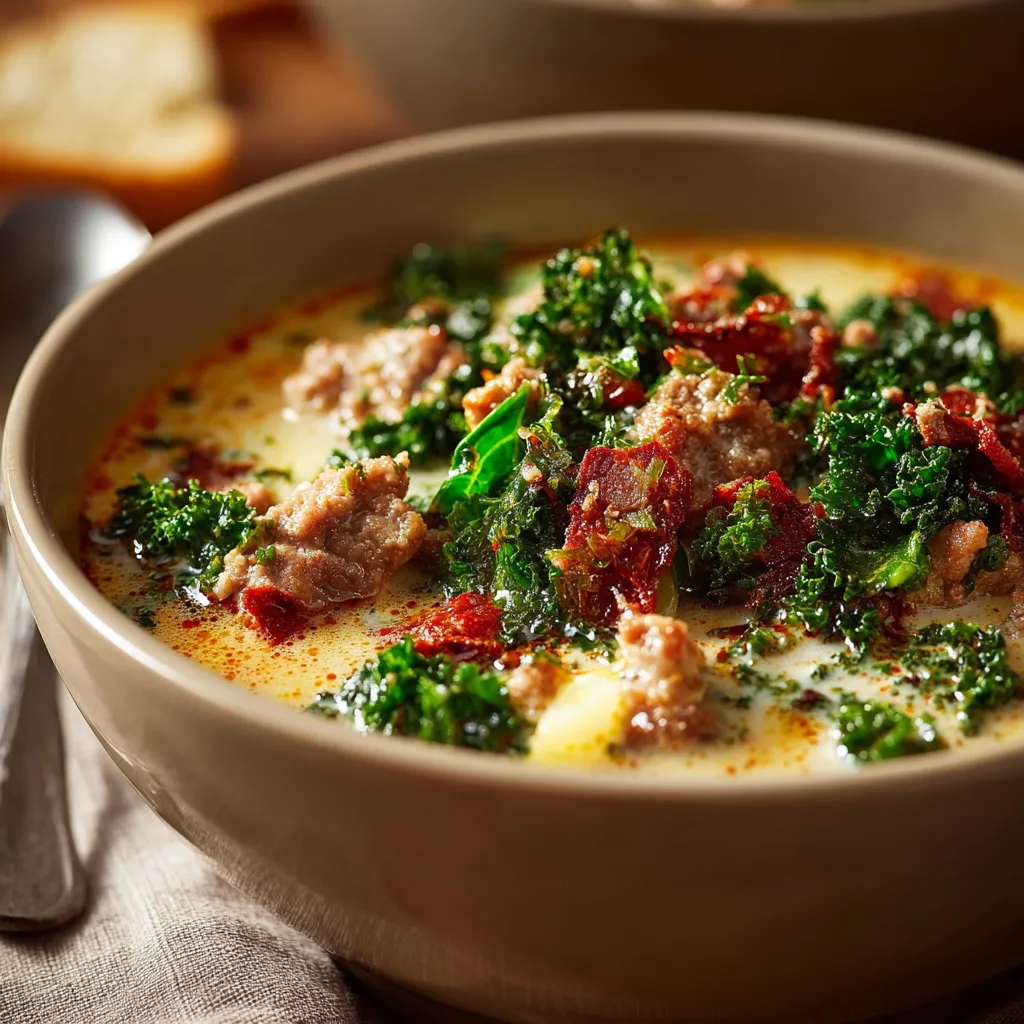 Here’s a meticulously crafted recipe designed to unlock the full potential of Zuppa Toscana:
Ingredients:
- 1 pound Italian sausage (sweet or hot, or a mix), casings removed
- 1 large yellow onion, diced
- 2 cloves garlic, minced
- 8 cups chicken broth (low sodium preferred)
- 1 pound Yukon Gold potatoes, peeled and thinly sliced
- 1/2 teaspoon red pepper flakes (adjust to taste)
- 1/2 cup heavy cream
- 4 cups chopped kale (Tuscan or curly)
- Salt and freshly ground black pepper to taste
- 2 tablespoons olive oil
Instructions:
- Brown the Sausage: In a large Dutch oven or stockpot, heat olive oil over medium-high heat. Add the sausage and cook, breaking it up with a spoon, until browned and cooked through. Remove the sausage from the pot and set aside.
- Sauté Aromatics: Add the diced onion to the pot and cook until softened, about 5 minutes. Add the minced garlic and cook for another minute until fragrant.
- Build the Broth: Pour in the chicken broth and scrape up any browned bits from the bottom of the pot. Add the sliced potatoes and red pepper flakes. Bring to a boil, then reduce heat and simmer until the potatoes are tender, about 15-20 minutes.
- Add Sausage and Kale: Return the cooked sausage to the pot. Stir in the chopped kale and cook until wilted, about 5 minutes.
- Creamy Perfection: Reduce the heat to low. Gently stir in the heavy cream. Do not boil. Season with salt and freshly ground black pepper to taste.
- Serve: Serve hot, garnished with a drizzle of olive oil or a sprinkle of Parmesan cheese (optional).
My Zuppa Toscana Odyssey: A Culinary Investigation
My journey to Zuppa Toscana perfection was not without its trials. My first few attempts were a disaster. The broth was bland, the potatoes were either mushy or undercooked, and the cream curdled more than once. Like many of you, I initially thought it was just a simple matter of throwing ingredients into a pot. I was wrong.The Bland Broth Blues
Initially, my Zuppa Toscana lacked depth. The broth tasted watery and lifeless. Then, I had an “Aha!” moment: building the *fond* – those delicious browned bits at the bottom of the pot after cooking the sausage – was key. Scraping those up when adding the broth unlocked a whole new level of savory goodness. I also experimented with different broths. Store-bought was okay, but homemade chicken broth truly elevated the flavor profile.The Potato Predicament
The potato issue was a persistent one. Some batches were gluey, others had hard, undercooked potato chunks. I tried Russet potatoes, which released too much starch and turned the soup into a thick, pasty mess. Then, I switched to Yukon Gold. Their lower starch content and creamy texture proved to be the answer. Slicing them thinly also ensured even cooking.The Creamy Catastrophe Averted
Curdled cream was a recurring nightmare. I learned that temperature control was paramount. Adding cold cream directly to hot soup was a recipe for disaster. Tempering the cream – gradually warming it by adding a spoonful of hot broth at a time – before incorporating it into the soup prevented curdling. Also, ensuring the soup was at a low simmer, *not* boiling, was crucial.The Kale Conundrum
The kale, often an afterthought, also presented a challenge. Overcooked kale turned bitter and slimy. I discovered that adding it towards the end of the cooking process and wilting it gently preserved its vibrant green color and slightly chewy texture.The Art of Zuppa Toscana: A Foolproof Technique
After countless experiments and numerous bowls of (sometimes less-than-perfect) Zuppa Toscana, I’ve distilled the process into a foolproof technique:- Master the Fond: Don’t skip browning the sausage! The Maillard reaction is your friend. Scrape up those browned bits when adding the broth for maximum flavor.
- Choose Your Potatoes Wisely: Yukon Gold are your best bet for creamy texture and balanced starch release. Slice them thinly for even cooking.
- Temper the Cream: Gently warm the cream before adding it to the soup to prevent curdling.
- Respect the Kale: Add the kale towards the end of the cooking process and wilt it gently. Don’t overcook!
- Taste and Adjust: Season generously with salt and pepper. Don’t be afraid to adjust the red pepper flakes to your preferred level of spiciness.
Why is it important to brown the sausage when making Zuppa Toscana?
Browning the sausage creates Maillard reaction products, which enhance the savory depth of the soup. Scraping up the browned bits (fond) when adding the broth unlocks a whole new level of flavor.
What type of potatoes are best to use in Zuppa Toscana, and why?
Yukon Gold potatoes are recommended. They have a lower starch content compared to Russet potatoes, which prevents the soup from becoming too thick and pasty. Their creamy texture also contributes to the overall flavor.
How can I prevent the cream from curdling when adding it to the soup?
To prevent curdling, temper the cream by gradually warming it with a spoonful of hot broth before adding it to the soup. Also, ensure the soup is at a low simmer, not boiling, when you add the cream.
When should I add the kale to Zuppa Toscana, and why?
Add the kale towards the end of the cooking process and wilt it gently. This preserves its vibrant green color and slightly chewy texture, preventing it from becoming bitter and slimy from overcooking.
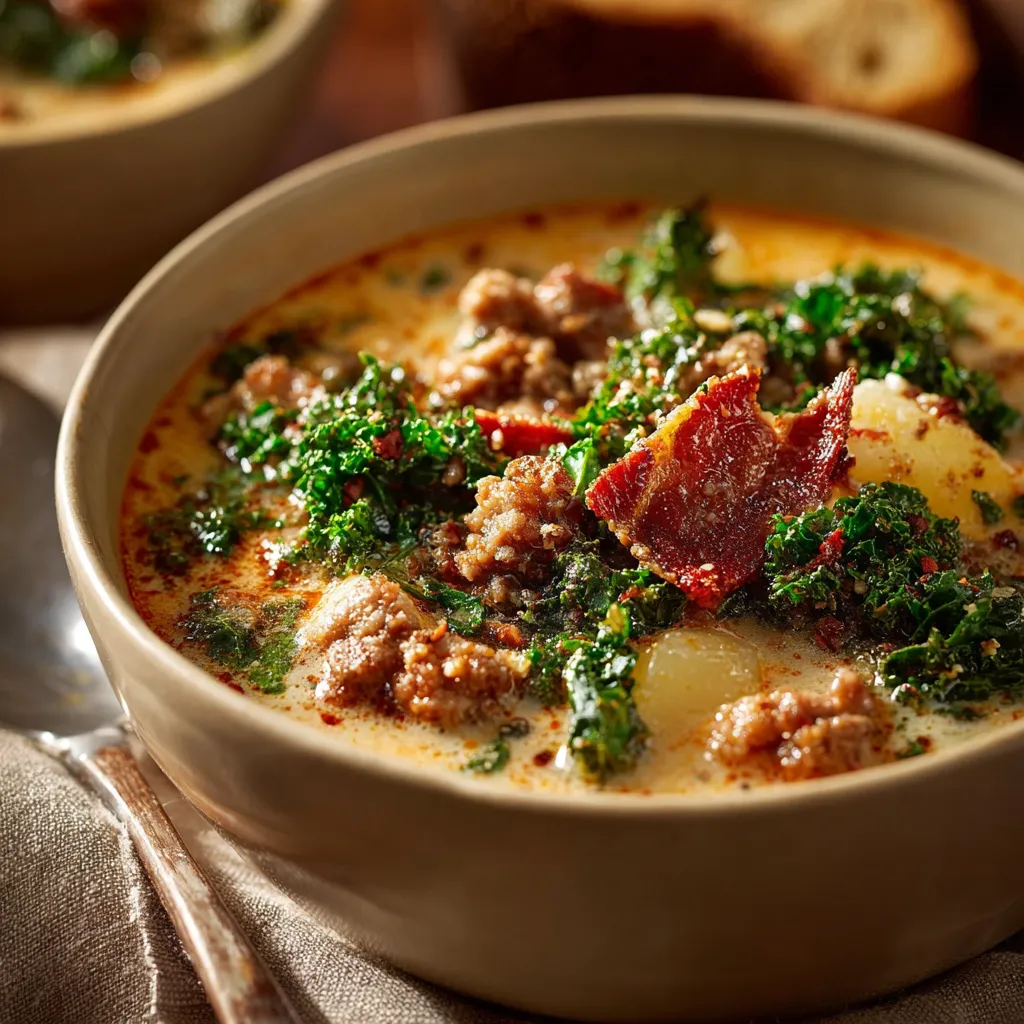
Ultimate Zuppa Toscana
Ingredients
Equipment
Method
- In a large Dutch oven or stockpot, heat olive oil over medium-high heat.
- Add the sausage and cook, breaking it up with a spoon, until browned and cooked through. Remove the sausage from the pot and set aside.
- Add the diced onion to the pot and cook until softened, about 5 minutes. Add the minced garlic and cook for another minute until fragrant.
- Pour in the chicken broth and scrape up any browned bits from the bottom of the pot.
- Add the sliced potatoes and red pepper flakes. Bring to a boil, then reduce heat and simmer until the potatoes are tender, about 15-20 minutes.
- Return the cooked sausage to the pot.
- Stir in the chopped kale and cook until wilted, about 5 minutes.
- Reduce the heat to low. Gently stir in the heavy cream. Do not boil.
- Season with salt and freshly ground black pepper to taste.
- Serve hot, garnished with a drizzle of olive oil or a sprinkle of Parmesan cheese (optional).