
Decoding the Deliciousness: The Science Behind Potsticker Soup
The allure of potsticker soup is undeniable: tender, flavorful dumplings swimming in a savory broth, often punctuated with vibrant vegetables. But transforming pre-made or homemade potstickers into a satisfying soup requires understanding a few key scientific principles. First, consider the potstickers themselves. They’re essentially doughy packages containing a filling – typically meat and/or vegetables. When boiled directly in water, the dough can become waterlogged and the filling can leach out, resulting in a bland, unappetizing mess. This is because of osmosis – water moves from an area of high concentration (the soup) to an area of low concentration (the filling and the dough). Next, think about the broth. A good broth is more than just flavored water; it’s a complex emulsion of fats, proteins, and carbohydrates. Gelatin, derived from collagen in bones, contributes to the rich, silky texture. Sodium (salt, soy sauce) enhances flavor perception. The key is to build layers of flavor without overpowering the delicate dumplings. Finally, consider the vegetables. They add color, texture, and nutritional value, but overcooked vegetables become mushy and detract from the overall experience. The ideal is a balance of tender-crisp vegetables that complement the other components. Understanding these principles is the foundation for creating a potsticker soup that is both delicious and structurally sound.The Ultimate Potsticker Soup Recipe
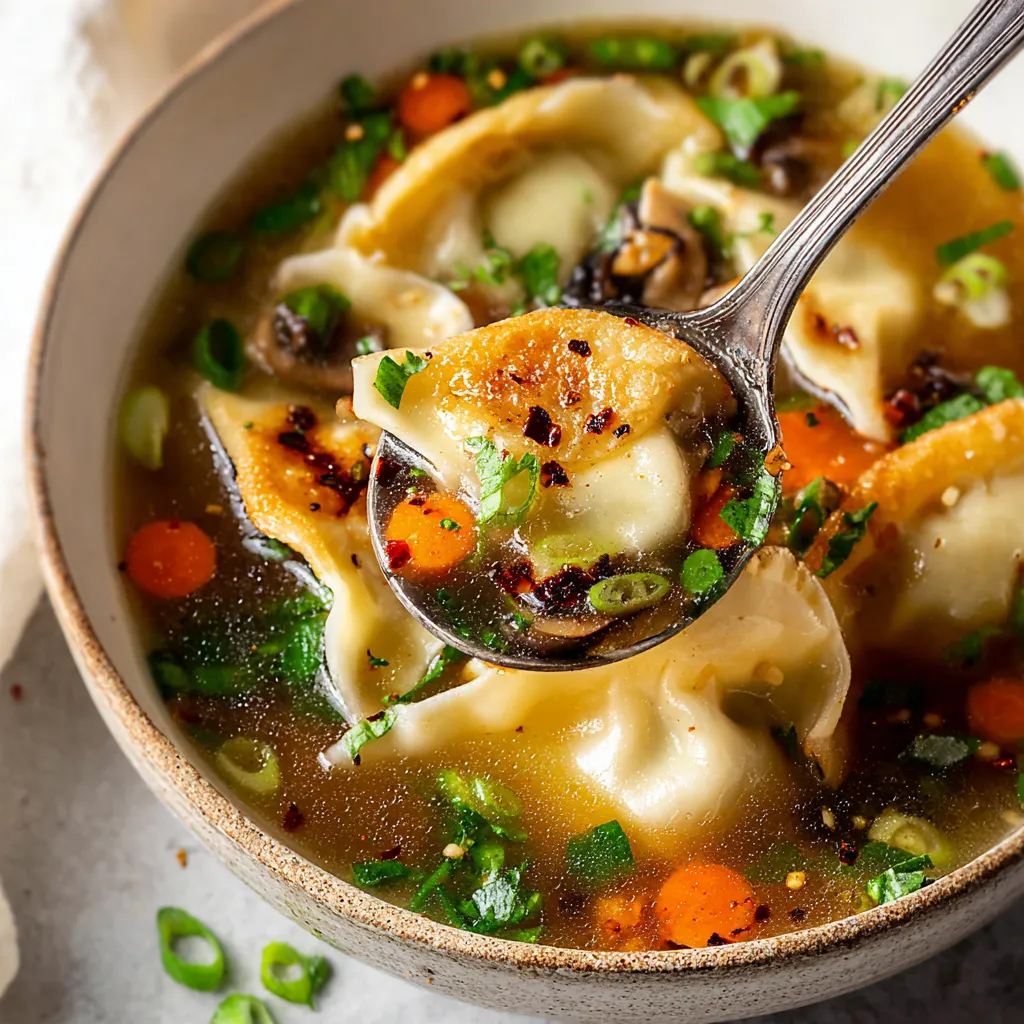 Here’s a recipe that I’ve honed through countless experiments, designed to deliver perfect potsticker soup every time.
Ingredients:
- Potstickers: 24 frozen or fresh potstickers (about 1 pound)
- Broth: 6 cups chicken broth (low sodium)
- Aromatics:
- 2 cloves garlic, minced
- 1 inch ginger, peeled and minced
- 1 green onion, thinly sliced (white and green parts separated)
- Vegetables:
- 1 cup sliced mushrooms (shiitake or cremini)
- 1 cup shredded carrots
- 1 cup baby bok choy, chopped
- Seasonings:
- 2 tablespoons soy sauce (low sodium)
- 1 tablespoon rice vinegar
- 1 teaspoon sesame oil
- Pinch of red pepper flakes (optional)
- Garnish:
- Toasted sesame seeds
- Extra sliced green onions
Instructions:
1. Prepare the Aromatics: In a large pot or Dutch oven, heat a tablespoon of vegetable oil over medium heat. Add the minced garlic and ginger and cook for about 30 seconds, until fragrant. Be careful not to burn the garlic. 2. Build the Broth: Pour in the chicken broth and bring to a simmer. Add the white parts of the green onion, soy sauce, rice vinegar, and red pepper flakes (if using). Simmer for 5 minutes to allow the flavors to meld. 3. Cook the Vegetables: Add the sliced mushrooms and shredded carrots to the simmering broth. Cook for 3-5 minutes, until the vegetables are slightly softened. 4. Add the Potstickers: Gently add the potstickers to the broth. If using frozen potstickers, add them directly from the freezer. Increase the heat slightly to maintain a gentle simmer. Cook for the time indicated on the potsticker package, or until the potstickers are cooked through and floating. Usually, this takes 5-7 minutes. 5. Incorporate the Bok Choy: Add the chopped baby bok choy during the last 2 minutes of cooking, ensuring it remains tender-crisp. 6. Finish and Serve: Remove the pot from the heat and stir in the sesame oil. Taste and adjust seasonings as needed. Ladle the soup into bowls, garnish with toasted sesame seeds and the green parts of the sliced green onions. Serve immediately.The Culinary Investigation: My Potsticker Soup Journey
My first few attempts were a disaster. I envisioned a quick and easy weeknight meal, but I ended up with a pot of mushy dumplings and bland broth. Then, I had an “Aha!” moment. I realized I was treating the potstickers like pasta, boiling them directly in water. This resulted in overcooked, soggy dumplings that had lost all their flavor.The Soggy Dumpling Debacle
Like many of you, I initially thought the broth was just a vehicle for cooking the potstickers. I used plain water and added a splash of soy sauce. The result was utterly disappointing. The potstickers were bland, and the broth tasted like… well, nothing. I needed to build a flavor foundation.Broth Breakthroughs
I experimented with different broths – chicken, vegetable, and even a homemade bone broth. Chicken broth emerged as the winner, providing a rich, savory base that complemented the potstickers without overpowering them. I also discovered the importance of aromatics. Sautéing garlic and ginger in oil before adding the broth created a fragrant and flavorful foundation.The Vegetable Verdict
My initial attempts at adding vegetables were equally disastrous. I tossed in everything at once, resulting in overcooked, mushy vegetables that detracted from the overall experience. I learned to add the vegetables in stages, starting with the heartier ones like carrots and mushrooms, and finishing with the more delicate ones like bok choy. This ensured that the vegetables remained tender-crisp and retained their individual flavors.The Perfect Potsticker Placement
I discovered that adding the potstickers directly to the simmering broth was key. This allowed them to cook evenly and prevented them from sticking to the bottom of the pot. I also learned to avoid overcrowding the pot, as this could lower the temperature of the broth and result in uneven cooking.The Sesame Secret
The final touch was the addition of sesame oil. This seemingly small ingredient added a subtle nutty flavor and a luxurious mouthfeel that elevated the entire dish. It was the missing piece of the puzzle.The Foolproof Technique: The Ultimate Potsticker Soup Guide
After countless experiments and taste tests, I’ve distilled the perfect potsticker soup technique into these simple steps:- Sauté Aromatics: Start by sautéing minced garlic and ginger in oil to create a fragrant flavor base.
- Build the Broth: Use a good quality chicken broth and add seasonings like soy sauce and rice vinegar to create a complex and savory broth.
- Layer the Vegetables: Add vegetables in stages, starting with the heartier ones and finishing with the more delicate ones, to ensure they are cooked to perfection.
- Simmer, Don’t Boil: Gently simmer the potstickers in the broth, avoiding a rapid boil that can cause them to break apart.
- Embrace the Sesame: Finish with a drizzle of sesame oil for a nutty flavor and luxurious mouthfeel.
- Garnish Generously: Garnish with toasted sesame seeds and sliced green onions for added flavor and visual appeal.
Why can potstickers become soggy and bland when cooked in soup?
Boiling potstickers directly in water can cause the dough to become waterlogged and the filling to leach out due to osmosis, resulting in a bland and unappetizing soup.
What type of broth is recommended for potsticker soup and why?
Chicken broth is recommended as it provides a rich, savory base that complements the potstickers without overpowering them.
How should vegetables be added to potsticker soup to prevent them from becoming mushy?
Add vegetables in stages, starting with the heartier ones like carrots and mushrooms, and finishing with the more delicate ones like bok choy. This ensures they remain tender-crisp.
What is the key to adding flavor to the broth for potsticker soup?
Sautéing minced garlic and ginger in oil before adding the broth creates a fragrant and flavorful foundation for the soup. Also, adding soy sauce and rice wine vinegar enhances the broth’s overall flavor.
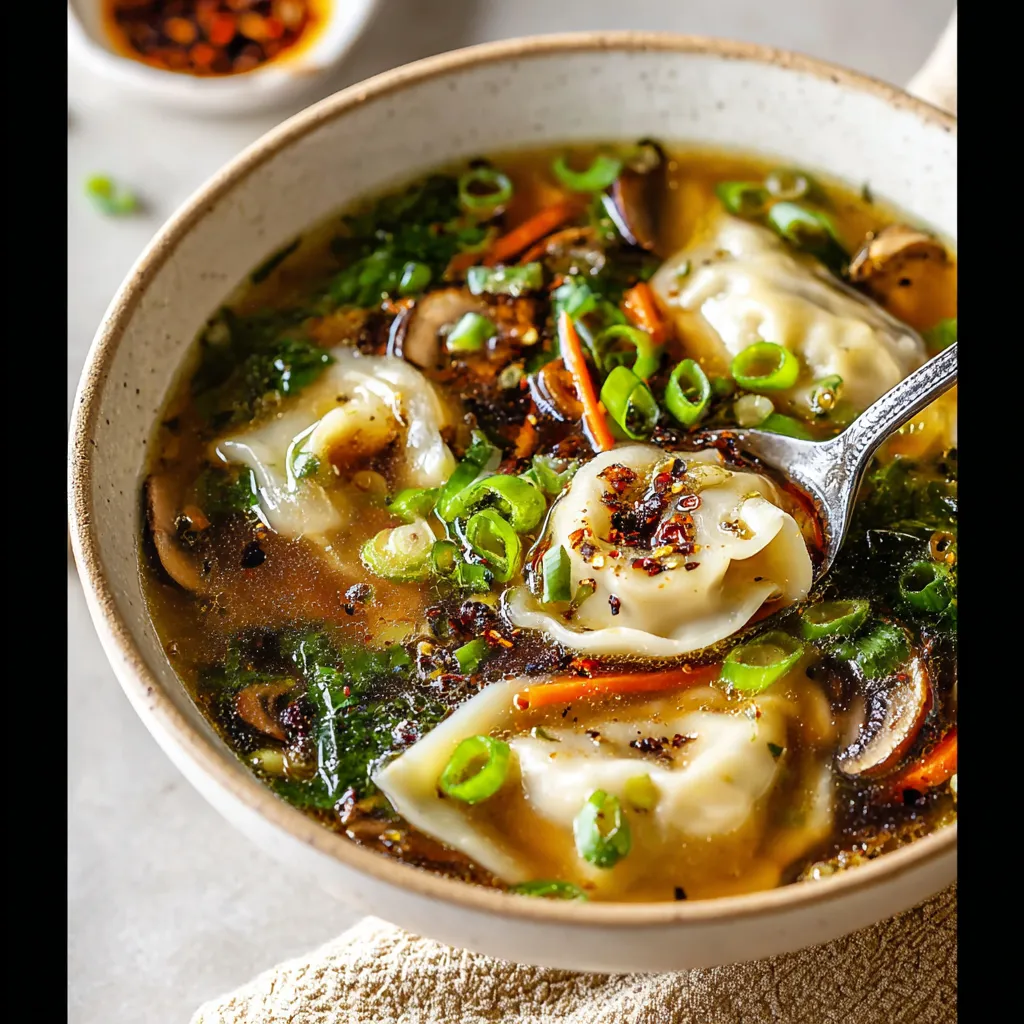
Easy Potsticker Soup
This easy potsticker soup recipe transforms frozen or fresh potstickers into a comforting and flavorful meal. The savory broth is built with aromatics and vegetables, while the potstickers are cooked to perfection without becoming soggy. It’s a quick and delicious weeknight dinner option.
Ingredients
Equipment
Method
- In a large pot or Dutch oven, heat vegetable oil over medium heat.
- Add the minced garlic and ginger and cook for about 30 seconds, until fragrant. Be careful not to burn the garlic.
- Pour in the chicken broth and bring to a simmer. Add the white parts of the green onion, soy sauce, rice vinegar, and red pepper flakes (if using).
- Simmer for 5 minutes to allow the flavors to meld.
- Add the sliced mushrooms and shredded carrots to the simmering broth. Cook for 3-5 minutes, until the vegetables are slightly softened.
- Gently add the potstickers to the broth. If using frozen potstickers, add them directly from the freezer.
- Increase the heat slightly to maintain a gentle simmer. Cook for the time indicated on the potsticker package, or until the potstickers are cooked through and floating. Usually, this takes 5-7 minutes.
- Add the chopped baby bok choy during the last 2 minutes of cooking, ensuring it remains tender-crisp.
- Remove the pot from the heat and stir in the sesame oil.
- Taste and adjust seasonings as needed.
- Ladle the soup into bowls, garnish with toasted sesame seeds and the green parts of the sliced green onions.
- Serve immediately.
Notes
For a richer broth, use homemade bone broth. You can substitute other vegetables like spinach or snap peas for the bok choy. Adjust the amount of red pepper flakes to your preference for spice. Store leftover soup in the refrigerator for up to 3 days.