
How do you transform a humble collection of vegetables into a bowl of creamy, comforting perfection?
Decoding the Creaminess Conundrum: A Food Scientist’s Quest
The secret to truly exceptional creamy vegetable soup isn’t just about throwing in some cream at the end. It’s about understanding the underlying science of flavor development and texture manipulation. It’s about building layers of deliciousness and coaxing the natural sweetness and richness from your vegetables.
One crucial element is the Maillard reaction, the chemical reaction between amino acids and reducing sugars that gives browned food its distinctive flavor. Sautéing your vegetables before adding liquid allows this reaction to occur, creating a depth of flavor that simmering alone simply cannot achieve. Think of it like this: a raw carrot is sweet, but a roasted carrot is *complexly* sweet, with nutty and caramelized notes. That complexity translates directly into the soup.
Then there’s the question of thickening. Many rely solely on heavy cream, but that can lead to a one-dimensional, overly rich soup. A better approach is to use a combination of techniques: a roux (equal parts butter and flour cooked together), a potato-based thickener, or even pureed vegetables themselves. Each method contributes a unique texture and flavor profile.
Finally, consider the role of acidity. A touch of lemon juice or a splash of white wine vinegar can brighten the flavors and cut through the richness of the cream, creating a more balanced and nuanced soup.
The Creamy Vegetable Soup Blueprint: A Detailed Recipe
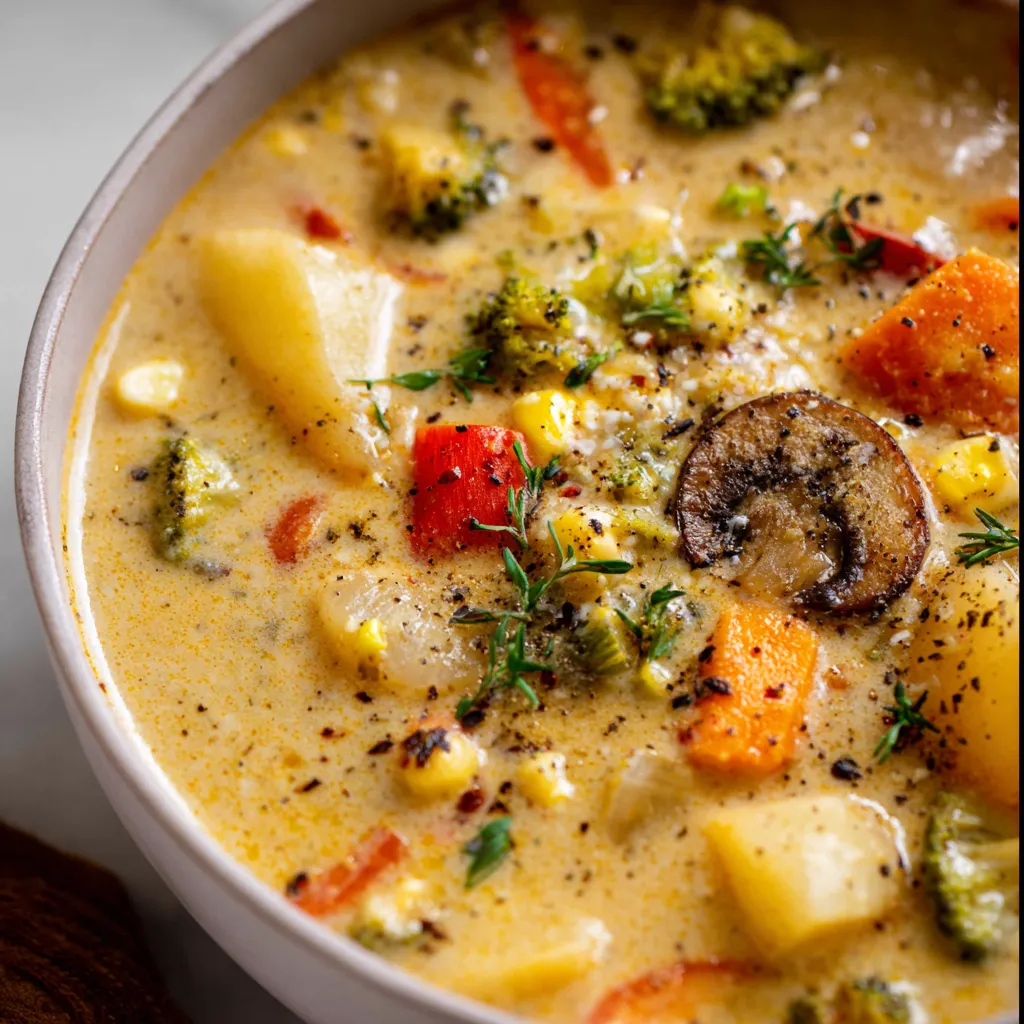
Yields:
6-8 servingsPrep time:
20 minutesCook time:
45 minutesIngredients:
- 2 tablespoons olive oil
- 1 large onion, chopped
- 2 carrots, peeled and chopped
- 2 celery stalks, chopped
- 4 cloves garlic, minced
- 1 teaspoon dried thyme
- 1/2 teaspoon dried rosemary
- 1/4 teaspoon red pepper flakes (optional)
- 6 cups vegetable broth
- 1 large russet potato, peeled and diced
- 1 (14.5 ounce) can diced tomatoes, undrained
- 1 cup chopped broccoli florets
- 1 cup chopped cauliflower florets
- 1 cup frozen peas
- 1 cup heavy cream
- 1/4 cup chopped fresh parsley
- Salt and pepper to taste
- Optional toppings: croutons, shredded cheese, a swirl of cream
Equipment:
- Large pot or Dutch oven
- Cutting board
- Chef’s knife
Instructions:
- Sauté the aromatics: Heat the olive oil in a large pot or Dutch oven over medium heat. Add the onion, carrots, and celery and cook until softened, about 5-7 minutes. Add the garlic, thyme, rosemary, and red pepper flakes (if using) and cook for another minute until fragrant.
- Build the base: Pour in the vegetable broth and add the diced potato and diced tomatoes. Bring to a boil, then reduce heat and simmer for 15-20 minutes, or until the potato is tender.
- Add the remaining vegetables: Stir in the broccoli, cauliflower, and frozen peas. Cook for another 5-7 minutes, or until the vegetables are tender-crisp.
- Create the creaminess: Stir in the heavy cream and heat through. Do not boil.
- Season and serve: Season with salt and pepper to taste. Stir in the fresh parsley. Serve hot, garnished with your favorite toppings.
From Watery Mess to Velvety Dream: My Soup-Making Odyssey
The Early Days: Broth with Bits
My first few attempts at creamy vegetable soup were a disaster. I thought the key was simply boiling a bunch of vegetables in broth and then adding cream. The result? A watery, bland concoction with a greasy film on top. The vegetables were mushy, the flavors were muddled, and the overall experience was deeply unsatisfying. It was nothing like the Vegetable Soup my grandmother used to make!The ‘Aha!’ Moment: The Power of Sautéing
Then, I had an “Aha!” moment. I remembered reading about the Maillard reaction and how it could transform the flavor of food. I decided to try sautéing the vegetables in olive oil before adding the broth. The difference was astounding! The onions, carrots, and celery developed a deep, caramelized flavor that permeated the entire soup. It was a game-changer. I even experimented with roasting some of the vegetables like the carrots and broccoli before adding them to the soup. This resulted in an even more complex and delicious flavor profile.Thickening Troubles: Cream Isn’t Always King
Like many of you, I initially thought that heavy cream was the only way to thicken vegetable soup. While it certainly adds richness, relying solely on cream can make the soup heavy and one-dimensional. I tried using a roux, which worked well but sometimes left a slightly starchy taste. Then I discovered the magic of using a potato-based thickener. Dicing a russet potato and simmering it in the broth not only thickens the soup beautifully but also adds a subtle sweetness and creaminess. This approach also works well when making Creamy Taco Soup.Finding the Balance: Acidity is Key
The final piece of the puzzle was acidity. I noticed that even with the sautéed vegetables and the potato thickener, the soup sometimes felt a little flat. A splash of lemon juice or white wine vinegar at the end brightened the flavors and cut through the richness of the cream, creating a more balanced and nuanced soup. It was the missing ingredient that elevated the soup from good to truly great. This is also a great trick when making Italian Penicillin Soup.The Foolproof Formula: A Step-by-Step Guide to Creamy Vegetable Soup Perfection
- Sauté your aromatics: Don’t skip this step! Sautéing the onions, carrots, and celery in olive oil is crucial for developing a deep, complex flavor.
- Choose your thickener wisely: A potato-based thickener is a great alternative to heavy cream alone. It adds sweetness and creaminess without being too heavy.
- Don’t overcook the vegetables: Add the more delicate vegetables like broccoli and cauliflower towards the end of the cooking process to prevent them from becoming mushy.
- Season generously: Salt and pepper are your friends! Taste the soup frequently and adjust the seasoning as needed.
- Add a touch of acidity: A splash of lemon juice or white wine vinegar at the end will brighten the flavors and balance the richness of the cream.
- Consider roasting some vegetables: Roasting vegetables like carrots, broccoli and cauliflower before adding them to the soup will add a wonderful depth of flavor. This technique can also be used with Gluten Free Lasagna Soup or Lasagna Soup to enhance the overall depth of the soup.
By following these simple steps, you can create a creamy vegetable soup that is both delicious and satisfying. It’s a perfect way to enjoy the bounty of the season and create a comforting meal that the whole family will love.
Why is sautéing the vegetables important for a creamy vegetable soup?
Sautéing the vegetables, especially aromatics like onions, carrots, and celery, allows the Maillard reaction to occur. This creates a deeper, more complex flavor profile compared to simply simmering the vegetables in broth.
What are some alternatives to using only heavy cream to thicken the soup?
Instead of relying solely on heavy cream, you can use a roux (equal parts butter and flour), a potato-based thickener (such as diced russet potato), or pureed vegetables to thicken the soup. Each method contributes a unique texture and flavor.
How does adding acidity improve the creamy vegetable soup?
A touch of acidity, such as lemon juice or white wine vinegar, brightens the flavors and cuts through the richness of the cream, resulting in a more balanced and nuanced soup.
What is the benefit of roasting some of the vegetables before adding them to the soup?
Roasting vegetables like carrots and broccoli before adding them to the soup enhances the overall depth of flavor, creating a more complex and delicious final product.

Easy Creamy Vegetable Soup
Ingredients
Equipment
Method
- Heat the olive oil in a large pot or Dutch oven over medium heat.
- Add the onion, carrots, and celery and cook until softened, about 5-7 minutes.
- Add the garlic, thyme, rosemary, and red pepper flakes (if using) and cook for another minute until fragrant.
- Pour in the vegetable broth and add the diced potato and diced tomatoes.
- Bring to a boil, then reduce heat and simmer for 15-20 minutes, or until the potato is tender.
- Stir in the broccoli, cauliflower, and frozen peas.
- Cook for another 5-7 minutes, or until the vegetables are tender-crisp.
- Stir in the heavy cream and heat through. Do not boil.
- Season with salt and pepper to taste.
- Stir in the fresh parsley.
- Serve hot, garnished with your favorite toppings.