
The Alchemy of Flavor: Unlocking Creamy Lemon Chicken Orzo Soup
At its heart, Creamy Lemon Chicken Orzo Soup is a delicate balance of acidity, richness, and texture. The lemon provides brightness that cuts through the creaminess, preventing the soup from becoming heavy. The chicken adds savory depth, and the orzo contributes a delightful bite. But each ingredient plays a crucial role, and understanding their interactions is essential for success.- The Cream: Heavy cream, while providing the most luxurious texture, can sometimes curdle if added improperly or exposed to too much heat or acid. The key is to temper it by gradually raising its temperature before adding it to the soup and avoid boiling after it’s incorporated. Alternatively, a stabilized cream like crème fraîche can also be used.
- The Lemon: Lemon juice is the star of the show, but its acidity can also be its downfall. Adding it too early can cause the dairy to curdle. The best approach is to add it towards the end of the cooking process, after the soup has been removed from the heat or at a very low simmer. This preserves the lemon’s bright flavor and prevents curdling.
- The Chicken: The chicken provides both flavor and body to the soup. Poaching the chicken in the broth ensures maximum flavor infusion and keeps the chicken moist and tender. Using leftover rotisserie chicken is a shortcut, but poaching it fresh yields superior results.
- The Orzo: This pasta adds a delightful chewy texture. Overcooking orzo can lead to a mushy soup, while undercooking results in an unpleasant bite. Cooking it directly in the broth allows it to absorb the flavors of the soup, but careful monitoring is required to prevent it from becoming too starchy.
The Recipe: Creamy Lemon Chicken Orzo Soup
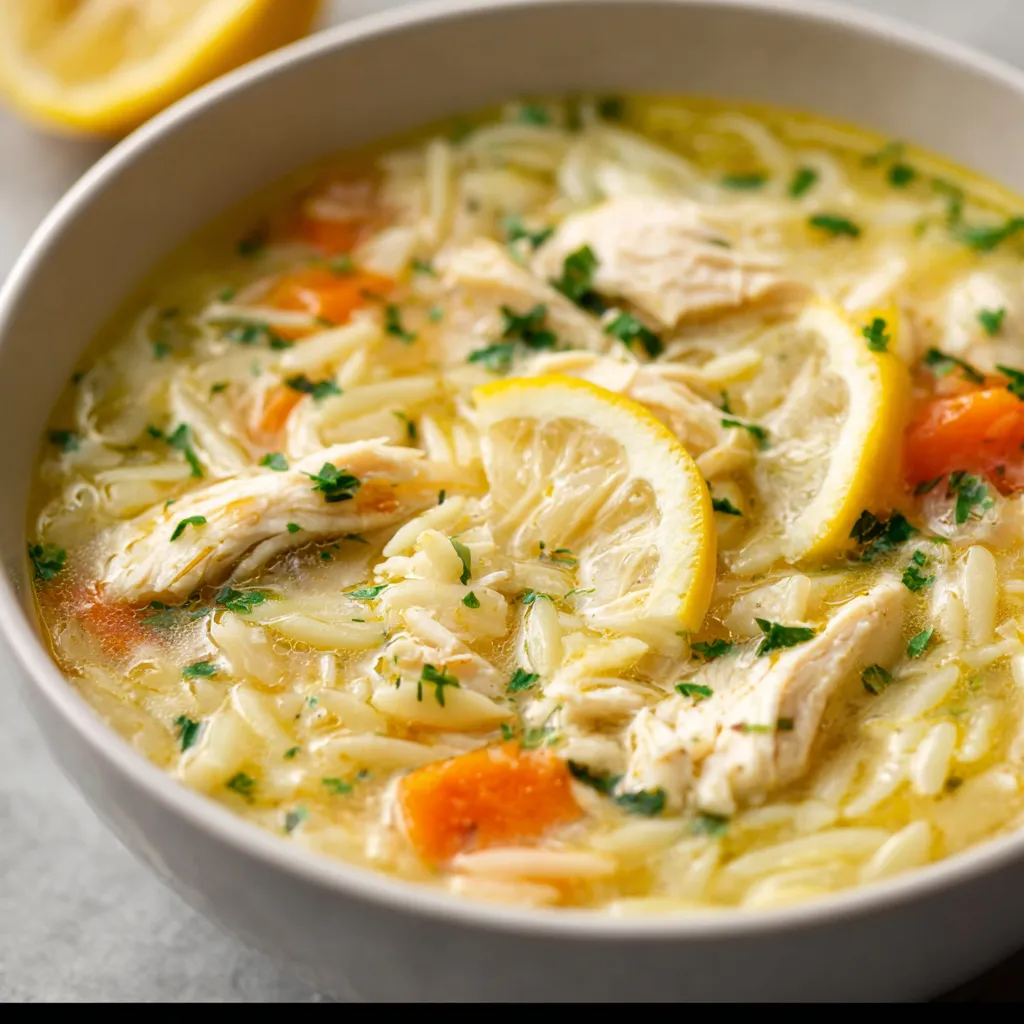
Ingredients:
- 1 tablespoon olive oil
- 1 medium onion, chopped
- 2 carrots, peeled and chopped
- 2 celery stalks, chopped
- 4 cloves garlic, minced
- 8 cups chicken broth
- 1 pound boneless, skinless chicken breasts
- 1 cup orzo pasta
- 1/2 cup heavy cream (or crème fraîche)
- 1/4 cup lemon juice, freshly squeezed
- 1/4 cup grated Parmesan cheese, plus more for serving
- 2 tablespoons chopped fresh parsley
- Salt and freshly ground black pepper to taste
Instructions:
- Heat the olive oil in a large pot or Dutch oven over medium heat. Add the onion, carrots, and celery and cook until softened, about 5-7 minutes.
- Add the garlic and cook for 1 minute more, until fragrant.
- Pour in the chicken broth and bring to a boil.
- Add the chicken breasts to the pot. Reduce the heat to low, cover, and simmer until the chicken is cooked through, about 15-20 minutes.
- Remove the chicken from the pot and shred it with two forks. Set aside.
- Add the orzo to the broth and cook according to package directions, usually about 8-10 minutes, or until al dente.
- Stir in the shredded chicken and heat through.
- Remove the pot from the heat.
- Gently stir in the heavy cream (or crème fraîche), lemon juice, and Parmesan cheese. Season with salt and pepper to taste.
- Garnish with fresh parsley and serve hot with additional Parmesan cheese, if desired.
The Investigation: My Quest for the Perfect Soup
The Initial Disaster: A Curdled Catastrophe
My first few attempts were a disaster. Like many of you, I initially thought throwing everything into the pot at once would be the easiest approach. I added the lemon juice along with the broth, and the cream curdled almost immediately. The result was a grainy, unappetizing mess that tasted far too acidic.The Broth Breakdown: Flavor Building Blocks
I realized I needed to build the flavors more deliberately. Instead of just using store-bought broth, I started making my own using chicken bones, vegetable scraps, and herbs. This made a huge difference in the depth of flavor. I also experimented with different vegetables, adding leeks and fennel for a more complex taste profile.The Chicken Conundrum: Poaching vs. Rotisserie
I tried using leftover rotisserie chicken to save time, but the soup lacked the rich, chicken-infused flavor I was looking for. Poaching the chicken directly in the broth proved to be the key. The broth became more flavorful, and the chicken remained incredibly moist.The Orzo Ordeal: Avoiding the Mush
I also struggled with the orzo. It kept either turning to mush or remaining stubbornly undercooked. Then, I had an “Aha!” moment: I started cooking the orzo separately and adding it to the soup towards the end, just long enough to heat through. This prevented overcooking and maintained its perfect al dente texture.The Cream Crisis: Tempering Tantrums
The cream was another source of frustration. No matter what I did, it seemed to curdle sometimes. I learned that tempering the cream was crucial. By slowly whisking a small amount of the hot broth into the cold cream before adding it to the soup, I was able to prevent curdling and achieve a smooth, velvety texture. Using crème fraîche instead of heavy cream proved to be another successful method to prevent curdling.The Lemon Liberation: Timing is Everything
Finally, I experimented with the timing of the lemon juice. Adding it at the end, after removing the soup from the heat, preserved its bright, citrusy flavor and prevented the dairy from curdling. I also found that using freshly squeezed lemon juice made a noticeable difference in the overall taste.The Technique: Foolproof Creamy Lemon Chicken Orzo Soup
Here’s the definitive, step-by-step method for creating perfect Creamy Lemon Chicken Orzo Soup every time:- Build the Base: Sauté aromatic vegetables (onion, carrots, celery, garlic) in olive oil to create a flavorful foundation.
- Poach the Chicken: Simmer chicken breasts in chicken broth until cooked through, then shred and set aside. This infuses the broth with chicken flavor.
- Cook the Orzo: Cook the orzo in the broth until al dente, absorbing the savory flavors.
- Temper the Cream (or use Crème Fraîche): Gradually whisk a small amount of hot broth into the cold cream to temper it, or use crème fraîche for a stabilized cream.
- The Grand Finale: Remove the soup from the heat and gently stir in the shredded chicken, tempered cream (or crème fraîche), lemon juice, and Parmesan cheese. Season to taste.
- Garnish and Serve: Garnish with fresh parsley and serve hot with additional Parmesan cheese.
Why is it important to add the lemon juice at the end of the cooking process?
Adding the lemon juice at the end, after removing the soup from the heat or at a very low simmer, preserves its bright, citrusy flavor and prevents the dairy from curdling.
How do you prevent the cream from curdling in Creamy Lemon Chicken Orzo Soup?
To prevent curdling, temper the cream by gradually whisking a small amount of the hot broth into the cold cream before adding it to the soup. Alternatively, use a stabilized cream like crème fraîche.
Why is poaching the chicken in the broth recommended instead of using rotisserie chicken?
Poaching the chicken in the broth ensures maximum flavor infusion and keeps the chicken moist and tender, resulting in a richer, more flavorful soup compared to using rotisserie chicken.
How do you prevent the orzo from becoming mushy in the soup?
Carefully monitor the orzo while it cooks in the broth. Cook until al dente according to package directions. Cooking it separately is also an option. This prevents overcooking and maintains its perfect al dente texture.

Creamy Lemon Chicken Orzo Soup
Ingredients
Equipment
Method
- Heat the olive oil in a large pot or Dutch oven over medium heat.
- Add the onion, carrots, and celery and cook until softened, about 5-7 minutes.
- Add the garlic and cook for 1 minute more, until fragrant.
- Pour in the chicken broth and bring to a boil.
- Add the chicken breasts to the pot. Reduce the heat to low, cover, and simmer until the chicken is cooked through, about 15-20 minutes.
- Remove the chicken from the pot and shred it with two forks. Set aside.
- Add the orzo to the broth and cook according to package directions, usually about 8-10 minutes, or until al dente.
- Stir in the shredded chicken and heat through.
- Remove the pot from the heat.
- Gently stir in the heavy cream, lemon juice, and Parmesan cheese. Season with salt and pepper to taste.
- Garnish with fresh parsley and serve hot with additional Parmesan cheese, if desired.