
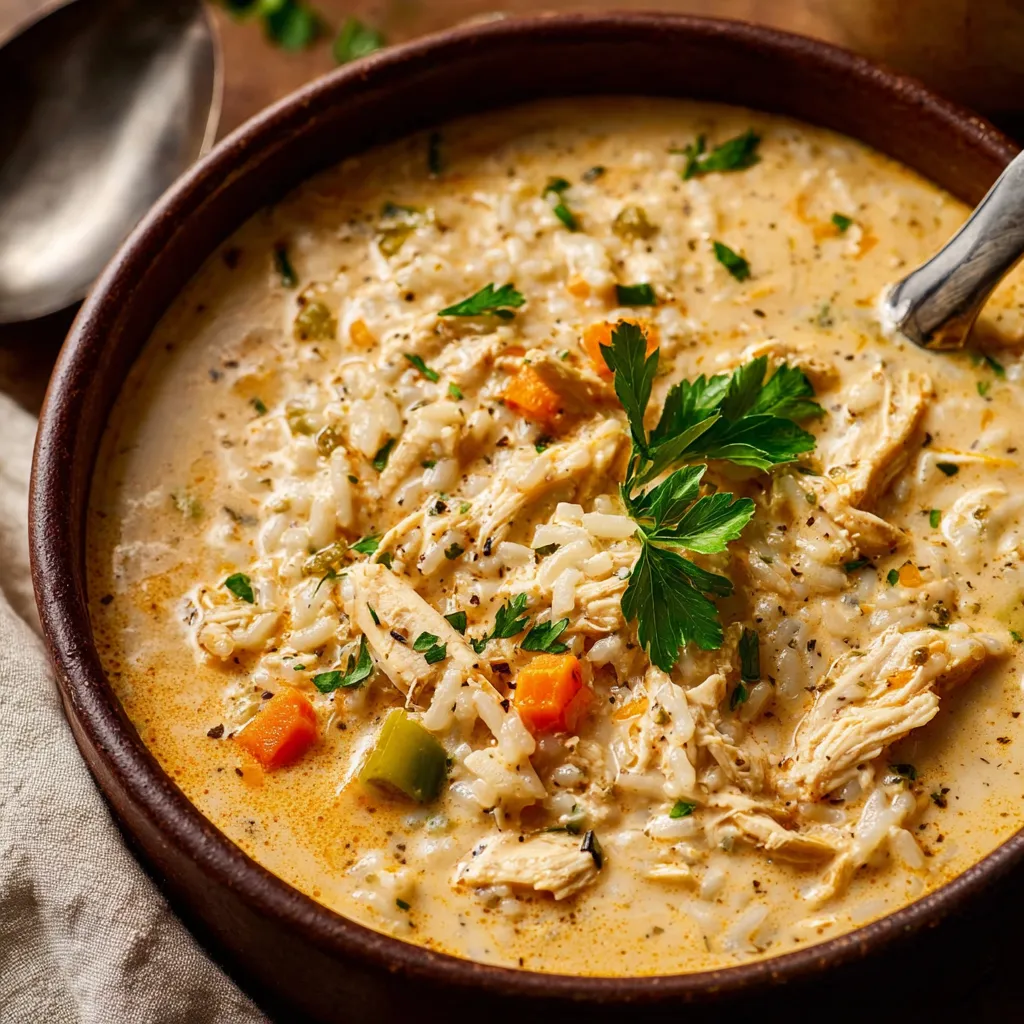
The Creamy Conundrum: Demystifying White Chicken Rice Soup
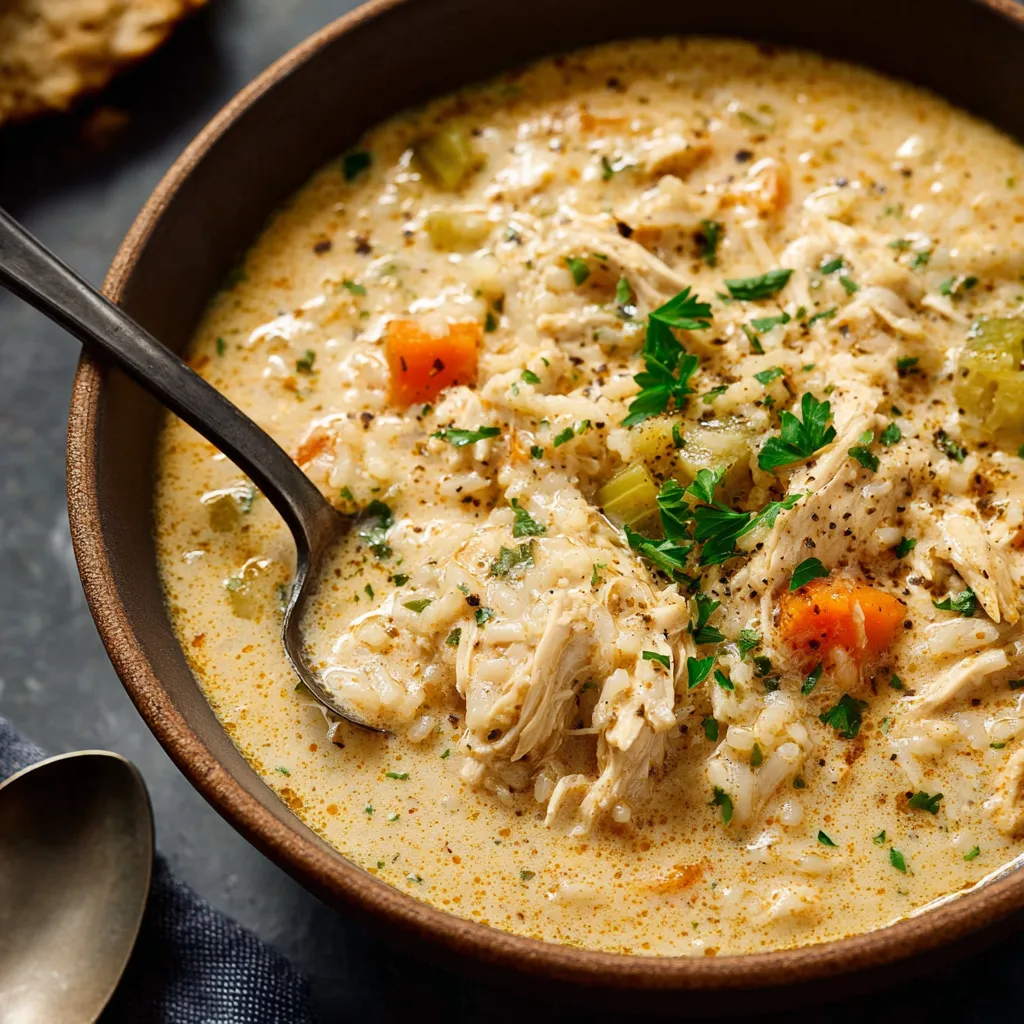
The beauty of White Chicken Rice Soup lies in its simplicity, but this simplicity can be deceiving. The key to a truly great version hinges on understanding the science of flavor infusion, starch management, and achieving that perfect, velvety texture without resorting to overly processed ingredients. Many believe that the creaminess comes *solely* from adding cream at the end. While cream certainly contributes, the real magic happens much earlier in the process. It’s about building layers of flavor and coaxing starch from the rice in a controlled way. Think of it like crafting a delicate balance between the savory chicken broth, aromatic vegetables, and the subtle sweetness of the rice. The cream should be the final flourish, not the crutch.The Alchemist’s Formula: White Chicken Rice Soup Recipe
Yields
6-8 servingsPrep time
20 minutesCook time
45 minutesIngredients
- 1 tablespoon olive oil
- 1 large onion, chopped
- 2 carrots, peeled and chopped
- 2 celery stalks, chopped
- 4 cloves garlic, minced
- 8 cups chicken broth, preferably homemade or low-sodium
- 1 teaspoon dried thyme
- 1/2 teaspoon dried rosemary
- 1/4 teaspoon red pepper flakes (optional)
- 1 bay leaf
- 1 1/2 pounds boneless, skinless chicken breasts
- 1 cup long-grain rice, rinsed
- 1/2 cup heavy cream
- 1/4 cup chopped fresh parsley
- Salt and freshly ground black pepper to taste
Instructions
- Sauté the Aromatics: Heat the olive oil in a large pot or Dutch oven over medium heat. Add the onion, carrots, and celery and cook until softened, about 5-7 minutes. Add the garlic and cook for another minute until fragrant.
- Build the Broth: Pour in the chicken broth, add the thyme, rosemary, red pepper flakes (if using), and bay leaf. Bring to a boil, then reduce heat to a simmer.
- Poach the Chicken: Gently add the chicken breasts to the simmering broth. Cover and cook until the chicken is cooked through, about 15-20 minutes. The internal temperature should reach 165°F (74°C).
- Shred the Chicken: Remove the chicken breasts from the pot and set aside to cool slightly. Once cool enough to handle, shred the chicken using two forks.
- Cook the Rice: Add the rinsed rice to the simmering broth. Cover and cook until the rice is tender, about 15-20 minutes.
- Finish the Soup: Stir in the shredded chicken and heavy cream. Heat through gently, being careful not to boil.
- Season and Serve: Remove the bay leaf. Stir in the parsley and season with salt and pepper to taste. Serve hot.
My Quest for Creamy Perfection: A Soup Saga
The Initial Disasters: Watery Woes and Gluey Grains
My first few attempts at White Chicken Rice Soup were a disaster. The broth was always thin and watery, lacking depth and richness. The rice, more often than not, ended up either undercooked and crunchy or completely mushy, turning the soup into a starchy mess. Like many of you, I initially thought the solution was simply adding more cream. While that did mask some of the issues, it didn’t solve the underlying problem: a fundamental lack of flavor and improper technique. I even considered throwing in the towel and just sticking to Chicken Noodle Soup.The Broth Breakthrough: Layering Flavors
Then, I had an “Aha!” moment. I realized I was treating the broth as an afterthought, simply using store-bought stock without any enhancement. I started experimenting with different techniques to build a more flavorful base. Sautéing the vegetables until they were deeply caramelized before adding the broth made a huge difference, unlocking their natural sweetness and adding depth to the overall flavor profile. Adding dried herbs like thyme and rosemary early on allowed their essential oils to infuse the broth, creating a more complex and aromatic soup. I also tried using bone-in chicken thighs instead of boneless breasts, simmering them in the broth to extract even more flavor. While this added more time to the process, the results were undeniable. This thicker broth would also be amazing in Chicken Corn Chowder.Rice Right: Mastering the Starch
The rice was another major hurdle. I tried different types of rice, from short-grain to long-grain, and experimented with rinsing and not rinsing. I discovered that long-grain rice, particularly basmati or jasmine, held its shape best and didn’t release excessive starch. Rinsing the rice before adding it to the soup was crucial, as it removed surface starch that could lead to a gluey texture. I also found that adding the rice *after* the chicken was cooked and removed from the pot allowed me to control the cooking time more precisely. This prevented the rice from overcooking and becoming mushy. This technique is also helpful in preventing a similar problem in Creamy Smothered Chicken And Rice.The Cream Factor: The Finishing Touch
Finally, I addressed the cream. I realized that the cream should be used sparingly, as a finishing touch to enhance the existing flavors, not to mask a weak broth. I experimented with different types of cream, from half-and-half to heavy cream, and found that heavy cream provided the richest and most luxurious texture. However, I also discovered that less is more. A small amount of heavy cream, stirred in gently at the end, was all that was needed to create a perfectly creamy soup. I even played around with adding a touch of lemon juice to cut through the richness and brighten the flavors, similar to the approach taken in Creamy Lemon Chicken Orzo Soup.The Foolproof Method: Soup Success in 5 Steps
Through trial and error, I’ve distilled the process into a simple, foolproof method:- Build a Robust Broth: Sauté aromatic vegetables, use high-quality chicken broth, and infuse with herbs and spices.
- Poach Chicken Gently: Cook chicken breasts gently in the broth to prevent them from drying out.
- Rinse Rice Thoroughly: Use long-grain rice and rinse it well to remove excess starch.
- Control Rice Cooking Time: Add the rice after the chicken is cooked and removed, and monitor closely to prevent overcooking. This will help prevent a similar problem you may encounter when making Creamy Crockpot Chicken Gnocchi Soup.
- Finish with Cream (Sparingly): Add a small amount of heavy cream at the end to enhance the flavor and texture, not to compensate for a weak broth. You could also add a touch of lemon juice to brighten the flavors. This technique is also used to brighten the flavors in White Chicken Lasagna Soup.
What is the key to achieving a creamy texture in White Chicken Rice Soup without relying solely on cream?
The key is to build layers of flavor by sautéing aromatic vegetables, using quality chicken broth, and controlling the starch released from the rice. Cream should be added sparingly at the end as a finishing touch.
What type of rice is recommended for White Chicken Rice Soup, and why is rinsing it important?
Long-grain rice, such as basmati or jasmine, is recommended because it holds its shape best and doesn’t release excessive starch. Rinsing the rice before adding it to the soup is crucial to remove surface starch that can lead to a gluey texture.
How should the chicken be cooked to prevent it from drying out in White Chicken Rice Soup?
The chicken breasts should be poached gently in the simmering broth until cooked through. This helps to keep them moist and prevent them from drying out.
At what point in the cooking process should the rice be added to the soup, and why?
The rice should be added to the simmering broth after the chicken has been cooked and removed from the pot. This allows for more precise control over the cooking time of the rice and prevents it from overcooking and becoming mushy.