
The Starch & Smoke Symphony: Unveiling the Secrets
Baked potato soup, at its core, is a study in starch gelatinization, flavor infusion, and textural balance. The key player, of course, is the potato itself. Different potato varieties yield vastly different results. Russets, with their high starch content, are ideal for achieving that creamy, almost velvety texture. However, relying solely on the starch from the potatoes can lead to a gluey consistency. The solution? A combination of techniques to control starch release and enhance flavor. Consider the Maillard reaction, the browning process that occurs when amino acids and reducing sugars are heated. Roasting the potatoes unlocks a depth of flavor that boiling simply cannot achieve. This browning contributes to a subtle sweetness and smoky undertone, a critical component of truly outstanding baked potato soup. Then there’s the dairy. Milk, cream, or a combination thereof provide the necessary richness and help emulsify the soup. But beware: overheating dairy can cause it to curdle, ruining the smooth texture. The science suggests a low and slow approach, gently heating the dairy while constantly stirring to prevent separation. Moreover, the addition of an acid, such as a squeeze of lemon juice or a dash of hot sauce, brightens the flavors and cuts through the richness, creating a more balanced and complex profile. Think of it as a counterpoint to the richness, similar to the role lime plays in Taco Soup.The Golden Ratio: The Definitive Baked Potato Soup Recipe
Yields:
6 servingsPrep time:
20 minutesCook time:
1 hourIngredients:
- 4 large russet potatoes, scrubbed and pierced
- 4 slices bacon, diced
- 1 medium yellow onion, chopped
- 2 cloves garlic, minced
- 4 tablespoons butter
- 4 tablespoons all-purpose flour
- 4 cups chicken broth
- 1 cup milk
- 1 cup heavy cream
- 1 cup shredded cheddar cheese, plus more for garnish
- 1/2 cup sour cream, plus more for garnish
- 2 green onions, thinly sliced, for garnish
- Salt and freshly ground black pepper to taste
- Optional: Hot sauce, for serving
Equipment:
- Baking sheet
- Large pot or Dutch oven
- Immersion blender (optional)
Instructions:
- Bake the Potatoes: Preheat oven to 400°F (200°C). Place potatoes on a baking sheet and bake for 45-60 minutes, or until easily pierced with a fork. Let cool slightly, then scoop out the flesh, reserving the skins for another use (or discard).
- Cook the Bacon: While the potatoes are baking, cook bacon in a large pot or Dutch oven over medium heat until crispy. Remove bacon with a slotted spoon and set aside, reserving the bacon fat in the pot.
- Sauté Aromatics: Add butter to the pot with the bacon fat. Once melted, add onion and cook until softened, about 5 minutes. Add garlic and cook for another minute until fragrant.
- Make a Roux: Sprinkle flour over the onion mixture and cook, stirring constantly, for 1-2 minutes to create a roux. This will help thicken the soup.
- Add Broth: Gradually whisk in chicken broth, making sure to scrape up any browned bits from the bottom of the pot. Bring to a simmer.
- Incorporate Potatoes: Add the scooped-out potato flesh to the pot. Use an immersion blender to partially blend the soup until slightly smooth, but still chunky. Alternatively, you can leave the soup completely chunky or transfer it to a regular blender in batches (be careful when blending hot liquids!).
- Add Dairy: Stir in milk and heavy cream. Heat gently, but do not boil.
- Melt the Cheese: Remove the pot from the heat and stir in cheddar cheese until melted and smooth.
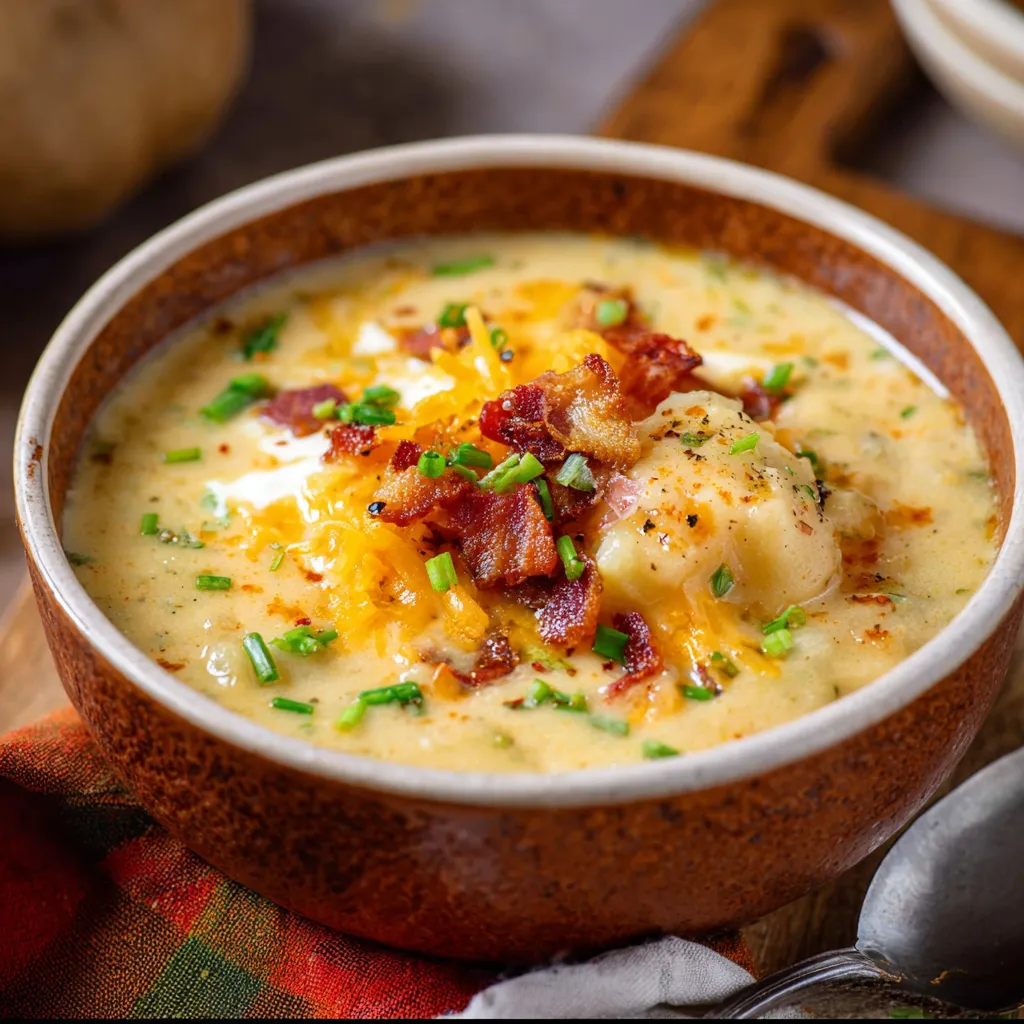
- Season and Serve: Season with salt and pepper to taste. Ladle soup into bowls and garnish with cooked bacon, sour cream, green onions, and extra cheddar cheese. A dash of hot sauce is also a welcome addition.
The Potato Soup Puzzle: My Quest for Perfection
The Early Days: Starchy Disasters
My first few attempts at baked potato soup were, frankly, a disaster. Like many of you, I initially thought it was as simple as boiling some potatoes, mashing them up, and adding milk. The result? A thick, gloppy mess that tasted overwhelmingly of starch. It was far from the creamy, flavorful soup I envisioned. I even considered throwing in the towel and making Vegetable Soup instead.The Roasting Revelation
Then, I had an “Aha!” moment. I remembered a trick I used when making mashed potatoes: roasting the potatoes instead of boiling them. The difference was night and day. Roasting brought out a natural sweetness and developed a slightly smoky flavor that added a whole new dimension to the soup. It also helped to dry out the potatoes slightly, preventing them from becoming waterlogged and overly starchy.Dairy Dilemmas and the Acidic Ascent
Next, I struggled with the dairy. I tried using only milk, but the soup lacked richness. I tried using only cream, but it felt too heavy and one-dimensional. The perfect balance, I discovered, was a combination of both. But even then, the soup sometimes tasted a little flat. That’s when I experimented with adding a touch of acidity. A squeeze of lemon juice at the end brightened the flavors and cut through the richness, creating a much more balanced and satisfying soup. I even tried a splash of vinegar, similar to how it enhances Creamy Taco Soup.The Bacon Factor: More Than Just a Garnish
Finally, I realized that the bacon wasn’t just a garnish; it was an integral part of the flavor profile. Cooking the bacon in the same pot as the soup and using the rendered bacon fat to sauté the onions and garlic infused the entire soup with a smoky, savory goodness that took it to the next level.The Foolproof Formula: Baking Your Way to Soup Success
Here’s the refined technique, a synthesis of my trials and errors, guaranteed to deliver the ultimate baked potato soup:- Roast, Don’t Boil: Always roast your potatoes for maximum flavor development and to control starch release.
- Bacon is Your Base: Cook bacon in the soup pot and use the rendered fat to build your flavor base.
- Embrace the Roux: A simple roux of butter and flour will thicken the soup and prevent it from becoming watery.
- Partial Blending is Key: Use an immersion blender to partially blend the soup for a creamy texture with some chunky potato pieces.
- Dairy Balance: A combination of milk and heavy cream provides the perfect richness without being too heavy.
- Acid is Your Friend: A touch of lemon juice or hot sauce brightens the flavors and balances the richness.
- Don’t Overheat the Dairy: Gently heat the dairy, but do not boil, to prevent curdling.
- Season Generously: Salt and pepper are essential, but don’t be afraid to experiment with other seasonings like garlic powder, onion powder, or smoked paprika.
- Garnish with Gusto: Load up your soup with your favorite toppings like bacon, sour cream, green onions, and shredded cheese.
Why is roasting the potatoes recommended instead of boiling them for baked potato soup?
Roasting the potatoes brings out a natural sweetness and smoky flavor, adding a new dimension to the soup. It also helps to dry out the potatoes slightly, preventing them from becoming waterlogged and overly starchy.
What is the purpose of adding an acid, such as lemon juice or hot sauce, to baked potato soup?
Adding a touch of acidity brightens the flavors and cuts through the richness of the soup, creating a more balanced and satisfying profile.
What type of potato is recommended for achieving a creamy texture in baked potato soup?
Russet potatoes, with their high starch content, are ideal for achieving a creamy, almost velvety texture in baked potato soup.
Why is it important to cook the bacon in the same pot as the soup?
Cooking the bacon in the same pot as the soup and using the rendered bacon fat to sauté the onions and garlic infuses the entire soup with a smoky, savory flavor.

BEST BAKED POTATO SOUP
This baked potato soup recipe delivers a creamy, smoky, and comforting bowl of deliciousness. Roasting the potatoes unlocks a depth of flavor, while a combination of milk and cream provides the perfect richness. Top with bacon, cheese, sour cream, and green onions for the ultimate comforting soup.
Ingredients
Equipment
Method
- Preheat oven to 400°F (200°C). Place potatoes on a baking sheet and bake for 45-60 minutes, or until easily pierced with a fork. Let cool slightly, then scoop out the flesh, reserving the skins for another use (or discard).
- While the potatoes are baking, cook bacon in a large pot or Dutch oven over medium heat until crispy. Remove bacon with a slotted spoon and set aside, reserving the bacon fat in the pot.
- Add butter to the pot with the bacon fat. Once melted, add onion and cook until softened, about 5 minutes. Add garlic and cook for another minute until fragrant.
- Sprinkle flour over the onion mixture and cook, stirring constantly, for 1-2 minutes to create a roux. This will help thicken the soup.
- Gradually whisk in chicken broth, making sure to scrape up any browned bits from the bottom of the pot. Bring to a simmer.
- Add the scooped-out potato flesh to the pot. Use an immersion blender to partially blend the soup until slightly smooth, but still chunky. Alternatively, you can leave the soup completely chunky or transfer it to a regular blender in batches (be careful when blending hot liquids!).
- Stir in milk and heavy cream. Heat gently, but do not boil.
- Remove the pot from the heat and stir in cheddar cheese until melted and smooth.
- Season with salt and pepper to taste. Ladle soup into bowls and garnish with cooked bacon, sour cream, green onions, and extra cheddar cheese. A dash of hot sauce is also a welcome addition.
Notes
For a richer flavor, use smoked bacon. You can also add other toppings like chives, crumbled blue cheese, or a swirl of pesto. Store leftover soup in an airtight container in the refrigerator for up to 3 days. Reheat gently on the stovetop or in the microwave. Be careful not to boil the soup, as this can cause the dairy to curdle. For a spicier soup, add a pinch of cayenne pepper or a dash of your favorite hot sauce to the soup while it’s simmering.