
Unlocking Creaminess: The Science Behind the Soup
The secret to a truly exceptional creamy soup, especially when you’re aiming for a healthier, cream-free version, lies in understanding the science of emulsification and starch. White beans, particularly cannellini beans, are naturally high in starch. When cooked, this starch gelatinizes, meaning it absorbs water and swells. Blending a portion of the cooked beans creates a smooth, starchy base that naturally thickens the soup and gives it a creamy mouthfeel. Think of it as a natural roux, but instead of butter and flour, we’re using the beans themselves. The addition of olive oil, also crucial in Tuscan cuisine, further contributes to the luxurious texture. The key is to ensure a proper emulsification of the oil and the bean broth, which prevents the soup from separating and enhances the overall richness. A final swirl of fresh herbs, like basil and rosemary, adds aromatic compounds that elevate the flavor profile and create a more complex and satisfying dish. The balance between acidity (from tomatoes or a splash of lemon juice) and richness is also vital. Acidity cuts through the heaviness and brightens the flavors, preventing the soup from becoming one-dimensional.The Creamy Tuscan White Bean Soup Recipe
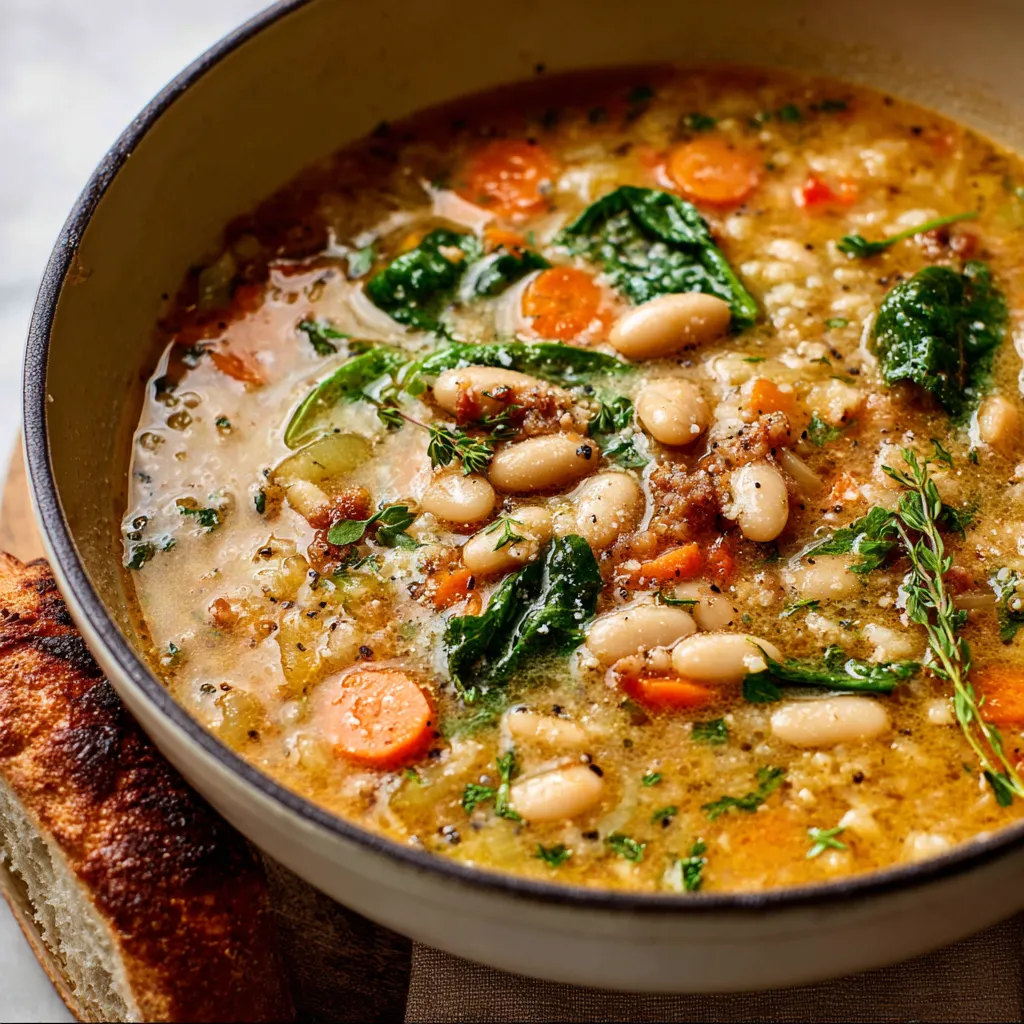 Here’s my foolproof recipe for Creamy Tuscan White Bean Soup, honed through numerous experiments and taste tests:
Ingredients:
- 2 tablespoons olive oil
- 1 medium yellow onion, chopped
- 2 carrots, peeled and chopped
- 2 celery stalks, chopped
- 4 cloves garlic, minced
- 1 teaspoon dried rosemary
- 1/2 teaspoon red pepper flakes (optional)
- 6 cups vegetable broth (low sodium)
- 2 (15-ounce) cans cannellini beans, rinsed and drained
- 1 (14.5-ounce) can diced tomatoes, undrained
- 1/2 cup chopped fresh basil, plus more for garnish
- 1/4 cup grated Parmesan cheese, plus more for garnish (optional, can omit for vegan)
- Salt and freshly ground black pepper to taste
- Optional: Crusty bread, for serving
Instructions:
- Sauté the Aromatics: Heat the olive oil in a large pot or Dutch oven over medium heat. Add the onion, carrots, and celery and cook, stirring occasionally, until softened, about 5-7 minutes. Add the garlic, rosemary, and red pepper flakes (if using) and cook for another minute until fragrant.
- Add the Liquids and Beans: Pour in the vegetable broth and bring to a simmer. Add one can of cannellini beans and the diced tomatoes (with their juices).
- Simmer and Blend: Reduce the heat to low, cover, and simmer for 15 minutes to allow the flavors to meld. Remove from heat. Using an immersion blender (or transferring to a regular blender in batches), carefully blend about half of the soup until smooth. Be cautious when blending hot liquids!
- Combine and Finish: Return the blended soup to the pot. Add the remaining can of cannellini beans and the fresh basil. Heat through gently. Stir in the Parmesan cheese (if using).
- Season and Serve: Season with salt and pepper to taste. Ladle into bowls and garnish with extra basil and Parmesan cheese (if using). Serve with crusty bread for dipping.
The Investigation: My Creamy Tuscan White Bean Soup Journey
My journey to perfecting this soup wasn’t exactly smooth sailing. My first few attempts were a disaster, resulting in a watery, flavorless mess. Then, I had an “Aha!” moment when I realized the key was in the beans themselves.The Watery Wilderness
Like many of you, I initially thought that adding cream was the only way to achieve that desirable creamy texture. My first batch involved a generous pour of heavy cream, which masked the true flavor of the beans and made the soup feel overly rich. It wasn’t Tuscan; it was just… heavy. It wasn’t even as satisfying as a Creamy Taco Soup.The Bean Revelation
Experimenting with different types of beans led me to cannellini beans. Their mild flavor and creamy texture when cooked made them the perfect candidate for blending. I discovered that blending only a portion of the soup allowed for a beautiful balance between smooth and chunky, creating a more interesting mouthfeel. This technique also reminded me of the method used in Italian Penicillin Soup, where blending some of the vegetables enhances the overall texture and flavor.Tuscan Harmony
Finding the right balance of Tuscan flavors was also crucial. My early attempts lacked depth. The addition of rosemary, red pepper flakes, and good-quality olive oil was a game-changer. Using canned diced tomatoes (with their juices) provided the perfect amount of acidity to balance the richness of the beans. I found that fresh basil added a bright, herbaceous note that complemented the other flavors beautifully. It was far more satisfying than a bland Vegetable Soup.The Parmesan Conundrum
The final piece of the puzzle was Parmesan cheese. While it adds a lovely savory note, it’s not strictly necessary for achieving a creamy texture. I found that a small amount of high-quality Parmesan adds a delicious depth of flavor, but the soup is equally delicious without it, making it a great vegan option. If you’re looking for a cheesy, creamy soup with a different flavor profile, you might enjoy White Chicken Lasagna Soup, but that requires a different approach altogether. Also, this is MUCH better than the Gluten Free Lasagna Soup I made last week.The Technique: A Foolproof Method
Follow these steps for guaranteed Creamy Tuscan White Bean Soup success:- Start with quality ingredients: Use good-quality olive oil, fresh vegetables, and canned cannellini beans.
- Sauté the aromatics: Don’t rush this step. Sautéing the onion, carrots, celery, and garlic in olive oil builds a flavorful base for the soup.
- Blend strategically: Blend only about half of the soup to achieve the perfect balance between smooth and chunky.
- Taste and adjust: Season with salt and pepper to taste. Adjust the amount of red pepper flakes to your preference.
- Garnish generously: Fresh basil and Parmesan cheese (if using) add the finishing touches to this delicious soup.
How does this recipe achieve a creamy texture without using heavy cream?
The recipe uses the natural starch in cannellini beans. Blending a portion of the cooked beans creates a smooth, starchy base that thickens the soup and provides a creamy mouthfeel. Olive oil also contributes to the luxurious texture.
Why is it important to only blend half of the soup?
Blending only half the soup creates a balance between smooth and chunky textures, resulting in a more interesting and satisfying mouthfeel.
What is the role of acidity in this soup?
Acidity, from the diced tomatoes, balances the richness of the beans and brightens the overall flavor of the soup, preventing it from becoming one-dimensional.
Can this soup be made vegan?
Yes, the soup can easily be made vegan by omitting the Parmesan cheese. The recipe is still delicious without it.
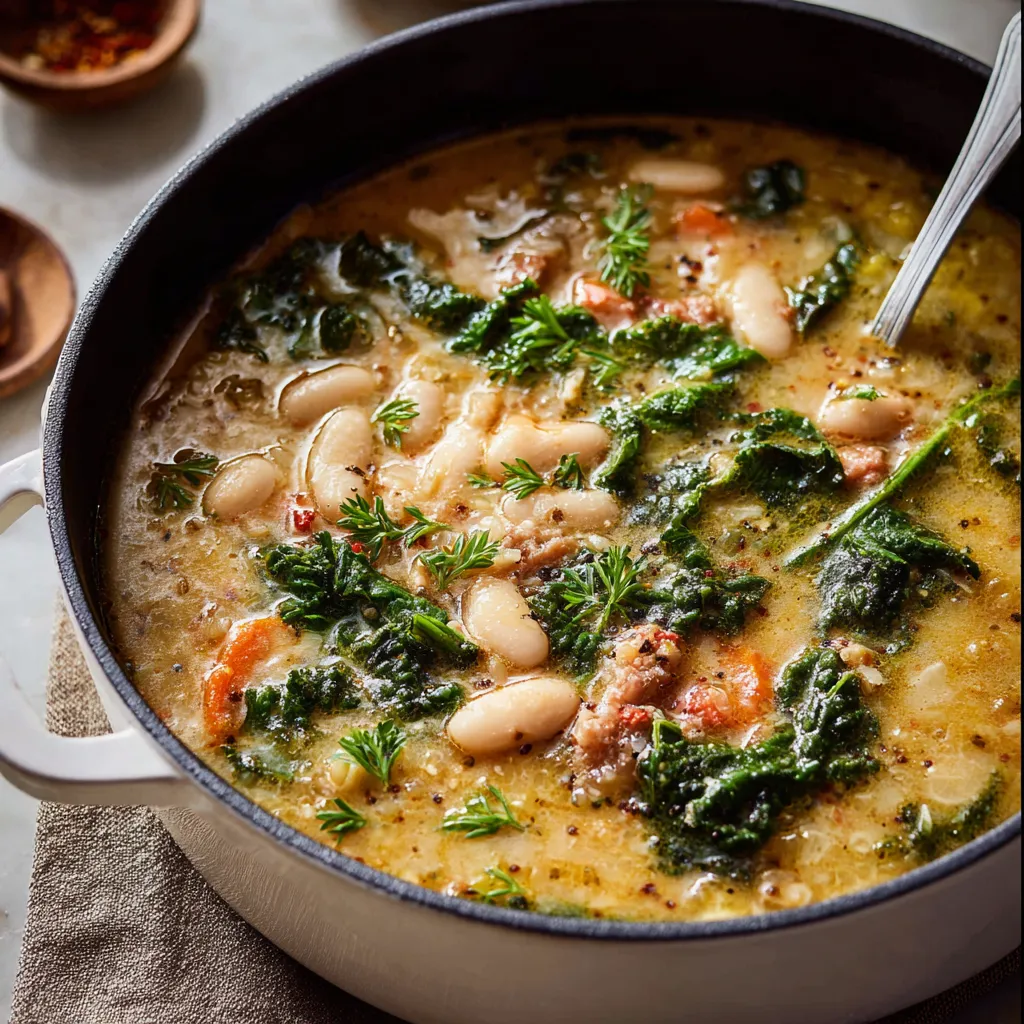
Creamy Tuscan White Bean Soup Ultimate
This Creamy Tuscan White Bean Soup achieves a velvety texture and maximum flavor without heavy cream. The secret lies in blending a portion of the cannellini beans for a naturally thick and creamy base, enhanced by Tuscan aromatics like rosemary, basil, and olive oil.
Ingredients
Equipment
Method
- Sauté the Aromatics: Heat the olive oil in a large pot or Dutch oven over medium heat. Add the onion, carrots, and celery and cook, stirring occasionally, until softened, about 5-7 minutes. Add the garlic, rosemary, and red pepper flakes (if using) and cook for another minute until fragrant.
- Add the Liquids and Beans: Pour in the vegetable broth and bring to a simmer. Add one can of cannellini beans and the diced tomatoes (with their juices).
- Simmer and Blend: Reduce the heat to low, cover, and simmer for 15 minutes to allow the flavors to meld. Remove from heat. Using an immersion blender (or transferring to a regular blender in batches), carefully blend about half of the soup until smooth. Be cautious when blending hot liquids!
- Combine and Finish: Return the blended soup to the pot. Add the remaining can of cannellini beans and the fresh basil. Heat through gently. Stir in the Parmesan cheese (if using).
- Season and Serve: Season with salt and pepper to taste. Ladle into bowls and garnish with extra basil and Parmesan cheese (if using). Serve with crusty bread for dipping.
Notes
For a vegan version, omit the Parmesan cheese. Soup can be stored in the refrigerator for up to 3 days. For best flavor, use good-quality olive oil and fresh vegetables. Adjust the amount of red pepper flakes to your preference. You can also add a splash of lemon juice for extra brightness.