
Deconstructing Deliciousness: The Science Behind Lasagna Soup
The beauty of lasagna lies in its interplay of textures and tastes. We have the soft, yielding pasta, the rich, creamy cheese blend (typically ricotta, mozzarella, and Parmesan), the savory meat sauce, and the bright, acidic tomato base. Translating this into soup form requires careful consideration of how these elements interact. The key is to mimic these characteristics in a liquid medium. Pasta choice is crucial; broken lasagna noodles work best, but other sturdy shapes like penne or rotini can substitute. Achieving the right balance of richness without excessive greasiness requires careful browning of the meat and strategic use of dairy. Finally, the acidity of the tomatoes needs to be balanced with a touch of sweetness and the umami depth of herbs and spices. We are, in effect, creating a deconstructed lasagna in a bowl, preserving all the original flavor profiles while streamlining the process.The Ultimate Lasagna Soup Recipe
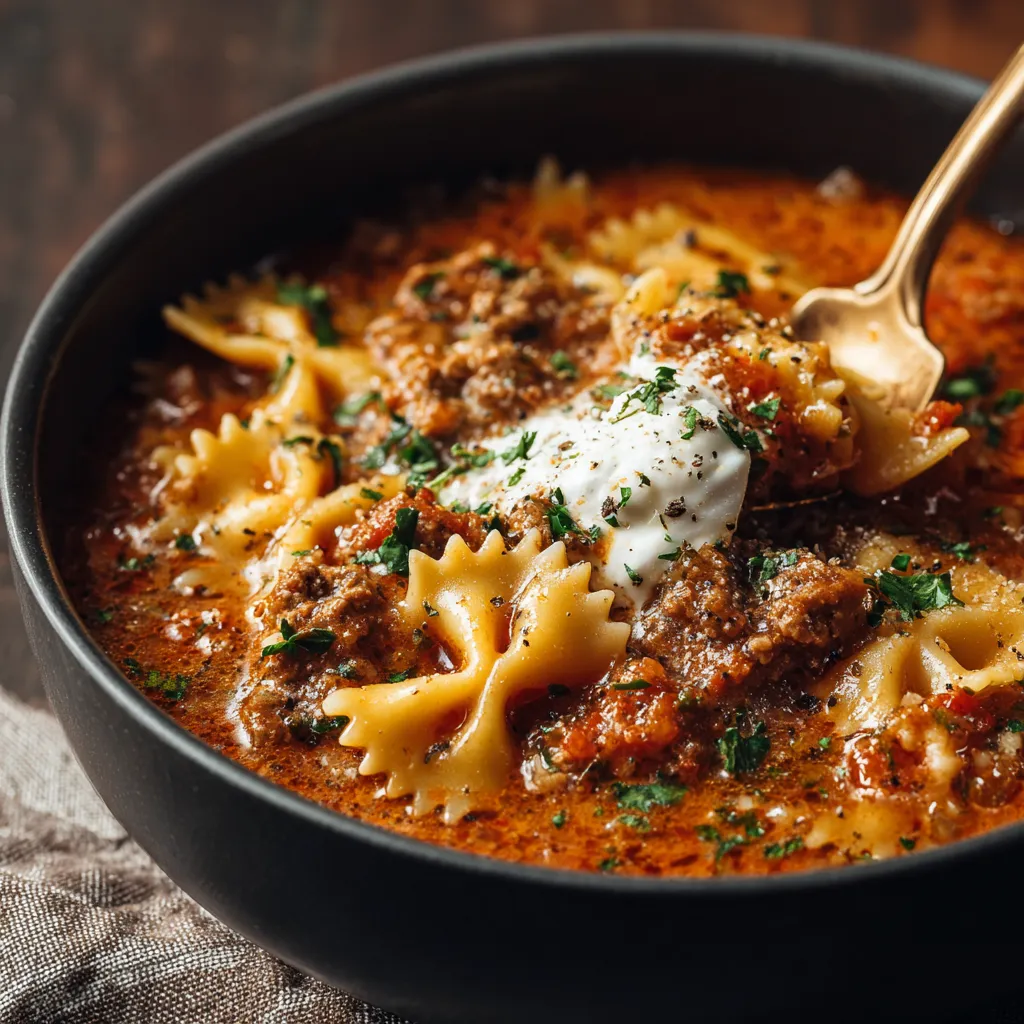 This recipe aims to deliver all the comforting flavors of lasagna in a warm, satisfying soup.
Ingredients:
- 1 pound Italian sausage (sweet or hot, or a mix), removed from casings
- 1 large onion, chopped
- 2 cloves garlic, minced
- 1 red bell pepper, chopped
- 1 (28 ounce) can crushed tomatoes
- 1 (15 ounce) can tomato sauce
- 4 cups chicken broth
- 1 teaspoon dried oregano
- 1 teaspoon dried basil
- 1/2 teaspoon salt
- 1/4 teaspoon black pepper
- 8 ounces lasagna noodles, broken into bite-sized pieces
- 1 cup ricotta cheese
- 1/2 cup grated Parmesan cheese
- 1/4 cup chopped fresh parsley, for garnish
- Mozzarella cheese, shredded, for garnish
Instructions:
- In a large pot or Dutch oven, brown the Italian sausage over medium-high heat, breaking it up with a spoon. Drain off any excess grease.
- Add the onion, garlic, and bell pepper to the pot and cook until softened, about 5-7 minutes.
- Stir in the crushed tomatoes, tomato sauce, chicken broth, oregano, basil, salt, and pepper. Bring to a simmer.
- Add the broken lasagna noodles and cook until tender, about 10-12 minutes.
- While the soup is simmering, prepare the ricotta cheese mixture. In a small bowl, combine the ricotta cheese, Parmesan cheese, and parsley.
- To serve, ladle the soup into bowls. Top each bowl with a dollop of the ricotta cheese mixture and a sprinkle of shredded mozzarella cheese.
The Culinary Detective: My Lasagna Soup Investigation
My first few attempts were a disaster. Honestly, they tasted like vaguely tomato-flavored pasta water with sad, overcooked noodles. Then, I had an “Aha!” moment – the key wasn’t just throwing ingredients into a pot, but understanding the layering of flavors that makes lasagna so special.The Great Sausage Debacle
Initially, I used pre-cooked sausage slices, thinking it would save time. Big mistake! The flavor was bland and lifeless. Using raw Italian sausage, removed from its casings and browned properly, made a world of difference. The rendered fat infused the entire soup with a rich, savory depth that was previously missing. It highlighted the need for building flavor from the ground up, much like a traditional lasagna.The Tomato Tang Tango
Like many of you, I initially thought more tomatoes equaled more flavor. Wrong again! The soup became overwhelmingly acidic. The solution? A combination of crushed tomatoes and tomato sauce provides a balanced base. A pinch of sugar also helped to mellow the acidity. Furthermore, I discovered that using high-quality canned tomatoes significantly improved the overall taste.Noodle Nightmare No More
The biggest challenge was preventing the noodles from turning into a mushy mess. I tried adding them at different points in the cooking process, but nothing seemed to work. The breakthrough came when I realized I was using too much liquid. Reducing the amount of broth and adding the noodles towards the very end, just until they were cooked *al dente*, solved the problem. I also experimented with different pasta shapes, but broken lasagna noodles truly captured the essence of the dish. It reminded me of how much fun it is to make Chicken Noodle Soup, but with an Italian flair.Cheese, Please!
My first iteration involved stirring the ricotta directly into the soup, which resulted in a grainy, unappetizing texture. The answer was to use dollops of ricotta cheese mixture as a topping. This not only added a creamy, contrasting texture but also allowed the flavors of the ricotta and Parmesan to shine through. I also found that grating fresh Parmesan cheese right before serving elevated the dish to another level. It made me think about other soups, such as Italian Penicillin Soup, and how important garnishes and toppings can be.The Foolproof Finale: Lasagna Soup Perfection Achieved
Here’s the definitive, step-by-step guide to achieving lasagna soup nirvana:- Brown the Sausage Powerfully: Use raw Italian sausage, removed from its casings, and brown it until nicely caramelized. This is the foundation of the flavor.
- Sauté Aromatics Expertly: Don’t rush the onion, garlic, and bell pepper. Cook them until softened and fragrant to build depth of flavor.
- Tomato Tango in Harmony: Use a blend of crushed tomatoes and tomato sauce for a balanced tomato base. Adjust sweetness with a pinch of sugar, if needed.
- Broth Management is Critical: Use just enough broth to cover the ingredients. Too much liquid will dilute the flavor and lead to mushy noodles.
- Noodle Timing is Everything: Add the broken lasagna noodles towards the end and cook until just *al dente*. Avoid overcooking at all costs.
- Cheese is the Star: Use dollops of ricotta cheese mixture as a topping, and garnish with freshly grated Parmesan cheese for the ultimate creamy, cheesy experience. Think of it like White Chicken Lasagna Soup, but even simpler.
- Herb Heaven: Don’t underestimate the power of fresh parsley as a garnish. It adds a bright, herbaceous note that perfectly complements the rich flavors of the soup. Consider adding other fresh herbs like oregano or basil as well.
What kind of sausage is recommended for the best flavor in lasagna soup?
The recipe recommends using raw Italian sausage, removed from its casings and browned. Pre-cooked sausage slices were found to be bland.
How do you prevent the lasagna noodles from becoming mushy in the soup?
To prevent mushy noodles, reduce the amount of broth used and add the broken lasagna noodles towards the end of the cooking process, cooking them only until they are *al dente*.
Why is the ricotta cheese added as a topping instead of being stirred directly into the soup?
Adding ricotta cheese directly to the soup can result in a grainy texture. Using dollops of a ricotta cheese mixture as a topping provides a creamy, contrasting texture and allows the flavors of the ricotta and Parmesan to shine through.
What is the best way to balance the acidity of the tomatoes in the lasagna soup?
Using a combination of crushed tomatoes and tomato sauce helps to balance the acidity. A pinch of sugar can also be added to mellow the acidity if needed.
Quick Lasagna Soup
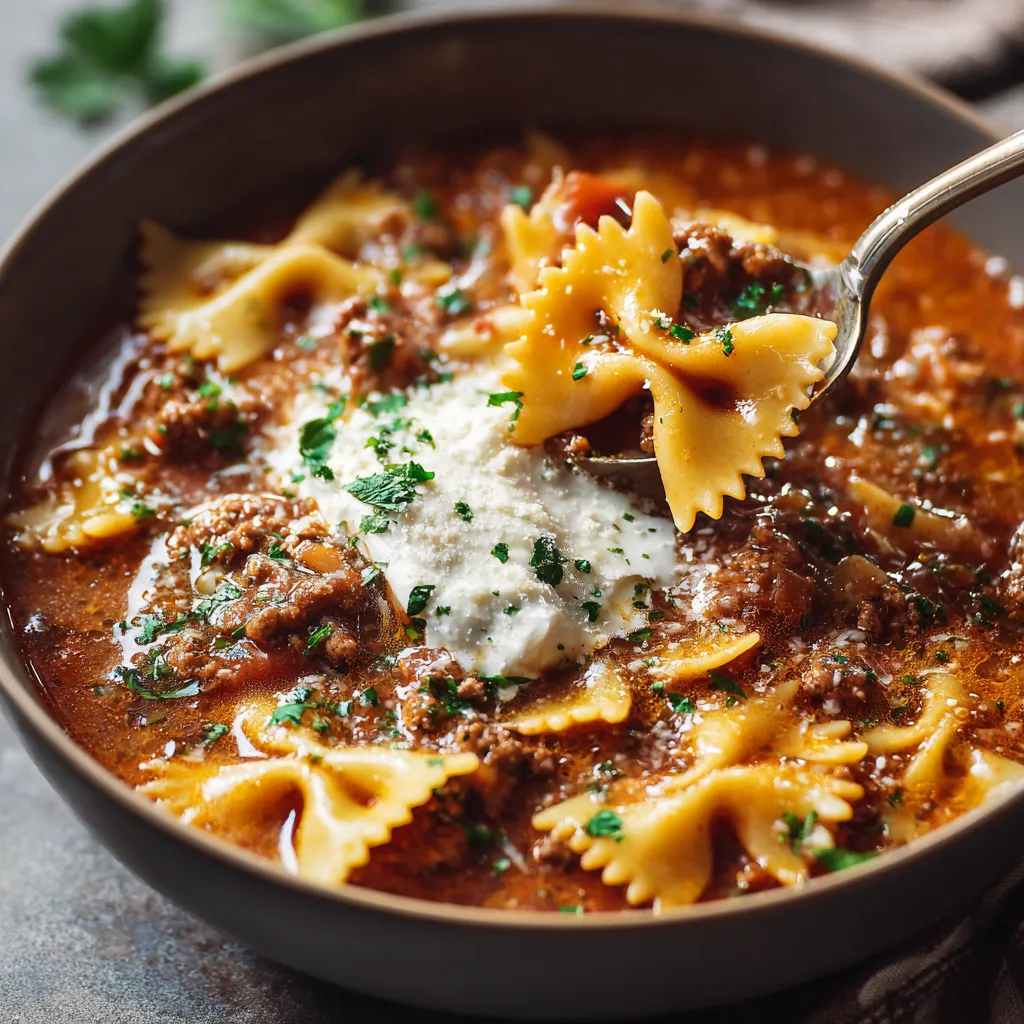
This quick lasagna soup recipe delivers all the comforting flavors of traditional lasagna in a warm, satisfying bowl. It’s a deconstructed version of the classic, streamlining the process without sacrificing the rich, cheesy, and savory taste we all love.
Ingredients
Equipment
Method
- In a large pot or Dutch oven, brown the Italian sausage over medium-high heat, breaking it up with a spoon. Drain off any excess grease.
- Add the onion, garlic, and bell pepper to the pot and cook until softened, about 5-7 minutes.
- Stir in the crushed tomatoes, tomato sauce, chicken broth, oregano, basil, salt, and pepper. Bring to a simmer.
- Add the broken lasagna noodles and cook until tender, about 10-12 minutes.
- While the soup is simmering, prepare the ricotta cheese mixture. In a small bowl, combine the ricotta cheese, Parmesan cheese, and parsley.
- To serve, ladle the soup into bowls. Top each bowl with a dollop of the ricotta cheese mixture and a sprinkle of shredded mozzarella cheese.
Notes
For a richer flavor, use high-quality canned tomatoes. To prevent the noodles from becoming mushy, add them towards the end of the cooking process and cook until just al dente. A pinch of sugar can help balance the acidity of the tomatoes. Leftovers can be stored in an airtight container in the refrigerator for up to 3 days.