
What if you could enjoy all the comforting flavors of stuffed peppers without the fuss of stuffing and baking? The answer, my friends, is Stuffed Pepper Soup, but achieving the *perfect* balance of flavors and textures is trickier than it seems.
The Deconstructed Delight: Understanding the Science of Stuffed Pepper Soup
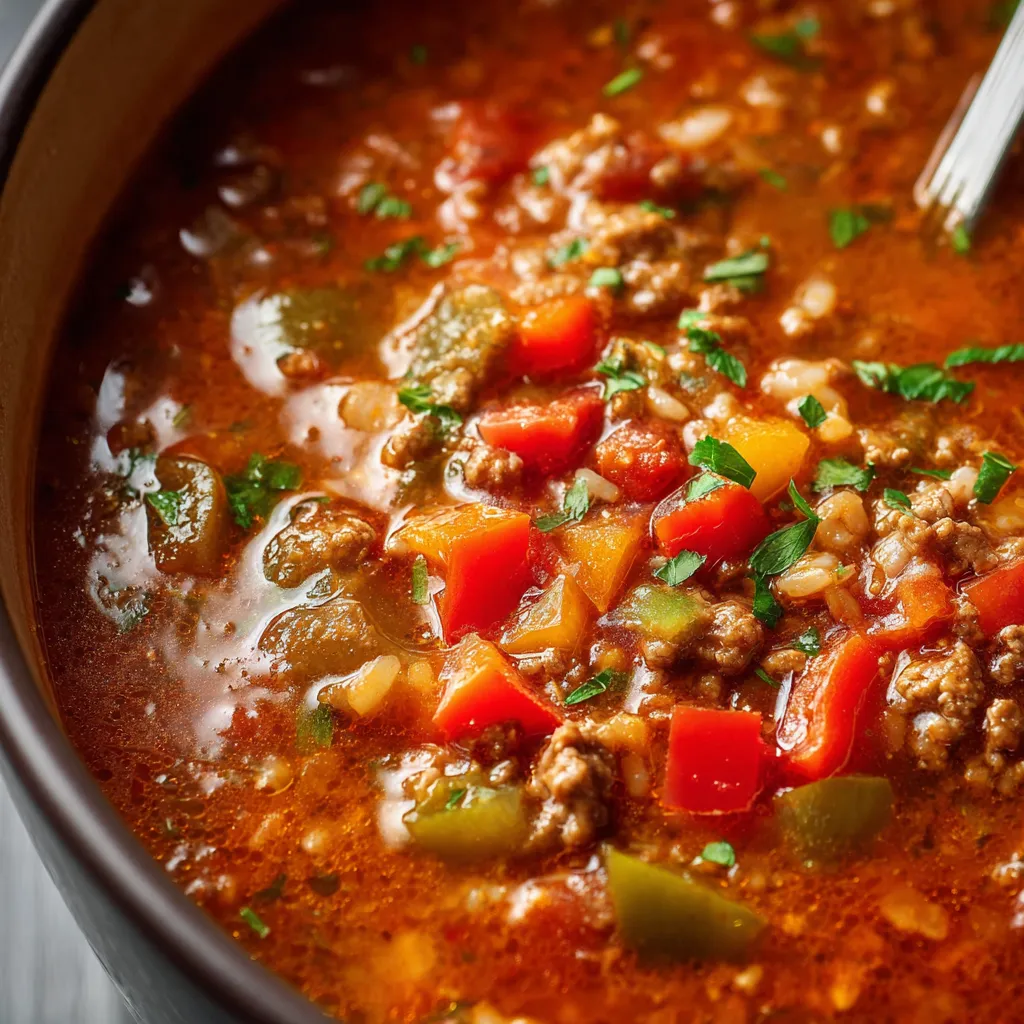
At its core, Stuffed Pepper Soup is a lesson in flavor synergy and textural harmony. We’re essentially building a complex flavor profile from simple ingredients: sweet bell peppers, savory ground meat (usually beef or sausage), aromatic rice, tangy tomatoes, and a blend of herbs and spices. The key is to understand how each component contributes to the final result and how to manipulate them to achieve the desired effect.
The Maillard reaction, the browning of the meat, is crucial for developing depth of flavor. Searing the ground meat before adding it to the soup creates those delicious, browned bits that contribute so much savory goodness. Similarly, lightly sautéing the vegetables, especially the peppers and onions, helps to release their natural sugars and create a more complex flavor base. The acid in the tomatoes balances the richness of the meat and provides a necessary tang that cuts through the heartiness of the soup. Rice acts as both a thickener and a textural element, absorbing the flavors of the broth and providing a satisfying chew.
Finally, and perhaps most importantly, we must consider the delicate dance between moisture and flavor concentration. Too much liquid, and the soup will be bland and watery. Too little, and it will be thick and pasty. The cooking time also plays a critical role, allowing the flavors to meld and deepen over time. It’s a balancing act, but with a little understanding and experimentation, anyone can master it.
The Ultimate Stuffed Pepper Soup Recipe
Ingredients
- 1 tablespoon olive oil
- 1 large onion, chopped
- 2 cloves garlic, minced
- 1 green bell pepper, chopped
- 1 red bell pepper, chopped
- 1 pound ground beef (or Italian sausage)
- 1 (28 ounce) can crushed tomatoes
- 1 (15 ounce) can tomato sauce
- 4 cups beef broth (or chicken broth)
- 1 cup cooked rice (long grain or brown rice)
- 1 teaspoon dried oregano
- 1/2 teaspoon dried basil
- 1/4 teaspoon red pepper flakes (optional)
- Salt and pepper to taste
- Optional toppings: shredded cheddar cheese, sour cream, fresh parsley
Instructions
- Heat olive oil in a large pot or Dutch oven over medium heat. Add onion and cook until softened, about 5 minutes. Add garlic and cook for 1 minute more.
- Add green and red bell peppers and cook until slightly softened, about 5 minutes.
- Add ground beef (or Italian sausage) and cook, breaking it up with a spoon, until browned. Drain off any excess grease.
- Stir in crushed tomatoes, tomato sauce, beef broth, cooked rice, oregano, basil, and red pepper flakes (if using). Season with salt and pepper to taste.
- Bring to a boil, then reduce heat and simmer for at least 30 minutes, or up to an hour, to allow the flavors to meld. The longer it simmers, the better it tastes!
- Serve hot, topped with shredded cheddar cheese, sour cream, and fresh parsley, if desired.
Confessions of a Culinary Investigator: My Stuffed Pepper Soup Saga
The Early Days: A Watery Grave
My first few attempts were a disaster. Like many of you, I initially thought, “How hard can it be? Just throw everything in a pot and simmer!” The result? A watery, bland concoction that tasted vaguely of tomatoes and regret. The rice was mushy, the peppers were lifeless, and the whole thing lacked that comforting, savory depth I was craving. It reminded me of a sad version of Vegetable Soup, only worse.
The Browning Breakthrough: Maillard Magic
Then, I had an “Aha!” moment. I remembered my culinary school training and the importance of the Maillard reaction. I realized I was skipping a crucial step: browning the meat properly. I started searing the ground beef in a separate pan before adding it to the soup, and *voila!* The difference was night and day. The browned bits added a depth of flavor that was previously missing, creating a much more satisfying and complex base for the soup. This alone bumped up the recipe’s rating!
Rice to the Occasion: Grain Game Strong
Next, I tackled the rice situation. Initially, I was adding uncooked rice directly to the soup, which resulted in a starchy, unevenly cooked mess. I experimented with different types of rice (long grain, brown rice, even Arborio!), and ultimately found that using *cooked* rice was the key. Adding cooked rice at the end of the cooking process prevented it from becoming mushy and allowed it to retain its individual texture while still absorbing the flavors of the broth. I found that brown rice added a nutty flavor that worked really well, similar to the hearty flavor profile of Italian Penicillin Soup.
Tomato Tango: Acidic Awakenings
The tomato component also needed tweaking. I started with just tomato sauce, but the soup lacked brightness. I experimented with adding a can of diced tomatoes and a splash of tomato paste. Finally, I landed on a combination of crushed tomatoes and tomato sauce, which provided the perfect balance of sweetness, acidity, and texture. I even tried fire-roasted tomatoes one time, which gave it a wonderful smokey flavor, not unlike the subtle heat in Creamy Taco Soup. I’ve also found that adding a pinch of sugar can help balance the acidity of the tomatoes, especially if they are particularly tart.
Pepper Power: Beyond the Bell
While bell peppers are traditional, I wondered if other peppers might add interesting flavors. I tried adding a poblano pepper, finely diced, for a touch of smokiness and mild heat. It was a revelation! It added a subtle complexity that elevated the soup to another level. Just be careful not to add too much, as poblano peppers can sometimes be unpredictable in their heat levels. This made me think of other variations, similar to the options available for Taco Soup, where you can really customize the flavor.
The Simmer Secret: Patience is a Virtue
Finally, I learned the importance of simmering. Rushing the process resulted in a soup that tasted disjointed and underdeveloped. Allowing the soup to simmer for at least 30 minutes, or even longer, allowed the flavors to meld and deepen, creating a truly harmonious and satisfying dish. It’s like the difference between a quick saute and a long, slow braise – the extra time allows the ingredients to truly come together.
The Foolproof Finale: Mastering the Stuffed Pepper Soup Technique
- Brown the Meat: Sear the ground meat in a separate pan before adding it to the soup. This is non-negotiable.
- Sauté the Vegetables: Don’t just throw the onions and peppers into the pot raw. Sauté them in olive oil until softened to release their natural sweetness.
- Use Cooked Rice: Add cooked rice at the end of the cooking process to prevent it from becoming mushy.
- Balance the Tomatoes: Use a combination of crushed tomatoes and tomato sauce for the perfect balance of sweetness and acidity. A pinch of sugar can help if your tomatoes are too tart.
- Simmer, Simmer, Simmer: Allow the soup to simmer for at least 30 minutes, or longer, to allow the flavors to meld and deepen.
- Taste and Adjust: Season with salt, pepper, and other spices to taste. Don’t be afraid to experiment!
- Garnish with Gusto: Top with shredded cheese, sour cream, fresh parsley, or any other toppings you enjoy.
Why is browning the ground meat so important in Stuffed Pepper Soup?
Browning the ground meat, also known as the Maillard reaction, is crucial for developing a depth of flavor. It creates delicious, browned bits that contribute savory goodness to the soup, creating a more satisfying and complex base.
Should I add raw or cooked rice to the Stuffed Pepper Soup, and why?
You should add cooked rice to the soup. Adding uncooked rice can result in a starchy, unevenly cooked mess. Using cooked rice at the end of the cooking process prevents it from becoming mushy and allows it to retain its individual texture while still absorbing the flavors of the broth.
What’s the best way to balance the tomato flavor in Stuffed Pepper Soup?
The article suggests using a combination of crushed tomatoes and tomato sauce for the perfect balance of sweetness, acidity, and texture. If the tomatoes are particularly tart, you can also add a pinch of sugar.
How long should I simmer the Stuffed Pepper Soup?
The soup should simmer for at least 30 minutes, or even longer, to allow the flavors to meld and deepen. The longer it simmers, the more harmonious and satisfying the dish will be.
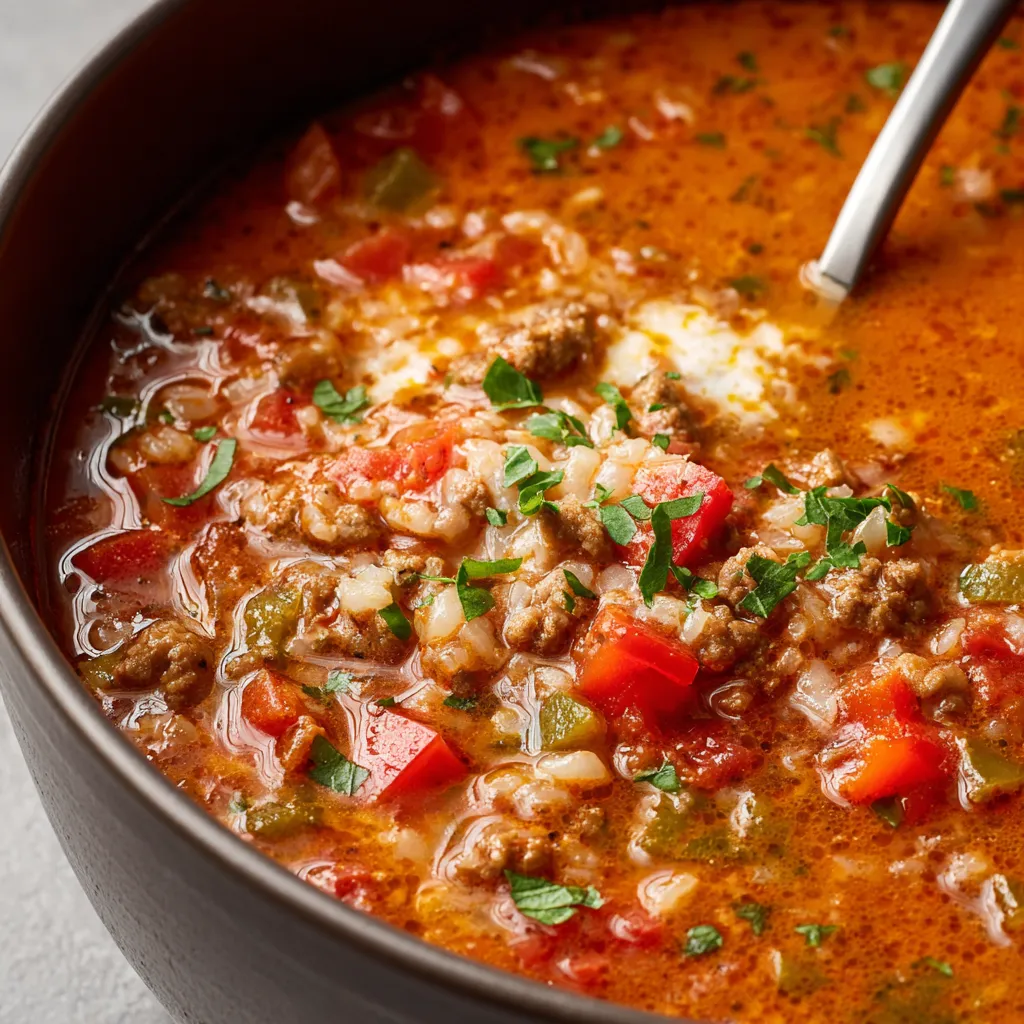
Best Stuffed Pepper Soup Ever
Ingredients
Equipment
Method
- Heat olive oil in a large pot or Dutch oven over medium heat.
- Add onion and cook until softened, about 5 minutes.
- Add garlic and cook for 1 minute more.
- Add green and red bell peppers and cook until slightly softened, about 5 minutes.
- Add ground beef or Italian sausage and cook, breaking it up with a spoon, until browned. Drain off any excess grease.
- Stir in crushed tomatoes, tomato sauce, beef broth, cooked rice, oregano, basil, and red pepper flakes (if using). Season with salt and pepper to taste.
- Bring to a boil, then reduce heat and simmer for at least 30 minutes, or up to an hour, to allow the flavors to meld. The longer it simmers, the better it tastes!
- Serve hot, topped with shredded cheddar cheese, sour cream, and fresh parsley, if desired.