
Unlocking Peanutty Perfection: The Science Behind the Wrap
The success of a truly great Thai Peanut Chicken Wrap hinges on understanding a few key scientific principles, mainly relating to emulsion stability, flavor layering, and moisture control. The peanut sauce itself is an emulsion, a suspension of oil (from the peanuts) in water (from the other sauce ingredients). If the emulsion breaks, you get an oily, separated mess. Proper emulsification requires a stabilizer (often an acid like vinegar or lime juice) and careful blending. Flavor layering is crucial: you need sweet, savory, spicy, and acidic notes to create that quintessential Thai flavor profile. Finally, moisture is the enemy of a good wrap. Soggy wraps are sad wraps. Controlling moisture content in both the chicken and the fillings is paramount to maintaining textural integrity.The Ultimate Thai Peanut Chicken Wrap Recipe
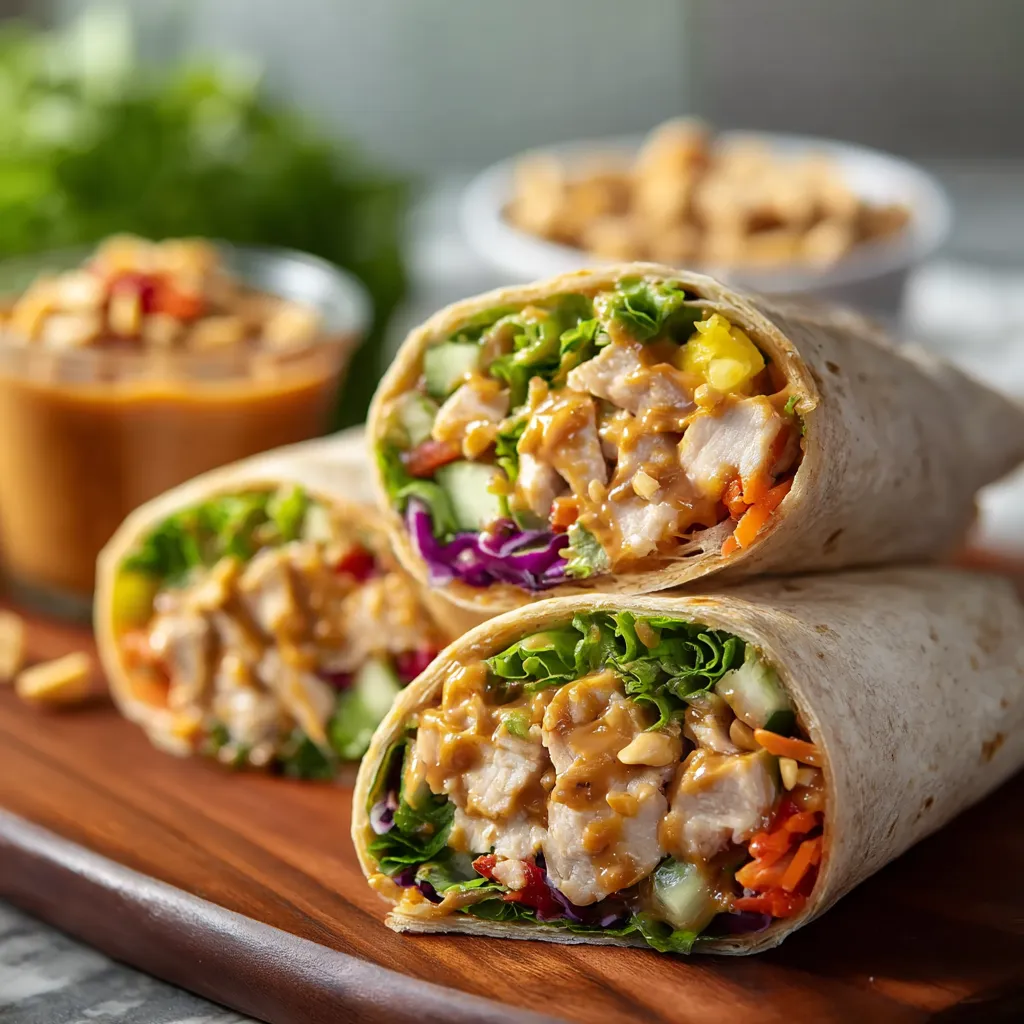 This recipe is the culmination of my (many) experiments and is designed to be foolproof, delivering perfect Thai Peanut Chicken Wraps every time.
Yields
Makes 4 wrapsPrep time
20 minutesCook time
20 minutesIngredients
- For the Chicken:
- 1.5 lbs boneless, skinless chicken thighs, cut into 1-inch pieces
- 1 tbsp soy sauce
- 1 tbsp cornstarch
- 1 tsp ginger, grated
- 1 clove garlic, minced
- 1 tbsp vegetable oil
- For the Peanut Sauce:
- 1/2 cup peanut butter (smooth or crunchy, your preference)
- 1/4 cup soy sauce
- 2 tbsp rice vinegar
- 2 tbsp honey (or maple syrup for vegan)
- 2 tbsp lime juice
- 1 tbsp sesame oil
- 1 tbsp sriracha (or more, to taste)
- 2 tbsp water (or more, as needed to thin)
- 1 clove garlic, minced
- 1/2 tsp ginger, grated
- For the Wraps:
- 4 large tortillas (whole wheat, spinach, or your favorite)
- 1 cup shredded carrots
- 1 cup shredded red cabbage
- 1/2 cup chopped cilantro
- 1/4 cup chopped peanuts, for garnish
- Lime wedges, for serving (optional)
Equipment
- Large skillet or wok
- Mixing bowl
- Whisk
- Cutting board
- Sharp knife
Instructions
- Marinate the Chicken: In a mixing bowl, combine the chicken pieces with soy sauce, cornstarch, grated ginger, and minced garlic. Mix well to coat and let it marinate for at least 15 minutes (or up to an hour in the refrigerator).
- Prepare the Peanut Sauce: While the chicken marinates, whisk together the peanut butter, soy sauce, rice vinegar, honey, lime juice, sesame oil, sriracha, water, minced garlic, and grated ginger in a separate bowl. Adjust the amount of water to achieve your desired consistency. The sauce should be thick but pourable.
- Cook the Chicken: Heat vegetable oil in a large skillet or wok over medium-high heat. Add the marinated chicken in a single layer (you may need to do this in batches to avoid overcrowding). Cook for 5-7 minutes, or until the chicken is cooked through and slightly browned.
- Combine Chicken and Sauce: Pour the peanut sauce over the cooked chicken and stir to coat evenly. Simmer for 2-3 minutes, allowing the sauce to thicken slightly and the chicken to absorb the flavors.
- Assemble the Wraps: Warm the tortillas according to package directions. Place a generous amount of the peanut chicken mixture in the center of each tortilla. Top with shredded carrots, shredded red cabbage, and chopped cilantro.
- Garnish and Serve: Fold the sides of the tortilla inward and roll tightly to create a wrap. Cut the wraps in half (optional) and garnish with chopped peanuts. Serve immediately with lime wedges, if desired.
The Culinary Investigation: My Quest for the Perfect Wrap
Like many of you, I initially thought Thai Peanut Chicken Wraps were a no-brainer. Chicken, peanut sauce, veggies, wrap it up – what could go wrong? My first few attempts were a disaster. The chicken was dry, the sauce was either too thick or too runny, and the wraps were soggy before I even took a bite. So, I embarked on a culinary investigation to uncover the secrets to truly outstanding Thai Peanut Chicken Wraps.The Case of the Dry Chicken
My initial approach involved simply pan-frying chicken breast until cooked through. The result? Tough, dry chicken that completely lacked flavor. Then, I had an “Aha!” moment: chicken thighs. Not only are they more forgiving to cook, but their higher fat content keeps them incredibly moist and flavorful. The marinade also proved crucial. The cornstarch creates a barrier that helps to seal in moisture during cooking, resulting in tender, juicy chicken every time. The flavor profile of this dish is also similar to the Chicken Ramen Stir Fry, so I tried some of the marinade techniques from that recipe.Decoding the Peanut Sauce Puzzle
The peanut sauce was another challenge. My first attempts resulted in a gloppy, uneven mess. I quickly realized that proper emulsification was key. Using warm water and whisking vigorously helped to combine the peanut butter, soy sauce, and other ingredients into a smooth, homogenous sauce. I also experimented with different types of peanut butter. While smooth peanut butter produced a classic creamy sauce, I found that using crunchy peanut butter added a delightful textural element. Another revelation was the importance of adjusting the water content. The sauce should be thick enough to cling to the chicken but thin enough to easily coat the fillings. If you are a fan of peanut sauces, you might like the Bang Bang Chicken Bowl, though it does have some key differences.Battling the Soggy Wrap Blues
Soggy wraps were perhaps the most frustrating issue. I tried everything from toasting the tortillas to wrapping the chicken and veggies separately. Then, I had another “Aha!” moment: controlling the moisture content of the fillings. By using shredded carrots and red cabbage, which are naturally drier than other vegetables, I was able to significantly reduce the amount of moisture in the wrap. Also, ensuring that the chicken was not overly saturated with sauce before assembling the wraps helped to prevent sogginess. I also learned the importance of serving the wraps immediately after assembly. Letting them sit for too long will inevitably lead to soggy wraps. Thinking about the Cheesy Garlic Chicken Wraps, I was reminded of how important it is to consume wraps quickly after making them.The Art of Flavor Layering
Finally, achieving that complex, balanced Thai flavor profile required careful attention to detail. The combination of soy sauce, rice vinegar, honey, lime juice, sesame oil, and sriracha created a symphony of sweet, savory, spicy, and acidic notes that tantalized the taste buds. I also found that adding a small amount of grated ginger and minced garlic to both the chicken marinade and the peanut sauce amplified the overall flavor and added depth. This layering reminded me of the Street Corn Chicken Rice Bowl, where the layering of flavors makes the difference.The Foolproof Technique: Mastering the Art of the Thai Peanut Chicken Wrap
After countless experiments and tweaks, I’ve distilled the process down to a simple, foolproof technique:- Choose Chicken Thighs: They stay moist and tender during cooking.
- Marinate with Cornstarch: This creates a protective barrier and locks in moisture.
- Emulsify the Sauce: Whisk vigorously and adjust water for a smooth, pourable consistency.
- Use Drier Veggies: Shredded carrots and red cabbage minimize moisture.
- Don’t Over-Sauce: Ensure the chicken is coated but not swimming in sauce.
- Serve Immediately: Enjoy your wraps fresh for optimal texture and flavor.
Why are chicken thighs recommended over chicken breast for these wraps?
Chicken thighs are more forgiving to cook and their higher fat content keeps them incredibly moist and flavorful, unlike chicken breast which can become dry.
What is the purpose of cornstarch in the chicken marinade?
The cornstarch creates a barrier that helps to seal in moisture during cooking, resulting in tender, juicy chicken.
How do you prevent the peanut sauce from becoming a “gloppy, uneven mess”?
Proper emulsification is key. Using warm water and whisking vigorously helps to combine the peanut butter, soy sauce, and other ingredients into a smooth, homogenous sauce. Adjust the water content to achieve the desired consistency.
What vegetables are recommended to avoid soggy wraps and why?
Shredded carrots and red cabbage are recommended because they are naturally drier than other vegetables, which helps to reduce the amount of moisture in the wrap.
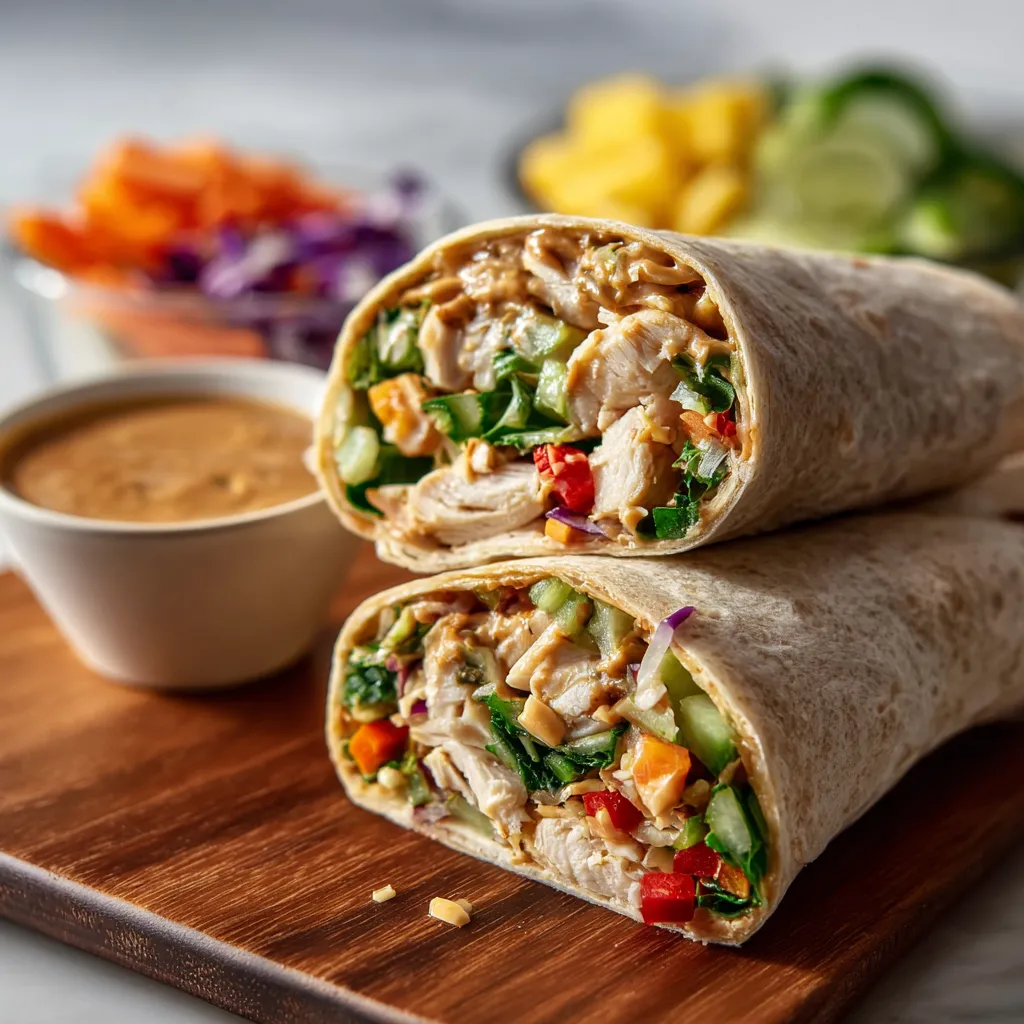
Easy Thai Peanut Chicken Wraps
These Thai Peanut Chicken Wraps are a delicious and convenient meal, perfect for a quick lunch or dinner. This recipe uses chicken thighs for maximum flavor and a homemade peanut sauce that’s both sweet and savory, all wrapped up in a warm tortilla with crunchy vegetables.
Ingredients
Equipment
Method
- Marinate the Chicken: In a mixing bowl, combine the chicken pieces with soy sauce, cornstarch, grated ginger, and minced garlic. Mix well to coat and let it marinate for at least 15 minutes (or up to an hour in the refrigerator).
- Prepare the Peanut Sauce: While the chicken marinates, whisk together the peanut butter, soy sauce, rice vinegar, honey, lime juice, sesame oil, sriracha, water, minced garlic, and grated ginger in a separate bowl. Adjust the amount of water to achieve your desired consistency. The sauce should be thick but pourable.
- Cook the Chicken: Heat vegetable oil in a large skillet or wok over medium-high heat. Add the marinated chicken in a single layer (you may need to do this in batches to avoid overcrowding). Cook for 5-7 minutes, or until the chicken is cooked through and slightly browned.
- Combine Chicken and Sauce: Pour the peanut sauce over the cooked chicken and stir to coat evenly. Simmer for 2-3 minutes, allowing the sauce to thicken slightly and the chicken to absorb the flavors.
- Assemble the Wraps: Warm the tortillas according to package directions. Place a generous amount of the peanut chicken mixture in the center of each tortilla. Top with shredded carrots, shredded red cabbage, and chopped cilantro.
- Garnish and Serve: Fold the sides of the tortilla inward and roll tightly to create a wrap. Cut the wraps in half (optional) and garnish with chopped peanuts. Serve immediately with lime wedges, if desired.
Notes
For best results, serve the wraps immediately after assembly to prevent sogginess. You can use smooth or crunchy peanut butter depending on your preference. Maple syrup can be substituted for honey to make the recipe vegan. Adjust the amount of sriracha to control the spice level. Chicken can be marinated up to one hour in the refrigerator.