
How do you transform the humble baked potato into a luxuriously creamy, intensely flavorful soup that rivals even the most sophisticated culinary creations?
The Starch Symphony: Understanding Potato Science
The magic of baked potato soup hinges on understanding the science of starch. Potatoes, primarily russets in this case, are packed with starch granules. These granules, when heated in the presence of liquid, undergo gelatinization. This is the process where they absorb water, swell, and release amylose and amylopectin, the two key starch molecules. Amylose contributes to the soup’s viscosity, while amylopectin creates a creamy texture. However, over-gelatinization, or excessive heating and stirring, can lead to a gummy, gluey soup. We need to coax the starch into action without letting it take over completely. Further, the Maillard reaction, occurring during the baking of the potatoes, contributes significantly to the depth of flavor. The browning of the potato skin and flesh creates hundreds of flavor compounds that simply cannot be replicated by boiling or steaming alone. This is why baking the potatoes is absolutely non-negotiable.
The Ultimate Baked Potato Soup Recipe
Ingredients:
- 4 large russet potatoes, scrubbed
- 4 tablespoons olive oil, divided
- 1 teaspoon kosher salt, divided
- 1/2 teaspoon black pepper, divided
- 6 slices bacon, cooked and crumbled
- 1 medium yellow onion, diced
- 2 cloves garlic, minced
- 4 cups chicken broth
- 1 cup heavy cream
- 1/2 cup sour cream
- 1/4 cup chopped fresh chives, for garnish
- 1 cup shredded cheddar cheese, for garnish
Instructions:
- Bake the Potatoes: Preheat oven to 400°F (200°C). Rub potatoes with 2 tablespoons olive oil and sprinkle with 1/2 teaspoon salt and 1/4 teaspoon pepper. Bake directly on the oven rack for 60-75 minutes, or until easily pierced with a fork.
- Prepare the Bacon and Aromatics: While potatoes are baking, cook bacon until crispy. Reserve the bacon grease. Crumble bacon and set aside. In the same pan, sauté onion in 1 tablespoon of reserved bacon grease (or olive oil) until softened, about 5 minutes. Add garlic and cook for 1 minute more, until fragrant.
- Scoop and Simmer: Once potatoes are cool enough to handle, cut them in half lengthwise. Scoop out the flesh, being careful to leave the skins intact (you can discard the skins or use them for potato skin appetizers). Add the potato flesh to a large pot.
- Blend and Enrich: Pour chicken broth into the pot with the potatoes. Use an immersion blender to blend until smooth. Alternatively, you can use a regular blender, working in batches.
- Create the Creamy Dream: Stir in the sautéed onion and garlic mixture, remaining 1/2 teaspoon salt and 1/4 teaspoon pepper. Bring to a simmer over medium heat. Reduce heat to low and stir in heavy cream and sour cream. Do not boil after adding the dairy.
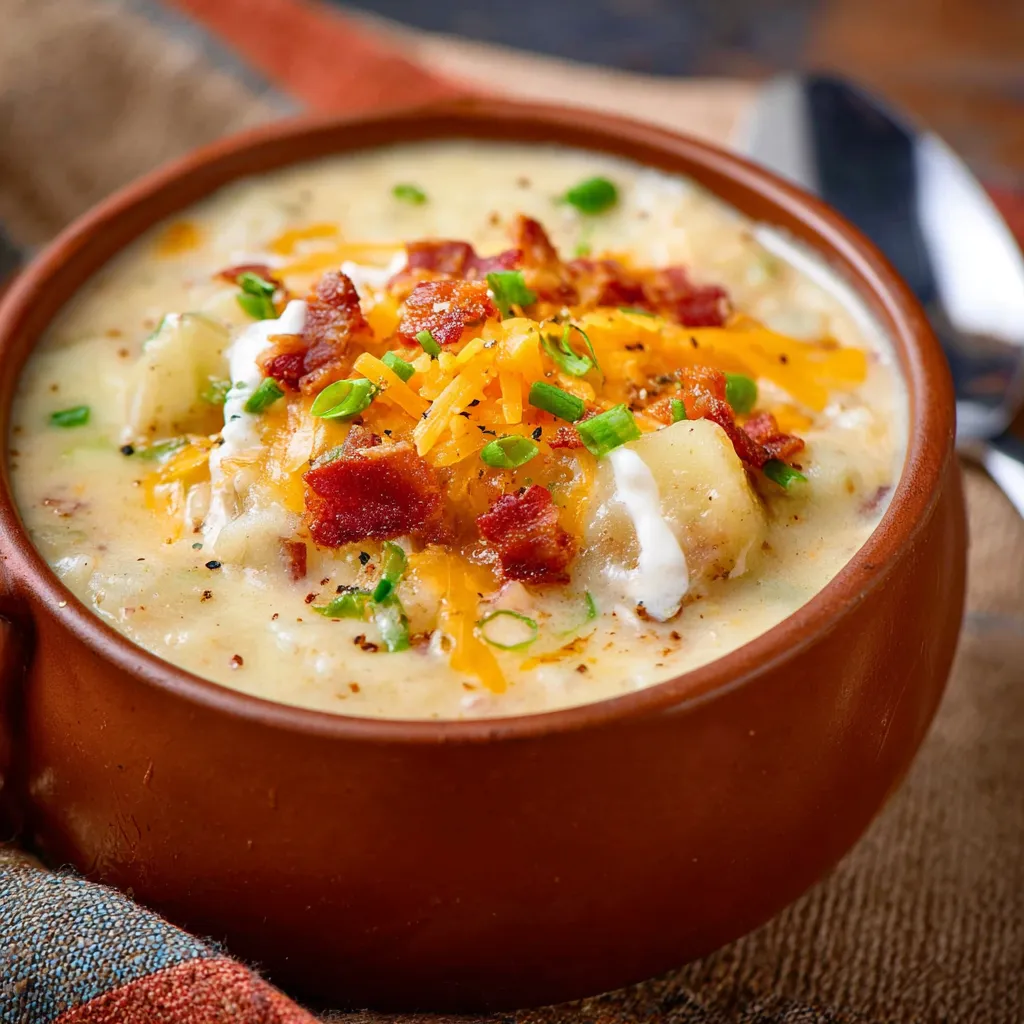
- Serve with Style: Ladle soup into bowls and garnish with crumbled bacon, shredded cheddar cheese, and chopped chives.
Confessions of a Culinary Investigator: My Baked Potato Soup Journey
The Early Days: A Starchy Struggle
My first few attempts at making baked potato soup were a disaster. Like many of you, I initially thought simply boiling potatoes would suffice. The result? A thin, watery soup lacking that signature creamy texture and deep, roasted flavor. It tasted vaguely of potato, but that’s about it. I also tried adding flour as a thickener, which resulted in a gummy mess. It was edible, but far from the luxurious experience I was aiming for. I even considered adding cornstarch but didn’t think it would be the right flavor.The “Aha!” Moment: Embracing the Bake
Then, I had an “Aha!” moment. It hit me that the *baked* part of baked potato soup wasn’t just a suggestion, it was the key! Roasting the potatoes concentrates their flavor and allows for the Maillard reaction to work its magic. The subtle caramelization adds an incredible depth that boiling simply can’t achieve. It completely changed the game. Also, I realized that the potato starch itself, when handled correctly, could provide all the thickening I needed, without resorting to flour or other additives. This is similar to how the right amount of starch gives a good consistency to Vegetable Soup.The Dairy Dilemma: Cream vs. Sour Cream
Next, I grappled with the dairy component. Should I use all cream? All sour cream? A combination? I experimented with different ratios. All cream resulted in a soup that was almost *too* rich, lacking a certain tanginess. All sour cream, on the other hand, made the soup a bit too acidic and prone to curdling if overheated. The perfect balance, I discovered, was a combination of both. The heavy cream provides the luxurious richness, while the sour cream adds a subtle tang that cuts through the fat and brightens the flavor. This is a similar balance to what is achieved in Chicken Corn Chowder.The Broth Brouhaha: Chicken vs. Vegetable
I also experimented with different broths. Vegetable broth worked, but it lacked the savory depth I was looking for. Chicken broth, particularly a good quality one, added a subtle umami that complemented the potatoes beautifully. It provided a backbone of flavor that tied all the other elements together. If you are looking for a soup with more broth options, try Creamy Taco Soup.The Bacon Bonus: To Render or Not to Render?
Finally, the bacon. While I initially just crumbled cooked bacon on top as a garnish, I realized that rendering the bacon first and using the rendered fat to sauté the onions and garlic amplified the smoky flavor and added another layer of richness to the soup. It was a subtle but significant improvement. You could also use a similar approach with sausage in Creamy Crockpot Chicken Gnocchi Soup.The Technique: A Foolproof Method for Baked Potato Soup Perfection
- Bake, Don’t Boil: Always bake your potatoes at 400°F (200°C) until soft. This is the foundation of flavor.
- Render the Bacon: Cook your bacon and reserve the rendered fat to sauté the onions and garlic. It adds a smoky depth that can’t be beat.
- Blend Smart: Use an immersion blender to puree the potatoes and broth directly in the pot for easy cleanup. If using a regular blender, work in batches and be careful of hot liquids.
- Dairy Balance: Strike the perfect balance between heavy cream and sour cream for richness and tang.
- Simmer, Don’t Boil: Add the dairy at the very end and gently simmer the soup. Boiling after adding the dairy can cause it to curdle.
- Garnish Generously: Don’t skimp on the toppings! Bacon, cheese, and chives are essential for the full baked potato experience. You can experiment with other flavors as well, such as the lemon in Creamy Lemon Chicken Orzo Soup.
- Season to Taste: Always taste and adjust the seasoning at the end. A little extra salt, pepper, or even a pinch of smoked paprika can make a big difference.
Why is it important to bake the potatoes instead of boiling them for baked potato soup?
Baking the potatoes allows for the Maillard reaction to occur, which creates hundreds of flavor compounds that boiling cannot replicate. It also concentrates the potato’s flavor and is key to achieving the soup’s signature roasted flavor.
What’s the best way to thicken the soup without using flour or cornstarch?
The potato starch itself, when handled correctly, provides all the thickening needed. Baking the potatoes and then blending them with the broth releases the starch, creating a creamy texture without needing additional thickeners.
What is the ideal ratio of heavy cream to sour cream in this soup, and why?
A combination of heavy cream and sour cream is ideal. Heavy cream provides luxurious richness, while sour cream adds a subtle tang that cuts through the fat and brightens the flavor. Using only cream can be too rich, while only sour cream can be too acidic.
Why is it important to simmer the soup gently after adding the dairy?
Boiling the soup after adding the heavy cream and sour cream can cause the dairy to curdle, ruining the texture of the soup. Simmering gently ensures the soup remains creamy and smooth.

ULTIMATE BAKED POTATO SOUP
Ingredients
Equipment
Method
- Preheat oven to 400°F (200°C). Rub potatoes with 2 tablespoons olive oil and sprinkle with 1/2 teaspoon salt and 1/4 teaspoon pepper.
- Bake directly on the oven rack for 60-75 minutes, or until easily pierced with a fork.
- While potatoes are baking, cook bacon until crispy. Reserve the bacon grease.
- Crumble bacon and set aside. In the same pan, sauté onion in 1 tablespoon of reserved bacon grease (or olive oil) until softened, about 5 minutes.
- Add garlic and cook for 1 minute more, until fragrant.
- Once potatoes are cool enough to handle, cut them in half lengthwise. Scoop out the flesh, being careful to leave the skins intact.
- Add the potato flesh to a large pot.
- Pour chicken broth into the pot with the potatoes. Use an immersion blender to blend until smooth. Alternatively, you can use a regular blender, working in batches.
- Stir in the sautéed onion and garlic mixture, remaining 1/2 teaspoon salt and 1/4 teaspoon pepper.
- Bring to a simmer over medium heat.
- Reduce heat to low and stir in heavy cream and sour cream. Do not boil after adding the dairy.
- Ladle soup into bowls and garnish with crumbled bacon, shredded cheddar cheese, and chopped chives.