
Decoding Deliciousness: The Science Behind Sausage Rigatoni
The magic of sausage rigatoni hinges on a few key scientific principles. First, the Maillard reaction, that browning process that creates hundreds of flavorful compounds, is crucial. This reaction occurs when amino acids and reducing sugars are heated, and it’s responsible for the deep, savory notes in browned sausage and caramelized onions. Second, the emulsification of fat into the sauce creates a creamy texture and helps carry flavors. Finally, the starch released from the pasta during cooking thickens the sauce, binding everything together in a harmonious whole. Like when making Italian Sausage Gnocchi Soup, achieving the perfect texture is key to a satisfying meal.The Ultimate Sausage Rigatoni Recipe
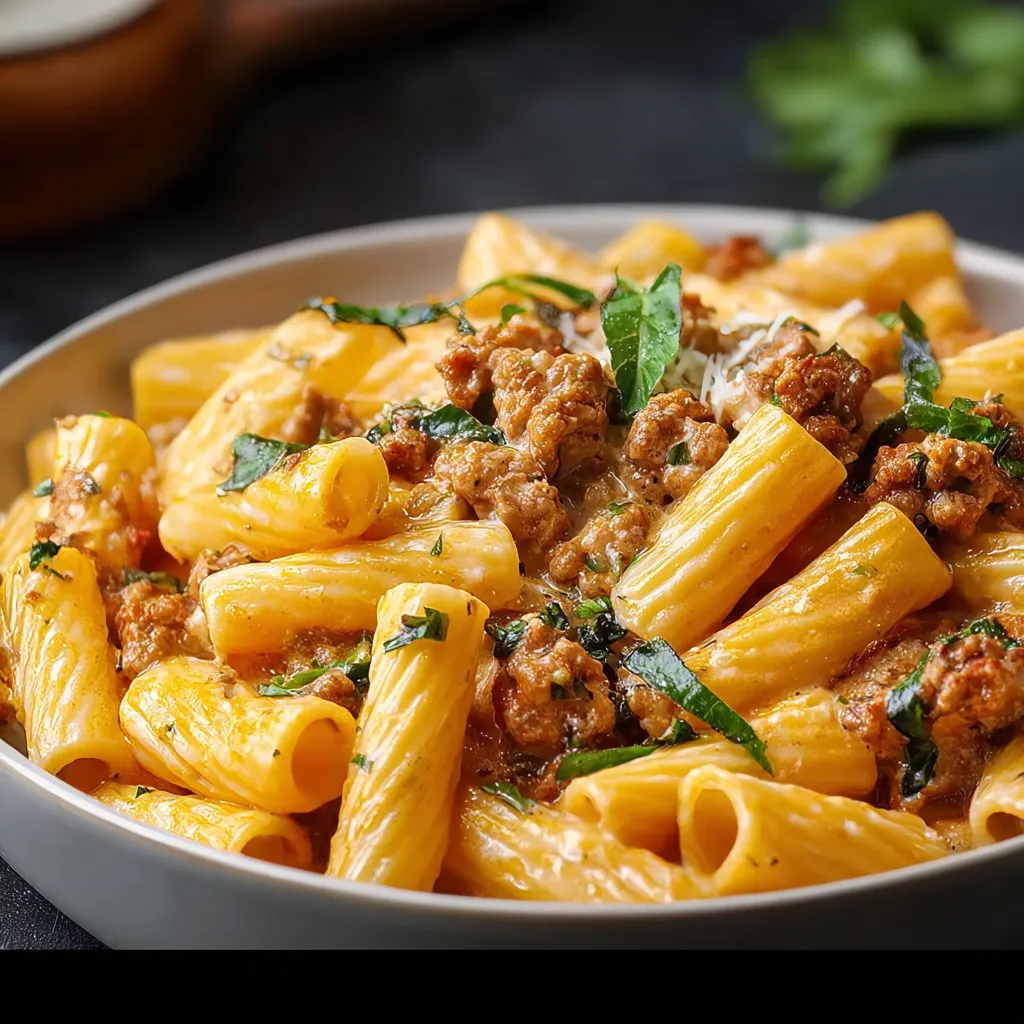 This recipe incorporates the principles I’ve learned, resulting in a sausage rigatoni that is both deeply flavorful and satisfyingly textured.
Ingredients:
- 1 pound rigatoni pasta
- 1 pound Italian sausage, removed from casings (sweet or hot, your preference)
- 1 large onion, diced
- 2 cloves garlic, minced
- 1 (28 ounce) can crushed tomatoes
- 1 (15 ounce) can tomato sauce
- 1/2 cup dry red wine (optional, but highly recommended)
- 1 teaspoon dried oregano
- 1/2 teaspoon dried basil
- 1/4 teaspoon red pepper flakes (optional)
- 1/4 cup heavy cream (optional, for extra richness)
- Salt and black pepper to taste
- Grated Parmesan cheese, for serving
- Fresh basil leaves, for garnish
- 2 tablespoons olive oil
Instructions:
- Bring a large pot of salted water to a boil. Add the rigatoni and cook according to package directions until al dente. Reserve about 1 cup of pasta water before draining.
- While the pasta is cooking, heat the olive oil in a large skillet or Dutch oven over medium-high heat. Add the sausage and cook, breaking it up with a spoon, until browned and cooked through. Remove the sausage from the skillet and set aside, leaving the rendered fat in the pan.
- Add the diced onion to the skillet and cook until softened and lightly caramelized, about 5-7 minutes, scraping up any browned bits from the bottom of the pan (this is where that Maillard reaction magic happens!). Add the minced garlic and cook for another minute until fragrant.
- Pour in the red wine (if using) and cook for 1-2 minutes, allowing the alcohol to evaporate. This deglazes the pan and adds depth of flavor.
- Stir in the crushed tomatoes, tomato sauce, oregano, basil, and red pepper flakes (if using). Season with salt and pepper to taste. Bring the sauce to a simmer, then reduce the heat to low and cook for at least 15 minutes, or up to an hour, stirring occasionally. The longer it simmers, the more the flavors will meld.
- Return the cooked sausage to the sauce and stir to combine. If the sauce is too thick, add a little of the reserved pasta water to thin it out.
- Stir in the cooked rigatoni and toss to coat. If using, stir in the heavy cream for extra richness.
- Serve immediately, garnished with grated Parmesan cheese and fresh basil leaves.
My Sausage Rigatoni Odyssey: From Bland to Brilliant
My first few attempts at sausage rigatoni were a disaster. Bland, watery sauce; rubbery sausage; overcooked pasta – the whole nine yards. Like many of you, I initially thought it was just a matter of throwing everything into a pot and hoping for the best. But I soon realized that true culinary success requires a deeper understanding of the ingredients and techniques involved. The flavors in Philly Cheese Steak Pasta are similarly reliant on the right cooking times and techniques.The Sausage Saga: Browning is Believing
My biggest mistake early on was not browning the sausage properly. I’d just throw it in the sauce raw, and it would end up pale and lifeless. Then, I had an “Aha!” moment: the Maillard reaction! By browning the sausage first, I unlocked a whole new level of flavor. The rendered fat also added richness to the sauce, creating a much more satisfying dish.The Sauce Solution: Patience is a Virtue
Another common pitfall is rushing the sauce. I used to just simmer it for a few minutes, but the flavors never fully developed. By simmering the sauce for at least 15 minutes, or even longer, the tomatoes become sweeter and more concentrated, and the herbs infuse their flavor throughout. This is similar to how flavors develop in Dutch Oven Tortellini Soup Sausage where slow cooking enhances the overall taste.Pasta Perfection: Al Dente or Bust
Overcooked pasta is the enemy of any pasta dish. I learned the hard way that al dente – slightly firm to the bite – is the only way to go. This not only provides a better texture but also allows the pasta to absorb the sauce more effectively. Reserving some pasta water is also crucial for adjusting the consistency of the sauce and ensuring that it clings to the pasta.The Foolproof Finale: The Sausage Rigatoni Revelation
After countless iterations, I finally cracked the code. Here’s my foolproof method for perfect sausage rigatoni every time:- Brown the sausage: Cook the sausage until deeply browned and crispy, rendering out its fat.
- Caramelize the onions: Take the time to properly caramelize the onions, scraping up any browned bits from the bottom of the pan.
- Deglaze with wine (optional): This adds depth and complexity to the sauce.
- Simmer the sauce: Simmer the sauce for at least 15 minutes, or longer, to allow the flavors to meld.
- Cook the pasta al dente: Drain the pasta while still slightly firm to the bite, reserving some pasta water.
- Combine and serve: Toss the pasta with the sauce, adding pasta water as needed to achieve the desired consistency. Serve immediately with Parmesan cheese and fresh basil.
What are the key principles for making delicious sausage rigatoni?
The key principles are the Maillard reaction (browning the sausage and caramelizing onions), emulsifying fat into the sauce for creaminess, and using starch from the pasta to thicken and bind the sauce.
Why is it important to reserve pasta water when making sausage rigatoni?
Reserving pasta water is crucial for adjusting the consistency of the sauce and ensuring that it clings to the pasta. It can be added to thin the sauce if it becomes too thick.
How long should I simmer the sauce for the best flavor?
The sauce should be simmered for at least 15 minutes, or up to an hour. Simmering allows the tomatoes to become sweeter and more concentrated, and the herbs to infuse their flavor throughout the sauce.
Why is browning the sausage important?
Browning the sausage, which triggers the Maillard reaction, unlocks a new level of flavor and renders fat that adds richness to the sauce, creating a more satisfying dish.
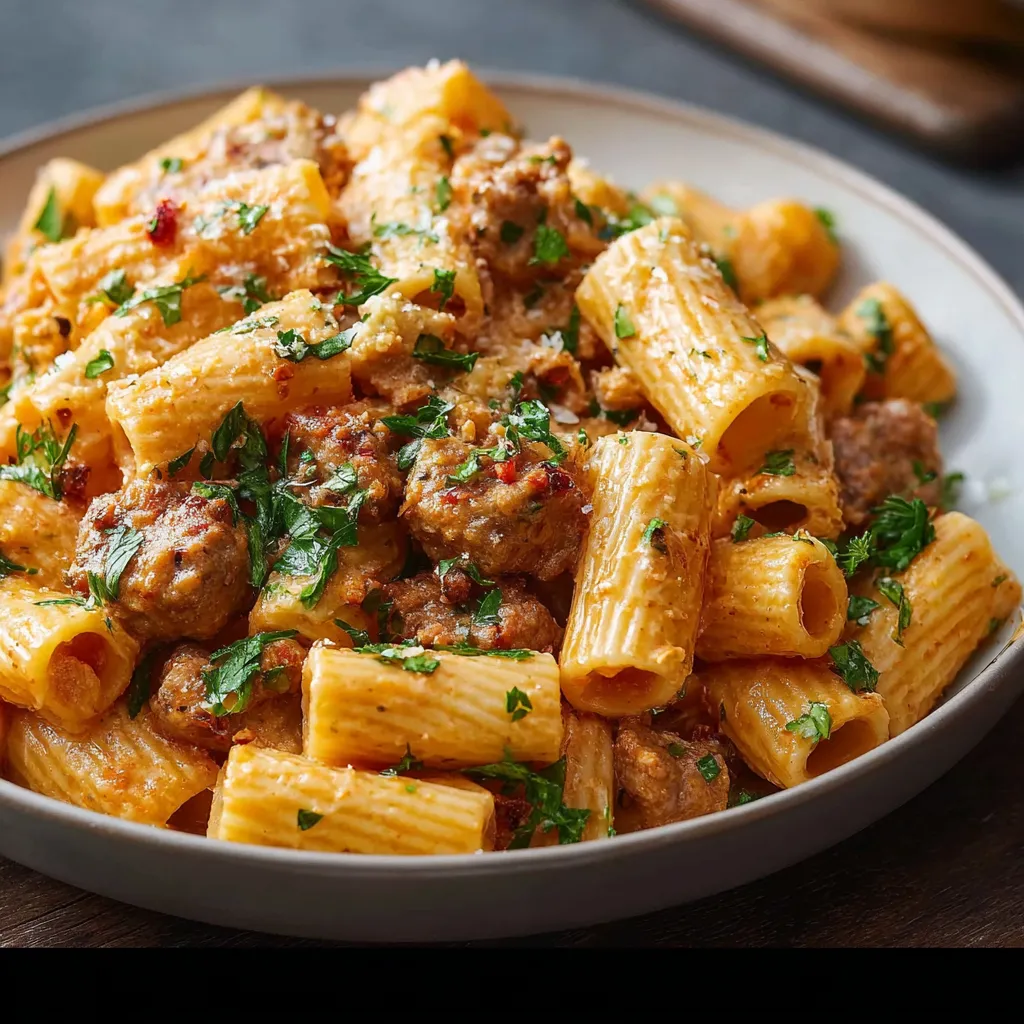
Quick Sausage Rigatoni
Ingredients
Equipment
Method
- Bring a large pot of salted water to a boil. Add the rigatoni and cook according to package directions until al dente. Reserve about 1 cup of pasta water before draining.
- While the pasta is cooking, heat the olive oil in a large skillet or Dutch oven over medium-high heat. Add the sausage and cook, breaking it up with a spoon, until browned and cooked through. Remove the sausage from the skillet and set aside, leaving the rendered fat in the pan.
- Add the diced onion to the skillet and cook until softened and lightly caramelized, about 5-7 minutes, scraping up any browned bits from the bottom of the pan. Add the minced garlic and cook for another minute until fragrant.
- Pour in the red wine (if using) and cook for 1-2 minutes, allowing the alcohol to evaporate.
- Stir in the crushed tomatoes, tomato sauce, oregano, basil, and red pepper flakes (if using). Season with salt and pepper to taste. Bring the sauce to a simmer, then reduce the heat to low and cook for at least 15 minutes, or up to an hour, stirring occasionally.
- Return the cooked sausage to the sauce and stir to combine. If the sauce is too thick, add a little of the reserved pasta water to thin it out.
- Stir in the cooked rigatoni and toss to coat. If using, stir in the heavy cream for extra richness.
- Serve immediately, garnished with grated Parmesan cheese and fresh basil leaves.