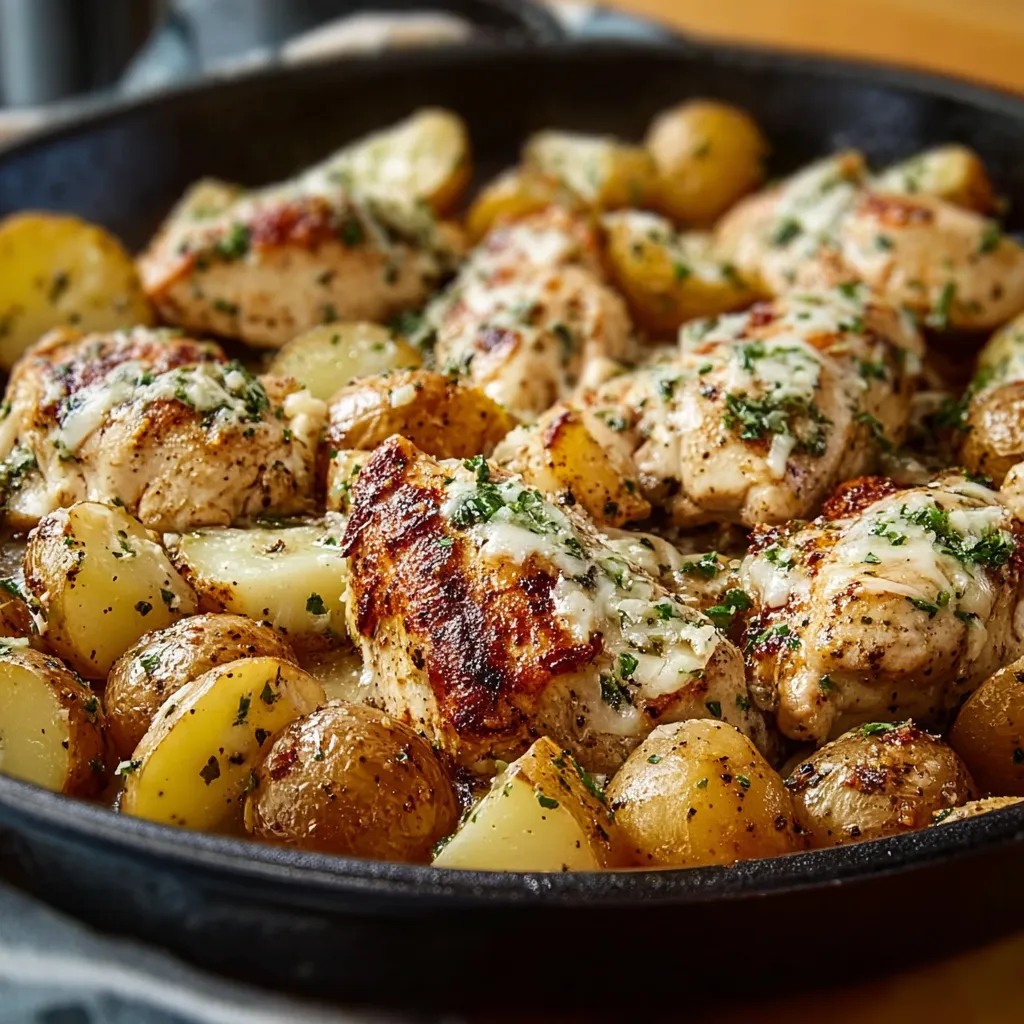

What if you could achieve perfectly cooked chicken and tender, flavorful potatoes in a single skillet, all bathed in a luscious garlic butter sauce, without the usual pitfalls of uneven cooking and bland flavors?
The Alchemic Dance of Garlic Butter: A Scientific Deconstruction
The magic of a great Garlic Butter Chicken and Potatoes Skillet lies in understanding the science behind each ingredient and how they interact. First, let’s consider the garlic. Garlic contains alliin, which, when crushed or chopped, converts to allicin – the compound responsible for its pungent aroma and flavor. Heat transforms allicin, mellowing the garlic’s intensity and releasing different flavor notes. Overcooking, however, can lead to bitterness, a common mistake I’ve seen (and made!).
Next, butter. Butter is more than just fat; it’s an emulsion of fat, water, and milk solids. As it melts and heats, the water evaporates, and the milk solids can brown, creating a nutty, complex flavor – the Maillard reaction in action! This browning is crucial for depth of flavor, but burning the milk solids results in a bitter, unpleasant taste. Clarified butter (ghee) eliminates the milk solids, allowing for higher cooking temperatures without burning, something to consider if you want a really deep sear on your chicken.
Finally, the chicken and potatoes. Chicken, particularly chicken breasts, can easily dry out if overcooked. The key is to cook it to an internal temperature of 165°F (74°C) and no higher. Potatoes, on the other hand, need time to soften and absorb the flavors of the garlic butter. Different potato varieties have different starch contents, affecting their cooking time and texture. Waxy potatoes like Yukon Golds hold their shape better, while starchy potatoes like Russets become fluffier. The size and shape of the potato pieces also significantly impact cooking time; uniform pieces ensure even cooking.
The Grand Recipe: Garlic Butter Chicken and Potatoes Skillet

Ingredients:
- 1.5 lbs boneless, skinless chicken breasts, cut into 1-inch cubes
- 1.5 lbs Yukon Gold potatoes, scrubbed and cut into 1-inch cubes
- 6 tbsp unsalted butter
- 6 cloves garlic, minced
- 1 tsp dried thyme
- 1 tsp dried rosemary
- 1/2 tsp paprika
- 1/4 tsp red pepper flakes (optional)
- Salt and freshly ground black pepper to taste
- 2 tbsp olive oil
- 1/4 cup chopped fresh parsley, for garnish
- 1/4 cup chicken broth
Instructions:
- Prepare the Chicken and Potatoes: Pat the chicken cubes dry with paper towels and season generously with salt, pepper, paprika, and red pepper flakes (if using). Toss the potatoes with olive oil, salt, pepper, thyme, and rosemary.
- Sear the Chicken: Heat 1 tablespoon of olive oil in a large skillet (cast iron is ideal) over medium-high heat. Add the chicken in a single layer, being careful not to overcrowd the pan. Sear for 2-3 minutes per side, until golden brown. Remove the chicken from the skillet and set aside.
- Cook the Potatoes: Add the remaining 1 tablespoon of olive oil to the skillet. Add the potatoes and cook, stirring occasionally, for 10-12 minutes, or until they are starting to brown and soften. If the potatoes start to stick, add a splash of chicken broth to deglaze the pan.
- Make the Garlic Butter Sauce: Reduce the heat to medium. Add the butter to the skillet and let it melt. Add the minced garlic and cook for 1-2 minutes, until fragrant, being careful not to burn it.
- Combine and Finish: Return the chicken to the skillet. Add the chicken broth. Stir to coat the chicken and potatoes in the garlic butter sauce. Bring to a simmer, then cover the skillet and cook for 5-7 minutes, or until the chicken is cooked through and the potatoes are tender.
- Garnish and Serve: Remove from heat and garnish with fresh parsley. Serve immediately.
The Investigation: My Quest for Skillet Supremacy
The Early Days: A Symphony of Scorched Garlic and Undercooked Potatoes
My first few attempts at creating the perfect Garlic Butter Chicken and Potatoes Skillet were, frankly, a disaster. I vividly remember one particular evening where the garlic burned before the potatoes even began to soften, and the chicken was simultaneously dry and undercooked. Like many of you, I initially thought it was just a matter of throwing everything into a pan and hoping for the best. I was wrong.
The Potato Predicament: Unlocking the Secrets of Starch
The potatoes were my primary nemesis. They were either rock-hard or mushy, never achieving that perfect balance of tenderness and slight crispness. I experimented with different potato varieties, starting with Russets, which turned out too mealy. Then, I tried red potatoes, but they didn’t absorb the garlic butter as well as I’d hoped. Finally, I landed on Yukon Golds. Their slightly waxy texture held up beautifully during cooking, and they readily soaked up the flavorful sauce. Furthermore, I realized the importance of cutting the potatoes into uniform pieces for even cooking. Small adjustments, significant impact!
The Chicken Conundrum: Battling Dryness and Achieving the Perfect Sear
Achieving perfectly cooked chicken was another hurdle. Chicken breasts, notorious for drying out, proved particularly challenging. I tried various methods, including brining the chicken beforehand, which helped retain moisture, but added an extra step. Then, I had an “Aha!” moment: searing the chicken before adding it back to the skillet to finish cooking. This created a beautiful golden-brown crust and sealed in the juices, preventing dryness. I also started using a meat thermometer to ensure the chicken reached 165°F (74°C) without overcooking. This simple tool became my best friend in the kitchen.
The Garlic Gauntlet: Taming the Aromatic Beast
The garlic butter sauce was the final piece of the puzzle. Getting the garlic flavor just right was tricky. Too little, and the dish was bland; too much, and it was overpowering. More importantly, burning the garlic was a constant concern. I learned that adding the garlic to the skillet *after* the potatoes had started cooking, and reducing the heat to medium, prevented it from burning. Cooking the garlic gently in the melted butter allowed its flavor to infuse the sauce without becoming bitter. I also experimented with adding a touch of chicken broth to create a more emulsified and flavorful sauce, similar to what you might experience when making Texas Roadhouse Butter Chicken Skillet. The addition of herbs like thyme and rosemary elevated the flavor profile, adding a touch of earthy complexity. I even tried it with the slow cooker method as in Slow Cooker Garlic Parmesan Chicken And Potatoes, but found the skillet gave me much better control over the browning and searing.
The Technique: A Foolproof Skillet Symphony
Here’s the definitive, foolproof method for creating the ultimate Garlic Butter Chicken and Potatoes Skillet:
- Prepare with Precision: Cut the chicken into uniform 1-inch cubes and pat dry. Cut the potatoes into uniform 1-inch cubes to ensure even cooking.
- Season Generously: Don’t be shy with the salt, pepper, and other spices. Season the chicken and potatoes liberally to build layers of flavor.
- Sear for Success: Sear the chicken in a hot skillet to create a golden-brown crust and seal in the juices. Remove the chicken from the skillet and set aside.
- Tame the Potatoes: Cook the potatoes in the same skillet, stirring occasionally, until they are starting to brown and soften. Add a splash of chicken broth if they start to stick.
- Garlic Butter Bliss: Reduce the heat to medium, melt the butter, and add the minced garlic. Cook gently until fragrant, being careful not to burn it.
- Combine and Conquer: Return the chicken to the skillet. Add the herbs and chicken broth. Cover and cook until the chicken is cooked through and the potatoes are tender.
- Garnish with Grace: Garnish with fresh parsley and serve immediately.
Why is it important to sear the chicken before cooking it with the potatoes and garlic butter?
Searing the chicken creates a golden-brown crust and seals in the juices, preventing the chicken from drying out during the cooking process.
What type of potatoes are recommended for this recipe, and why?
Yukon Gold potatoes are recommended. Their slightly waxy texture holds up well during cooking and they readily soak up the flavorful garlic butter sauce.
How can I prevent the garlic from burning when making the garlic butter sauce?
Add the garlic to the skillet after the potatoes have started cooking and reduce the heat to medium. Cooking the garlic gently in the melted butter allows its flavor to infuse the sauce without becoming bitter.
What’s the best way to ensure the chicken is cooked through without drying it out?
Use a meat thermometer to ensure the chicken reaches an internal temperature of 165°F (74°C). Searing the chicken beforehand also helps retain moisture.

Garlic Butter Chicken and Potatoes Skillet
Ingredients
Equipment
Method
- Prepare the Chicken and Potatoes: Pat the chicken cubes dry with paper towels and season generously with salt, pepper, paprika, and red pepper flakes (if using). Toss the potatoes with olive oil, salt, pepper, thyme, and rosemary.
- Sear the Chicken: Heat 1 tablespoon of olive oil in a large skillet (cast iron is ideal) over medium-high heat. Add the chicken in a single layer, being careful not to overcrowd the pan. Sear for 2-3 minutes per side, until golden brown. Remove the chicken from the skillet and set aside.
- Cook the Potatoes: Add the remaining 1 tablespoon of olive oil to the skillet. Add the potatoes and cook, stirring occasionally, for 10-12 minutes, or until they are starting to brown and soften. If the potatoes start to stick, add a splash of chicken broth to deglaze the pan.
- Make the Garlic Butter Sauce: Reduce the heat to medium. Add the butter to the skillet and let it melt. Add the minced garlic and cook for 1-2 minutes, until fragrant, being careful not to burn it.
- Combine and Finish: Return the chicken to the skillet. Add the chicken broth. Stir to coat the chicken and potatoes in the garlic butter sauce. Bring to a simmer, then cover the skillet and cook for 5-7 minutes, or until the chicken is cooked through and the potatoes are tender. Use a meat thermometer to ensure the chicken reaches 165°F (74°C).
- Garnish and Serve: Remove from heat and garnish with fresh parsley. Serve immediately.