
The Creamy Conundrum: A Scientific Breakdown
The magic, and the potential for disaster, in baked cream cheese spaghetti casserole lies in the interaction between the ingredients. The cream cheese, our star player, is essentially a soft, unripened cheese with a high fat content. This fat is crucial for the creamy texture we crave. However, heat can be its enemy. Overbaking cream cheese causes it to separate, resulting in a grainy or oily sauce. The pasta itself presents another challenge. Spaghetti, being a relatively thin noodle, can easily become overcooked and mushy, especially when baked in a liquid-rich environment. Understanding starch gelatinization is key here. When pasta cooks, the starch granules absorb water and swell. Overcooking leads to excessive swelling and rupture of these granules, resulting in a gummy texture. Finally, the moisture content of the sauce is paramount. Too little, and the casserole will be dry and unappetizing. Too much, and the spaghetti will swim in a watery pool. We need just the right balance to ensure the pasta cooks through properly while maintaining a creamy, cohesive sauce. The right sauce viscosity is very important, like in Lasagna Soup, but we’re going for a thicker outcome here.The Ultimate Baked Cream Cheese Spaghetti Casserole Recipe
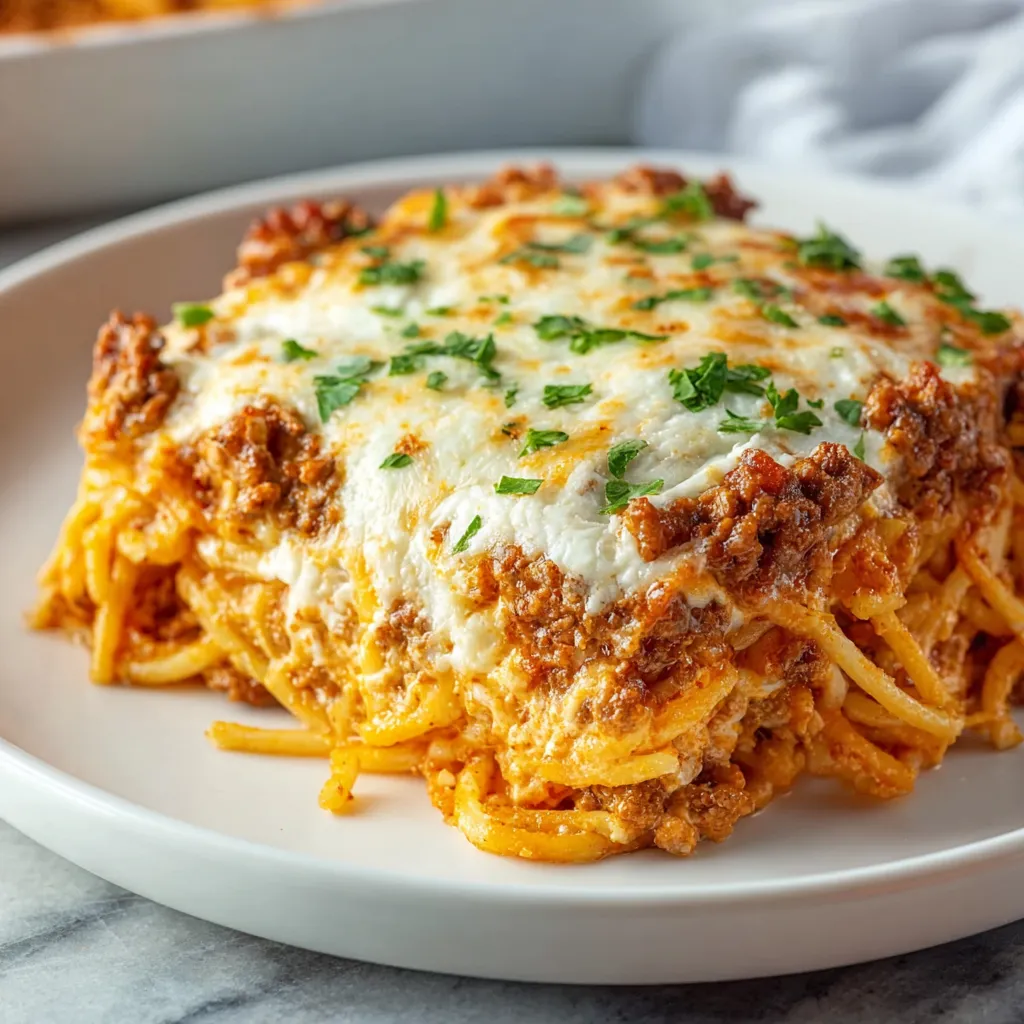 This recipe is the culmination of numerous experiments and tweaks, designed to deliver a consistently delicious and satisfying casserole every time.
Ingredients:
- 1 pound spaghetti
- 1 (8 ounce) package cream cheese, softened
- 1 (24 ounce) jar marinara sauce
- 1 pound ground beef, browned and drained
- 1/2 cup grated Parmesan cheese
- 1/4 cup chopped fresh basil
- 1 teaspoon garlic powder
- 1/2 teaspoon salt
- 1/4 teaspoon black pepper
- 1 cup shredded mozzarella cheese
Instructions:
- Preheat oven to 350 degrees F (175 degrees C).
- Cook spaghetti according to package directions until al dente. Drain well.
- In a large bowl, combine the softened cream cheese, marinara sauce, browned ground beef, Parmesan cheese, basil, garlic powder, salt, and pepper.
- Add the cooked spaghetti to the sauce mixture and toss to coat evenly.
- Pour the spaghetti mixture into a greased 9×13 inch baking dish.
- Sprinkle the mozzarella cheese evenly over the top of the casserole.
- Bake for 20-25 minutes, or until the cheese is melted and bubbly and the casserole is heated through.
- Let stand for 5-10 minutes before serving.
The Investigation: My Quest for Casserole Perfection
My first few attempts were a disaster. I followed recipes that seemed simple enough, but the results were consistently disappointing. The spaghetti was either mushy, the sauce was grainy, or the whole thing was just bland. Like many of you, I initially thought it was “just a casserole,” how hard could it be? Turns out, pretty hard if you want a truly exceptional dish.The Soggy Spaghetti Saga
My initial problem was overcooked spaghetti. I religiously followed the package directions, but baking it in the sauce for an extended period turned it into a soggy mess. Then, I had an “Aha!” moment: al dente is key! Undercooking the pasta slightly before adding it to the sauce allowed it to finish cooking in the oven without becoming mushy. This principle also applies to Chicken Casserole, where you need to be careful about overcooking the rice.The Cream Cheese Crisis
Next came the cream cheese conundrum. Some recipes called for adding cold cream cheese directly to the sauce, which resulted in clumps and an uneven texture. Other recipes instructed to overbake the casserole, leading to a grainy, separated sauce. The solution? Soften the cream cheese completely before mixing it with the sauce, and limit the baking time to prevent it from overcooking.The Blandness Battle
Finally, I tackled the issue of blandness. While marinara sauce provides a good base, it needed a boost of flavor. Adding Parmesan cheese, fresh basil, garlic powder, salt, and pepper elevated the dish significantly. Browning the ground beef also added a depth of flavor that was missing in earlier iterations. You could also consider using the base from Spicy Southern Chicken Spaghetti Casserole as inspiration for flavor profiles!The Cheese Topping Triumphs
Initially, I just used pre-shredded mozzarella. It was convenient, but lacked flavor and didn’t melt as nicely as I wanted. Switching to freshly grated mozzarella made a huge difference. It melted more evenly and contributed a richer, more satisfying flavor. You could even try a blend of mozzarella and provolone for an even more complex cheesy experience, similar to what you’d find in White Chicken Lasagna Soup.The Technique: A Foolproof Method
After numerous experiments, I’ve distilled the process into a simple, foolproof technique:- Cook Spaghetti Al Dente: Undercook the spaghetti by a minute or two. It will finish cooking in the oven.
- Soften the Cream Cheese: Ensure the cream cheese is completely softened before mixing it with the sauce to prevent clumps.
- Brown and Drain the Ground Beef: Browning the ground beef adds flavor and prevents a greasy casserole.
- Mix Thoroughly: Combine all ingredients thoroughly to ensure an even distribution of flavor.
- Bake Wisely: Bake at 350 degrees F (175 degrees C) for 20-25 minutes, or until the cheese is melted and bubbly and the casserole is heated through. Avoid overbaking to prevent a grainy sauce.
- Rest Before Serving: Let the casserole stand for 5-10 minutes before serving to allow the sauce to thicken slightly and the flavors to meld. This step is crucial!
Why is it important to cook the spaghetti al dente for this casserole?
Cooking the spaghetti al dente, slightly undercooked, is crucial because it will continue to cook in the oven within the sauce. This prevents it from becoming mushy during baking.
What happens if the cream cheese isn’t softened before being added to the sauce?
If the cream cheese is not softened before mixing it with the sauce, it can result in clumps and an uneven texture in the casserole.
Why is resting the casserole for 5-10 minutes after baking so important?
Resting the casserole allows the sauce to thicken slightly and the flavors to meld together, enhancing the overall taste and texture.
What causes the cream cheese in the casserole to become grainy or oily?
Overbaking the casserole can cause the cream cheese to separate, leading to a grainy or oily sauce. Limiting the baking time is key to preventing this.
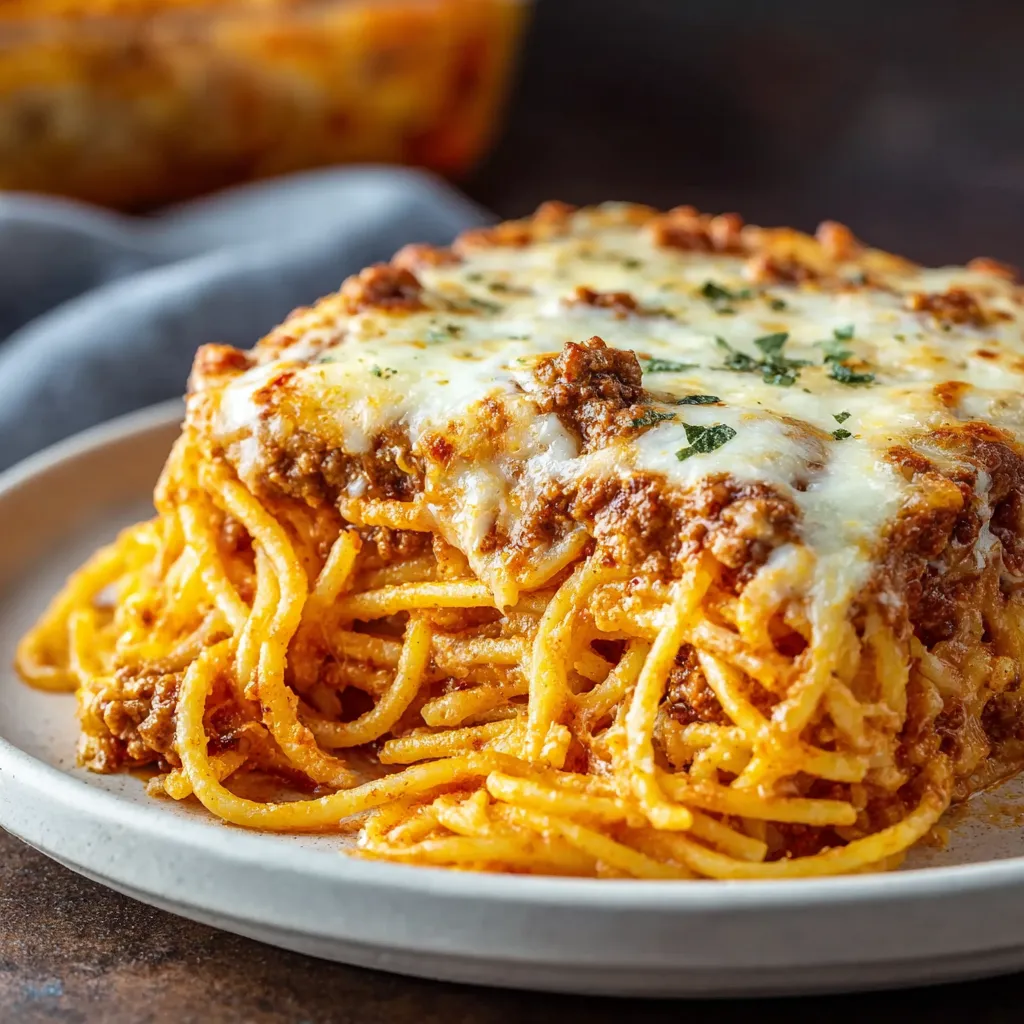
Baked Cream Cheese Spaghetti Casserole
This baked cream cheese spaghetti casserole is a creamy and comforting dish, perfect for a weeknight meal. It combines spaghetti, a rich cream cheese sauce, ground beef, and a bubbly mozzarella topping for a satisfying and flavorful experience.
Ingredients
Equipment
Method
- Preheat oven to 350 degrees F (175 degrees C).
- Cook spaghetti according to package directions until al dente. Drain well.
- In a skillet, brown ground beef over medium heat. Drain off any excess grease.
- In a large bowl, combine the softened cream cheese, marinara sauce, browned ground beef, Parmesan cheese, basil, garlic powder, salt, and pepper.
- Add the cooked spaghetti to the sauce mixture and toss to coat evenly.
- Pour the spaghetti mixture into a greased 9×13 inch baking dish.
- Sprinkle the mozzarella cheese evenly over the top of the casserole.
- Bake for 20-25 minutes, or until the cheese is melted and bubbly and the casserole is heated through.
- Let stand for 5-10 minutes before serving.
Notes
To prevent a grainy sauce, ensure the cream cheese is fully softened before mixing. Undercooking the spaghetti slightly (al dente) will prevent it from becoming mushy during baking. For a richer flavor, use freshly grated mozzarella instead of pre-shredded. Leftovers can be stored in the refrigerator for up to 3 days. You can also add other vegetables like mushrooms or bell peppers to the ground beef while browning.