
The Lo Mein Lowdown: Decoding the Dish
The secret to exceptional Beef And Broccoli Lo Mein lies in understanding the interplay of several key elements. First, the noodles. We’re not just talking about any noodles; we’re talking about *lo mein* noodles, which are typically made with wheat flour and eggs, giving them a slightly chewy texture. The key is to cook them *al dente* – slightly undercooked – because they will continue to cook in the sauce. Next, the beef. Tenderness is paramount. Marinating the beef not only infuses it with flavor but also tenderizes it, breaking down tough muscle fibers. The type of cut also matters; flank steak or sirloin are good choices because they can be sliced thinly against the grain for maximum tenderness. Finally, the sauce. A well-balanced sauce is the heart of any great lo mein. It needs to be savory, slightly sweet, and have a hint of umami. Achieving this requires a careful blend of soy sauce, oyster sauce, sesame oil, and a touch of sugar. Cornstarch acts as a thickening agent, creating a glossy, clingy sauce that coats the noodles and ingredients beautifully. Understanding the Maillard reaction, that browning process that happens when meat hits a hot pan, is also key. This is where the depth of flavor develops.The Ultimate Beef And Broccoli Lo Mein Recipe
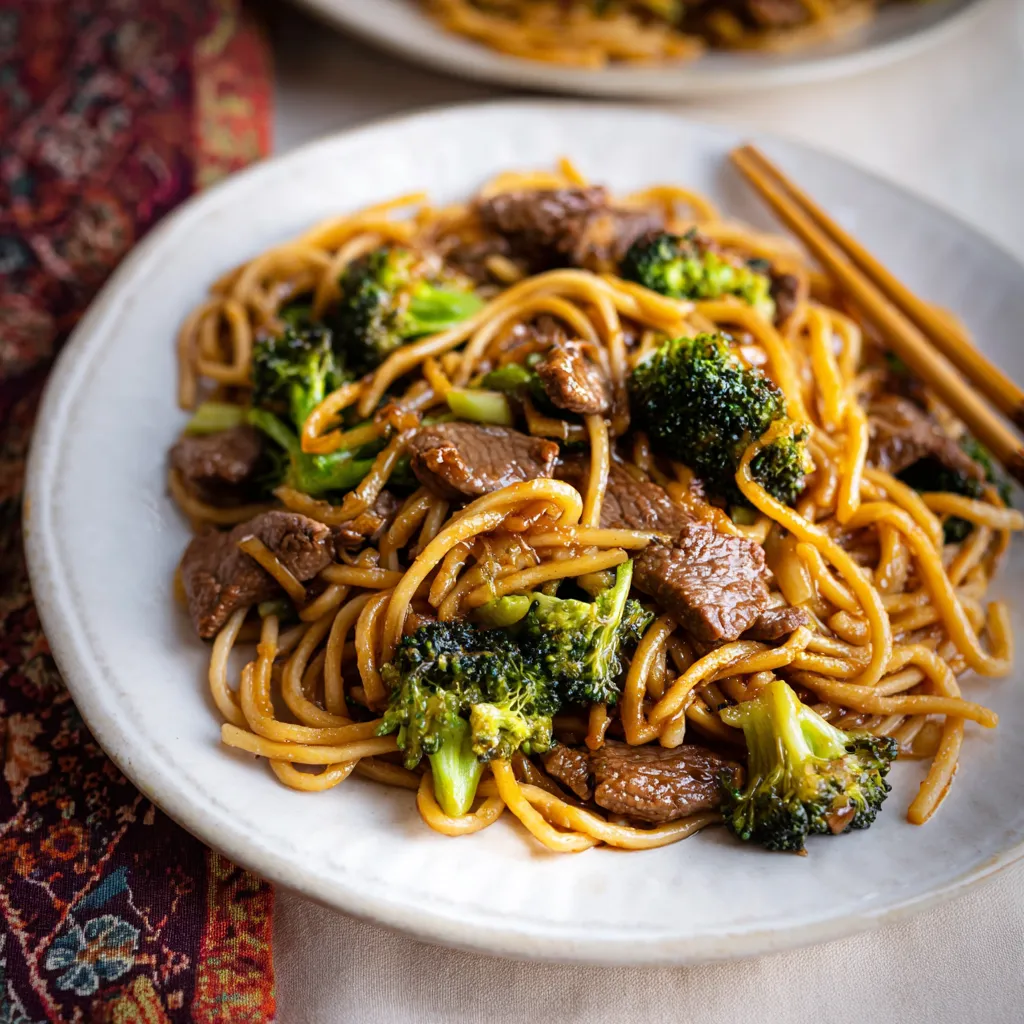 Here’s a recipe that incorporates all the scientific principles discussed above, resulting in a Beef And Broccoli Lo Mein that rivals your favorite takeout spot.
Ingredients:
- For the Beef:
- 1 pound flank steak or sirloin steak, thinly sliced against the grain
- 2 tablespoons soy sauce
- 1 tablespoon cornstarch
- 1 tablespoon rice wine vinegar
- 1 teaspoon sesame oil
- 1/2 teaspoon ground ginger
- 1/4 teaspoon garlic powder
- For the Lo Mein:
- 1 pound fresh or dried lo mein noodles
- 1 tablespoon vegetable oil
- 1 medium onion, thinly sliced
- 2 cloves garlic, minced
- 4 cups broccoli florets
- 1/2 cup sliced carrots (optional)
- For the Sauce:
- 1/2 cup soy sauce
- 2 tablespoons oyster sauce
- 1 tablespoon brown sugar
- 1 tablespoon sesame oil
- 1 tablespoon cornstarch
- 1/2 cup chicken broth or water
- 1/4 teaspoon red pepper flakes (optional)
- Garnish:
- Sesame seeds
- Chopped green onions
Instructions:
- Marinate the Beef: In a medium bowl, combine the sliced beef with soy sauce, cornstarch, rice wine vinegar, sesame oil, ginger, and garlic powder. Mix well and let marinate for at least 30 minutes, or up to 2 hours in the refrigerator.
- Cook the Noodles: Cook the lo mein noodles according to package directions, but slightly undercook them by about 1-2 minutes. Drain and set aside.
- Prepare the Sauce: In a small bowl, whisk together the soy sauce, oyster sauce, brown sugar, sesame oil, cornstarch, chicken broth (or water), and red pepper flakes (if using). Set aside.
- Stir-Fry the Beef: Heat a large wok or skillet over high heat. Add the vegetable oil. Once the oil is hot, add the marinated beef and stir-fry until browned and cooked through, about 3-5 minutes. Remove the beef from the wok and set aside.
- Stir-Fry the Vegetables: Add the onion and garlic to the wok and stir-fry until softened, about 2 minutes. Add the broccoli florets and carrots (if using) and stir-fry until tender-crisp, about 3-5 minutes.
- Combine Everything: Return the cooked beef to the wok with the vegetables. Pour in the prepared sauce and bring to a simmer, stirring constantly until the sauce thickens, about 1-2 minutes.
- Add the Noodles: Add the cooked lo mein noodles to the wok and toss everything together until the noodles are well coated with the sauce.
- Serve: Serve immediately, garnished with sesame seeds and chopped green onions.
My Lo Mein Lab: A Culinary Confessional
Like many of you, I initially thought making restaurant-quality Beef And Broccoli Lo Mein at home was an impossible feat. My first few attempts were a disaster, resulting in either mushy noodles, tough beef, or a bland, watery sauce. But I was determined to crack the code.The Noodle Nightmare
My initial attempts with the noodles were… problematic. I consistently overcooked them, resulting in a sticky, gloppy mess. I tried different brands, different cooking times, even different water temperatures! Then, I had an “Aha!” moment when I realized the importance of the *al dente* principle. Undercooking the noodles by a minute or two allowed them to absorb the sauce without becoming mushy. I started using fresh lo mein noodles when I could find them, and that made a huge difference.Beefing Up My Game
The beef was another hurdle. My first tries resulted in tough, chewy meat. I experimented with different cuts and marinades. I tried marinating overnight, but that made the beef too soft. The magic happened when I started using flank steak, slicing it paper-thin *against the grain*, and marinating it for only 30 minutes. The cornstarch in the marinade also helped to create a protective coating, sealing in the juices and preventing the beef from drying out during stir-frying. You can use the same principles when cooking Garlic Butter Beef Bites.Sauce SOS
The sauce was perhaps the most challenging aspect. My early attempts were either too salty, too sweet, or too bland. I realized that the key was to balance the flavors and to use high-quality ingredients. I switched to low-sodium soy sauce, experimented with different ratios of oyster sauce and brown sugar, and added a touch of sesame oil for that characteristic Asian flavor. I also discovered the importance of cornstarch as a thickening agent. After many failed attempts, I finally achieved that perfect balance of savory, sweet, and umami. Now, I can quickly whip up a batch of Beef And Broccoli Lo Mein that tastes just as good as, if not better than, takeout. Similar principles also apply when trying to create recipes like Chicken Ramen Stir Fry.The Secret Weapon: Mastering the Technique
After countless experiments, I’ve distilled the process down to a simple, foolproof method. Here’s the definitive guide to making perfect Beef And Broccoli Lo Mein every time:- Noodle Nirvana: Cook your lo mein noodles *al dente*. Aim for slightly undercooked, as they’ll finish cooking in the sauce. Fresh noodles are preferable, but dried noodles work well too – just be vigilant about cooking time.
- Beef Boss: Use flank steak or sirloin, sliced thinly against the grain. Marinate for at least 30 minutes with soy sauce, cornstarch, and a touch of sesame oil to tenderize and flavor the beef.
- Broccoli Brilliance: Don’t overcook the broccoli. Stir-fry it until tender-crisp, so it retains its texture and color.
- Sauce Symphony: Balance the flavors in your sauce. Use low-sodium soy sauce, oyster sauce, brown sugar, sesame oil, cornstarch, and chicken broth. Adjust the ratios to your taste.
- Wok Wizardry: Use a hot wok or skillet for stir-frying. This ensures that the beef and vegetables brown properly and don’t steam.
- Timing is Everything: Have all your ingredients prepped and ready to go before you start cooking. This will ensure that the stir-fry cooks quickly and evenly.
- The Final Flourish: Toss the noodles, beef, and vegetables together with the sauce until everything is well coated. Serve immediately, garnished with sesame seeds and chopped green onions.
What are lo mein noodles and why are they important for this dish?
Lo mein noodles are typically made with wheat flour and eggs, giving them a slightly chewy texture. They are cooked *al dente* (slightly undercooked) because they will continue to cook in the sauce, absorbing flavor without becoming mushy.
What is the best way to ensure the beef is tender in Beef and Broccoli Lo Mein?
Use flank steak or sirloin, sliced thinly against the grain, and marinate it for at least 30 minutes with soy sauce, cornstarch, rice wine vinegar, sesame oil, ginger, and garlic powder. The cornstarch helps create a protective coating, sealing in the juices and preventing the beef from drying out during stir-frying.
What are the key ingredients for a well-balanced Lo Mein sauce?
A well-balanced lo mein sauce needs to be savory, slightly sweet, and have a hint of umami. The key ingredients are soy sauce, oyster sauce, sesame oil, brown sugar, and cornstarch (as a thickening agent), along with chicken broth or water.
Why is it important to cook the lo mein noodles *al dente*?
Cooking the lo mein noodles *al dente*, slightly undercooked by about 1-2 minutes, is crucial because they continue to cook in the sauce as it thickens. This prevents the noodles from becoming mushy and allows them to absorb the sauce’s flavor effectively.
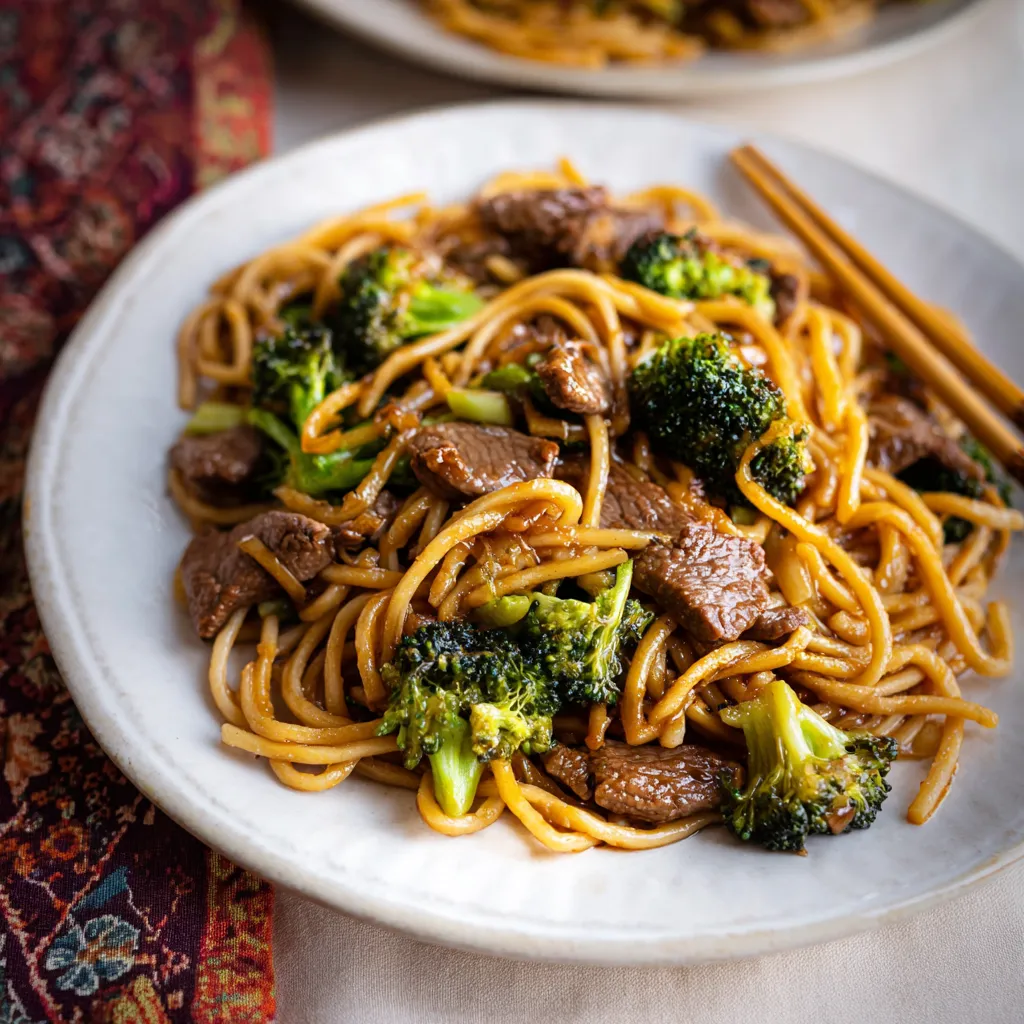
Easy Beef and Broccoli Lo Mein Noodles
Ingredients
Equipment
Method
- Marinate the Beef: In a medium bowl, combine the sliced beef with soy sauce, cornstarch, rice wine vinegar, sesame oil, ginger, and garlic powder. Mix well and let marinate for at least 30 minutes, or up to 2 hours in the refrigerator.
- Cook the Noodles: Cook the lo mein noodles according to package directions, but slightly undercook them by about 1-2 minutes. Drain and set aside.
- Prepare the Sauce: In a small bowl, whisk together the soy sauce, oyster sauce, brown sugar, sesame oil, cornstarch, chicken broth (or water), and red pepper flakes (if using). Set aside.
- Stir-Fry the Beef: Heat a large wok or skillet over high heat. Add the vegetable oil. Once the oil is hot, add the marinated beef and stir-fry until browned and cooked through, about 3-5 minutes. Remove the beef from the wok and set aside.
- Stir-Fry the Vegetables: Add the onion and garlic to the wok and stir-fry until softened, about 2 minutes. Add the broccoli florets and carrots (if using) and stir-fry until tender-crisp, about 3-5 minutes.
- Combine Everything: Return the cooked beef to the wok with the vegetables. Pour in the prepared sauce and bring to a simmer, stirring constantly until the sauce thickens, about 1-2 minutes.
- Add the Noodles: Add the cooked lo mein noodles to the wok and toss everything together until the noodles are well coated with the sauce.
- Serve: Serve immediately, garnished with sesame seeds and chopped green onions.