
The Garlic-Infused Fundamentals
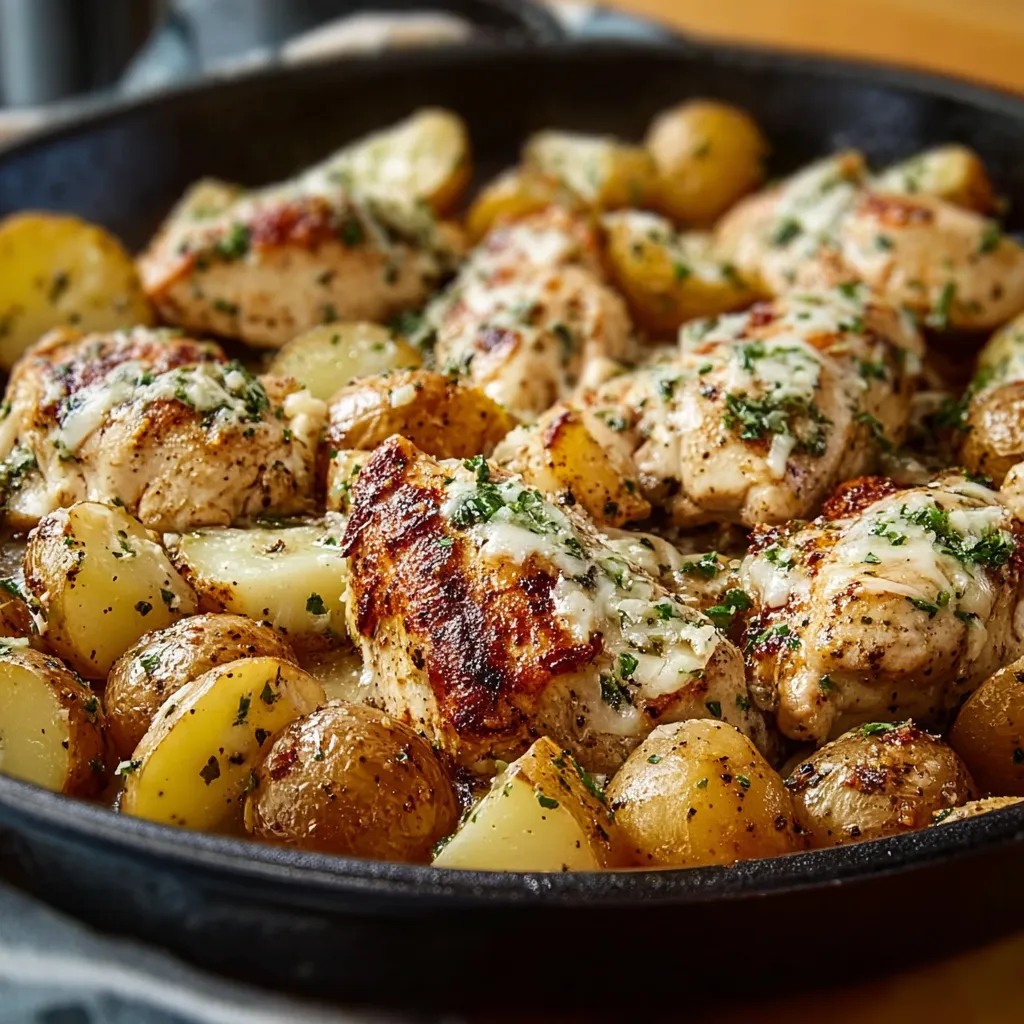
At its core, this dish relies on a few key principles: Maillard reaction, heat transfer, and moisture control. The Maillard reaction, that beautiful browning that occurs when amino acids and reducing sugars are heated, is responsible for much of the flavor development. Chicken skin, rich in proteins, and the natural sugars in potatoes are primed for this reaction. Heat transfer determines how evenly and efficiently the food cooks. Conduction (direct contact with the pan) and convection (hot air circulating around the food) are the primary mechanisms at play. Finally, moisture control is essential to prevent the chicken from drying out while ensuring the potatoes become tender and caramelized. We need enough moisture to steam the potatoes initially, but then we want that moisture to evaporate, allowing the Maillard reaction to take over and create crispy edges. Garlic, of course, is the star flavoring agent. Its pungent compounds are best released when crushed or minced, and gently cooked to prevent bitterness. Understanding these scientific principles is crucial for unlocking the full potential of this seemingly simple recipe.The Recipe: A Culinary Blueprint

Yields:
4 servingsPrep time:
20 minutesCook time:
45 minutesIngredients:
- 1.5 lbs boneless, skinless chicken thighs
- 1.5 lbs Yukon gold potatoes, cut into 1-inch pieces
- 6 cloves garlic, minced
- 2 tablespoons olive oil
- 1 tablespoon butter
- 1 teaspoon dried oregano
- 1/2 teaspoon smoked paprika
- 1/4 teaspoon red pepper flakes (optional)
- Salt and freshly ground black pepper to taste
- 1/4 cup chicken broth
- 2 tablespoons chopped fresh parsley, for garnish
Equipment:
- Large oven-safe skillet (cast iron preferred)
- Cutting board
- Chef’s knife
- Garlic press or mincer
- Measuring spoons and cups
Instructions:
- Preheat the oven: Preheat your oven to 400°F (200°C).
- Prepare the chicken: Pat the chicken thighs dry with paper towels. This is crucial for browning. Season generously with salt, pepper, oregano, and smoked paprika.
- Sauté the potatoes: In the oven-safe skillet, heat 1 tablespoon of olive oil over medium-high heat. Add the potatoes and cook, stirring occasionally, until they start to brown on all sides, about 8-10 minutes. Season with salt and pepper. Remove the potatoes from the skillet and set aside.
- Cook the chicken: Add the remaining 1 tablespoon of olive oil and the butter to the skillet. Once the butter is melted and the pan is hot, add the chicken thighs in a single layer, being careful not to overcrowd the pan. Sear the chicken for 3-4 minutes per side, until nicely browned. Don’t worry about cooking them all the way through at this point.
- Add garlic and broth: Reduce the heat to medium. Add the minced garlic to the skillet and cook for about 1 minute, until fragrant. Be careful not to burn the garlic. Pour in the chicken broth and scrape up any browned bits from the bottom of the skillet.
- Combine and bake: Return the potatoes to the skillet, arranging them around the chicken thighs. Transfer the skillet to the preheated oven.
- Bake: Bake for 20-25 minutes, or until the chicken is cooked through (internal temperature of 165°F/74°C) and the potatoes are tender.
- Rest and serve: Remove the skillet from the oven and let it rest for 5 minutes before serving. Garnish with fresh parsley and serve hot.
My Quest for Garlic Chicken Perfection
The Early Days: A Series of Disappointments
My first few attempts were a disaster. Like many of you, I initially thought garlic chicken thighs and potatoes were just about throwing everything into a pan and hoping for the best. My first batch involved tossing raw chicken thighs, potatoes, and a mountain of garlic into a cold skillet. The result? Pale, rubbery chicken, undercooked potatoes, and bitter, burnt garlic. The texture was all wrong, and the flavor was even worse. I knew I needed to rethink my approach.The Skin-On vs. Skinless Dilemma
Next, I experimented with bone-in, skin-on chicken thighs. The idea was that the skin would render fat and create a crispy texture. While the skin did get crispy, the chicken was still unevenly cooked. The bone slowed down the cooking process, and the potatoes remained stubbornly underdone. Plus, the excess fat made the dish greasy. I started to lean toward boneless, skinless thighs for better control and a healthier outcome.The “Aha!” Moment: The Sear and the Sauté
Then, I had an “Aha!” moment. I realized the key was to *partially* cook the components separately. Searing the chicken thighs first created that beautiful Maillard reaction, locking in moisture and developing flavor. Sautéing the potatoes separately ensured they were evenly browned and had a head start on becoming tender. This two-step process made a world of difference.The Garlic Gauntlet: Avoiding the Burn
The garlic was another challenge. Raw garlic is too pungent, and burnt garlic is bitter. The sweet spot is gently cooking it until fragrant. I found that adding the garlic to the skillet *after* searing the chicken, and then deglazing with chicken broth, created the perfect balance of flavor without any bitterness. The broth also helped to create a delicious pan sauce.The Final Revelation: Oven Temperature and Resting Time
Finally, I realized the oven temperature and resting time were crucial. A higher oven temperature (400°F) ensured the chicken cooked quickly and the potatoes caramelized properly. Letting the dish rest for 5 minutes after baking allowed the juices to redistribute, resulting in more tender and flavorful chicken.The Foolproof Technique: A Culinary Checklist
Based on my investigation, here’s the foolproof technique for creating the *ultimate* garlic chicken thighs and potatoes:- Prep is paramount: Pat the chicken thighs dry and cut the potatoes into uniform pieces. This ensures even cooking and browning.
- Season generously: Don’t be shy with the salt, pepper, and other seasonings. These flavors will intensify during cooking.
- Sear the chicken: Sear the chicken thighs in a hot skillet to develop flavor and lock in moisture.
- Sauté the potatoes: Sauté the potatoes separately to ensure they are evenly browned and have a head start on becoming tender.
- Sauté the garlic: Add the minced garlic to the skillet *after* searing the chicken, and cook until fragrant. Avoid burning.
- Deglaze the pan: Pour in chicken broth to deglaze the pan and create a flavorful sauce.
- Combine and bake: Arrange the potatoes around the chicken thighs in the skillet and bake in a preheated oven.
- Check for doneness: Ensure the chicken is cooked through (165°F/74°C) and the potatoes are tender.
- Rest before serving: Let the dish rest for 5 minutes before serving to allow the juices to redistribute.
- Garnish and enjoy: Garnish with fresh parsley and serve hot.
Why is it important to pat the chicken thighs dry before cooking?
Patting the chicken thighs dry with paper towels is crucial for browning. This helps to achieve the Maillard reaction, which is responsible for much of the flavor development.
Why does the recipe instruct to sear the chicken and sauté the potatoes separately?
Searing the chicken thighs first creates that beautiful Maillard reaction, locking in moisture and developing flavor. Sautéing the potatoes separately ensures they are evenly browned and have a head start on becoming tender.
How do you prevent the garlic from burning and becoming bitter in this recipe?
Add the minced garlic to the skillet *after* searing the chicken, and cook until fragrant. Deglazing the pan with chicken broth after adding the garlic also helps to prevent it from burning.
What is the ideal oven temperature for cooking the garlic chicken thighs and potatoes?
The ideal oven temperature is 400°F (200°C). This ensures the chicken cooks quickly and the potatoes caramelize properly.
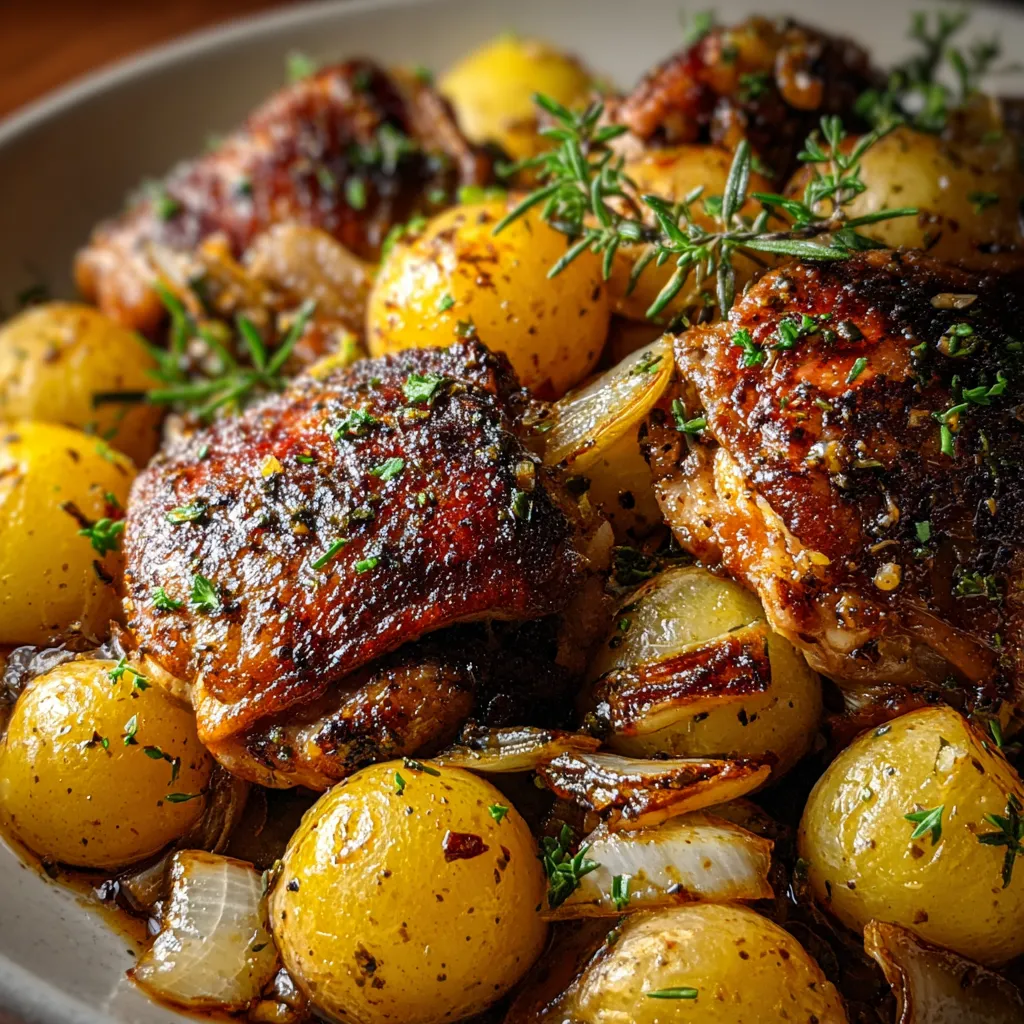
ULTIMATE GARLIC CHICKEN THIGHS AND POTATOES
This recipe delivers succulent and flavorful garlic chicken thighs and potatoes by focusing on the Maillard reaction, heat transfer, and moisture control. Searing the chicken and sautéing the potatoes separately ensures even cooking and browning, while a garlic-infused pan sauce adds depth of flavor. The final oven bake and resting period guarantee tender chicken and perfectly caramelized potatoes.
Ingredients
Equipment
Method
- Preheat the oven to 400°F (200°C).
- Pat the chicken thighs dry with paper towels and season generously with salt, pepper, oregano, and smoked paprika.
- In the oven-safe skillet, heat 1 tablespoon of olive oil over medium-high heat. Add the potatoes and cook, stirring occasionally, until they start to brown on all sides, about 8-10 minutes. Season with salt and pepper. Remove the potatoes from the skillet and set aside.
- Add the remaining 1 tablespoon of olive oil and the butter to the skillet. Once the butter is melted and the pan is hot, add the chicken thighs in a single layer, being careful not to overcrowd the pan. Sear the chicken for 3-4 minutes per side, until nicely browned.
- Reduce the heat to medium. Add the minced garlic to the skillet and cook for about 1 minute, until fragrant. Be careful not to burn the garlic. Pour in the chicken broth and scrape up any browned bits from the bottom of the skillet.
- Return the potatoes to the skillet, arranging them around the chicken thighs.
- Transfer the skillet to the preheated oven.
- Bake for 20-25 minutes, or until the chicken is cooked through (internal temperature of 165°F/74°C) and the potatoes are tender.
- Remove the skillet from the oven and let it rest for 5 minutes before serving.
- Garnish with fresh parsley and serve hot.
Notes
For extra flavor, marinate the chicken thighs for at least 30 minutes before cooking. Store leftovers in an airtight container in the refrigerator for up to 3 days. To reheat, bake in a preheated oven at 350°F (175°C) until heated through.