
The Chowder Code: Decoding the Creaminess
The heart of any good chowder lies in its creamy base, and understanding the science behind achieving that perfect consistency is paramount. Many recipes rely heavily on flour or cornstarch as thickeners, which can easily lead to a pasty, undesirable texture. The trick is to leverage the natural starches present in the corn itself, combined with careful temperature control and the strategic use of dairy. Overheating dairy causes it to curdle, resulting in a grainy chowder – a culinary crime! Furthermore, the starch granules in corn need sufficient hydration and gentle heat to swell and thicken properly, releasing their binding power without turning into a gluey blob. Emulsification, the process of suspending fat molecules evenly within the water-based broth, is also crucial. This prevents the separation of fats and contributes to that luxurious, velvety mouthfeel we all crave. Finally, consider the role of acidity. A touch of acid, such as a squeeze of lemon juice or a dash of hot sauce, can brighten the flavors and cut through the richness, creating a more balanced and complex profile.The Ultimate Chicken Corn Chowder Recipe
Yields:
About 6-8 servingsPrep time:
20 minutesCook time:
45 minutesIngredients:
- 4 slices bacon, diced
- 1 medium yellow onion, diced
- 2 stalks celery, diced
- 1 red bell pepper, diced
- 2 cloves garlic, minced
- 6 cups chicken broth (low sodium preferred)
- 2 cups cooked chicken, shredded or diced
- 4 cups fresh or frozen corn kernels (if frozen, no need to thaw)
- 1 large russet potato, peeled and diced small
- 1 teaspoon dried thyme
- 1/2 teaspoon smoked paprika
- Salt and freshly ground black pepper to taste
- 1 cup heavy cream
- 1/4 cup chopped fresh chives, for garnish
- Hot sauce (optional), for serving
Equipment:
- Large Dutch oven or heavy-bottomed pot
- Cutting board
- Knife
- Wooden spoon or spatula
Instructions:
- Render the Bacon: In a large Dutch oven or heavy-bottomed pot, cook the diced bacon over medium heat until crispy. Remove the bacon with a slotted spoon and set aside, leaving the rendered bacon fat in the pot.
- Sauté the Vegetables: Add the diced onion, celery, and bell pepper to the pot and cook in the bacon fat over medium heat until softened, about 5-7 minutes. Add the minced garlic and cook for another minute until fragrant.
- Build the Broth: Pour in the chicken broth, scraping up any browned bits from the bottom of the pot. Add the shredded chicken, corn kernels, diced potato, thyme, and smoked paprika. Season with salt and pepper to taste.
- Simmer and Thicken: Bring the mixture to a simmer, then reduce the heat to low, cover, and cook for 15-20 minutes, or until the potatoes are tender.
- Partial Purée (Optional): For a creamier texture, use an immersion blender to partially purée about 1-2 cups of the chowder directly in the pot. Be careful not to over-blend, as this can make the chowder too thick. Alternatively, you can carefully transfer a portion of the chowder to a regular blender, blend until smooth, and then return it to the pot.
- Finish with Cream: Stir in the heavy cream and cooked bacon. Heat gently over low heat, being careful not to boil.
- Serve: Ladle the chowder into bowls and garnish with fresh chives. Serve hot with a dash of hot sauce, if desired.
My Chowder Chronicles: A Personal Investigation
The Early Days: A Gloppy Mess
My first few attempts at chicken corn chowder were a disaster. Like many of you, I initially thought more flour equaled a creamier chowder. The result? A thick, pasty concoction that tasted more like wallpaper paste than a comforting soup. The corn was often overcooked and mushy, and the chicken dried out. It was a culinary wasteland.The Starch Revelation: Corn to the Rescue!
Then, I had an “Aha!” moment. I realized the power of the corn itself! By using a portion of the corn to naturally thicken the chowder, I could drastically reduce the amount of added starch. I began experimenting with partially pureeing some of the corn, releasing its starches and creating a smoother, more naturally thickened base. This was a game-changer!Dairy Dilemmas: Avoiding the Curdle
Next, I tackled the dairy dilemma. My initial attempts often resulted in curdled cream, a telltale sign of overheating. The solution? Adding the cream at the very end and keeping the heat low. Patience is key here. Gentle warming is all that’s needed to incorporate the cream without ruining its texture.Bacon Bliss: The Umami Bomb
The final piece of the puzzle was bacon. While many recipes call for adding bacon bits as a garnish, I discovered that rendering the bacon first and using the rendered fat to sauté the vegetables infused the entire chowder with a smoky, umami-rich flavor that took it to another level. The crispy bacon bits then became the perfect textural counterpoint to the creamy soup.The Foolproof Formula: Chowder Success in Five Steps
Here’s a summary of the technique, broken down into a foolproof method:- Render & Infuse: Render bacon, remove crisped pieces. Sauté aromatics (onion, celery, etc.) in the bacon fat for a flavor-infused base.
- Build the Base: Add broth, chicken, corn, potatoes, and seasonings. Simmer until potatoes are tender.
- Starch Power: Partially purée a portion of the chowder for natural thickening using corn starch.
- Creamy Finale: Gently stir in the heavy cream and reserved bacon at the very end, heating through gently without boiling.
- Garnish & Serve: Garnish with fresh chives and a dash of hot sauce for added zing.
What’s the key to achieving a creamy chowder without it becoming too thick or pasty?
The key is to leverage the natural starches in the corn itself, combined with careful temperature control when adding dairy. Avoid relying too heavily on flour or cornstarch as thickeners.
Why is it important to add the heavy cream at the end of the cooking process?
Adding the cream at the end and keeping the heat low prevents the dairy from curdling, which can result in a grainy chowder. Gentle warming is all that’s needed to incorporate the cream without ruining its texture.
How does rendering the bacon at the beginning enhance the flavor of the chowder?
Rendering the bacon first and using the rendered fat to sauté the vegetables infuses the entire chowder with a smoky, umami-rich flavor.
Is it necessary to thaw frozen corn before adding it to the chowder?
No, it is not necessary to thaw frozen corn kernels before adding them to the chowder according to the recipe.
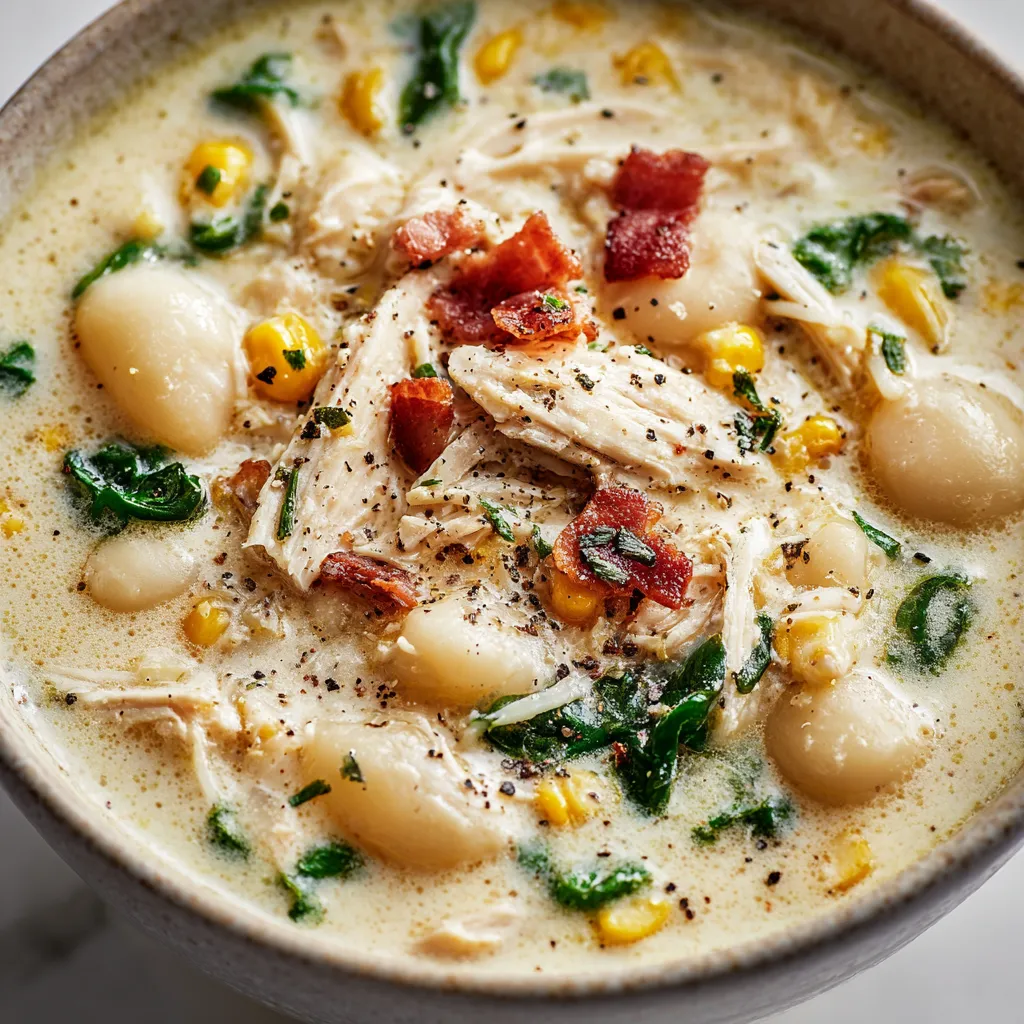
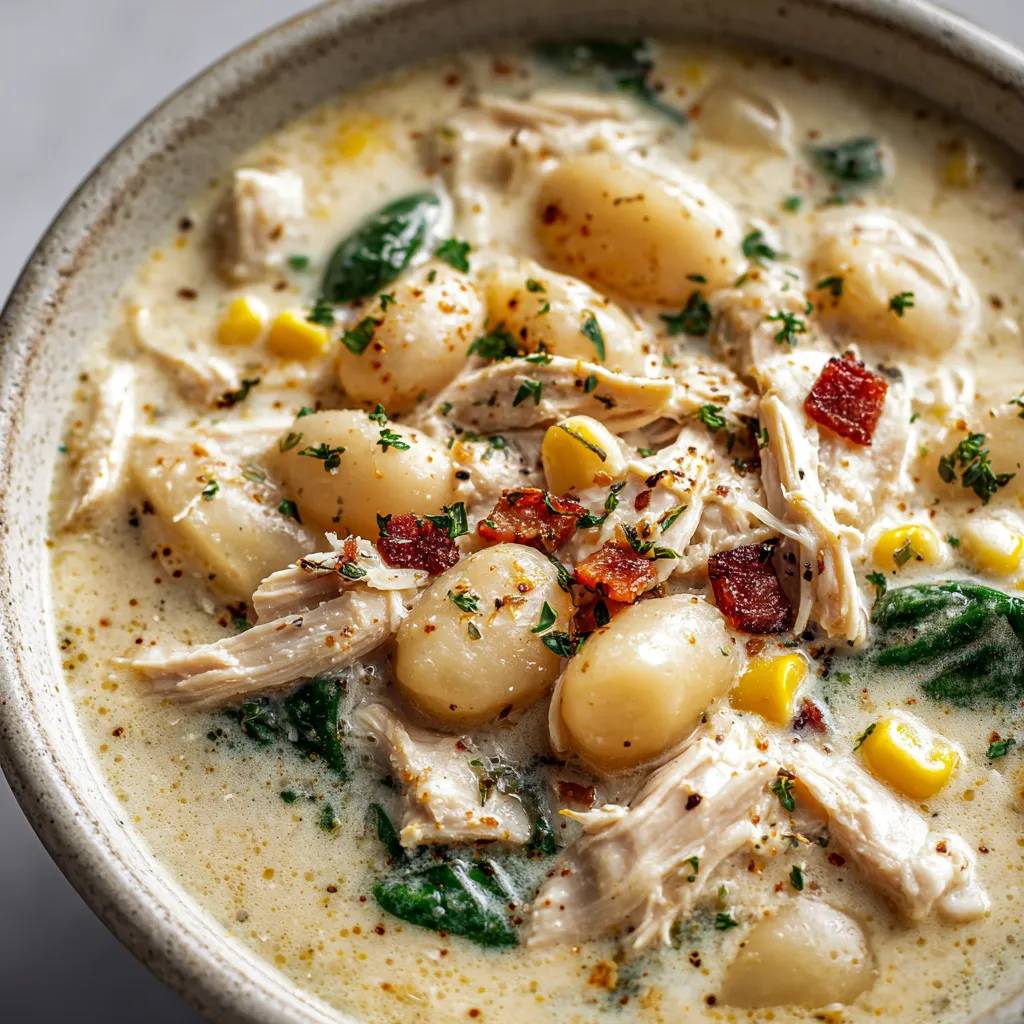
ULTIMATE CHICKEN CORN CHOWDER
This creamy and comforting chicken corn chowder is the perfect cold-weather meal. It features a velvety smooth texture, sweet corn, tender chicken, and a hint of smoky bacon, all balanced with fresh chives and a touch of hot sauce.
Ingredients
Equipment
Method
- Render the Bacon: In a large Dutch oven or heavy-bottomed pot, cook the diced bacon over medium heat until crispy. Remove the bacon with a slotted spoon and set aside, leaving the rendered bacon fat in the pot.
- Sauté the Vegetables: Add the diced onion, celery, and bell pepper to the pot and cook in the bacon fat over medium heat until softened, about 5-7 minutes. Add the minced garlic and cook for another minute until fragrant.
- Build the Broth: Pour in the chicken broth, scraping up any browned bits from the bottom of the pot. Add the shredded chicken, corn kernels, diced potato, thyme, and smoked paprika. Season with salt and pepper to taste.
- Simmer and Thicken: Bring the mixture to a simmer, then reduce the heat to low, cover, and cook for 15-20 minutes, or until the potatoes are tender.
- Partial Purée (Optional): For a creamier texture, use an immersion blender to partially purée about 1-2 cups of the chowder directly in the pot. Be careful not to over-blend, as this can make the chowder too thick. Alternatively, you can carefully transfer a portion of the chowder to a regular blender, blend until smooth, and then return it to the pot.
- Finish with Cream: Stir in the heavy cream and cooked bacon. Heat gently over low heat, being careful not to boil.
- Serve: Ladle the chowder into bowls and garnish with fresh chives. Serve hot with a dash of hot sauce, if desired.
Notes
For a richer flavor, use homemade chicken broth. To prevent the cream from curdling, ensure the heat is low when adding it and do not boil the chowder after adding the cream. Chowder can be stored in the refrigerator for up to 3 days. Reheat gently on the stovetop. For a spicier kick, add a pinch of cayenne pepper or a dash of your favorite hot sauce directly to the chowder while simmering.