
Unlocking the Umami: The Science of Cheesesteak Flavor
The magic of a Philly Cheesesteak, whether in a bowl or on a roll, isn’t just about the meat and cheese; it’s about the Maillard reaction and the perfect balance of umami. The Maillard reaction, that browning process that occurs when amino acids and reducing sugars are heated, is crucial for developing the rich, savory flavor we crave. Thinly sliced steak, quickly seared at high heat, maximizes this reaction. The cheese, traditionally provolone or Cheez Whiz (yes, Cheez Whiz!), contributes both creaminess and umami, thanks to its glutamates. Finally, the onions and peppers, when caramelized, add sweetness and depth, completing the flavor profile. The real challenge is replicating this synergy in a bowl format, ensuring each component contributes optimally to the overall experience.The Definitive Philly Cheesesteak Bowl Recipe
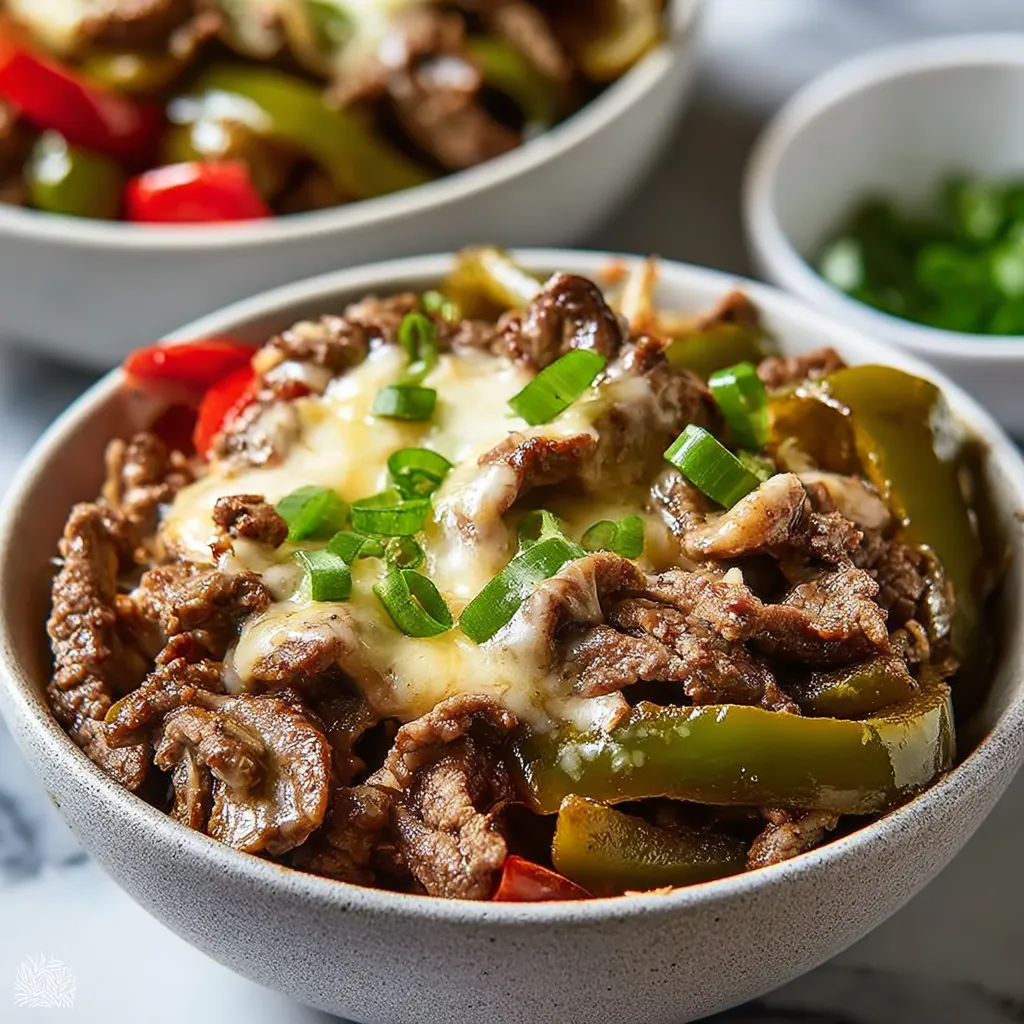 Here’s my perfected recipe for creating incredible Philly Cheesesteak Bowls at home:
Ingredients:
- 1 pound thinly sliced ribeye steak (see notes below on slicing)
- 1 large yellow onion, thinly sliced
- 1 bell pepper (green, red, or a mix), thinly sliced
- 4 ounces provolone cheese, sliced or shredded (or Cheez Whiz, if you dare!)
- 2 tablespoons olive oil or beef tallow
- 1 teaspoon garlic powder
- 1/2 teaspoon onion powder
- 1/4 teaspoon smoked paprika
- Salt and freshly ground black pepper to taste
- Optional toppings: pickled hot peppers, sauteed mushrooms
Instructions:
- Prepare the Steak: If you can’t find pre-sliced steak, partially freeze a ribeye steak for about 30 minutes to make slicing easier. Use a sharp knife to slice the steak as thinly as possible against the grain.
- Sauté the Vegetables: Heat 1 tablespoon of olive oil or beef tallow in a large skillet or cast iron pan over medium-high heat. Add the sliced onions and bell peppers. Sauté until softened and caramelized, about 8-10 minutes, stirring occasionally. Season with salt and pepper. Remove vegetables from the skillet and set aside.
- Cook the Steak: Add the remaining 1 tablespoon of oil or tallow to the skillet. Increase the heat to high. Working in batches, add the thinly sliced steak to the hot skillet. Do not overcrowd the pan. Sear the steak quickly, about 1-2 minutes per side, until browned and cooked through. Season with garlic powder, onion powder, smoked paprika, salt, and pepper.
- Combine and Melt Cheese: Once all the steak is cooked, return the sautéed onions and peppers to the skillet. Toss everything together. Reduce the heat to low and top with the provolone cheese (or Cheez Whiz). Cover the skillet and let the cheese melt, about 1-2 minutes.
- Assemble the Bowls: Divide the cheesesteak mixture into bowls. Top with optional toppings like pickled hot peppers or sauteed mushrooms. Serve immediately.
Notes on Steak Selection and Slicing:
- Ribeye is the traditional choice for its marbling and flavor, but sirloin or flank steak can also be used.
- Slicing the steak thinly is crucial for achieving the right texture. Partially freezing the steak makes this much easier. A meat slicer is ideal if you have one.
My Cheesesteak Bowl Odyssey: A Culinary Investigation
My journey to the perfect Philly Cheesesteak Bowl wasn’t a straight path. My first few attempts were a disaster. I either overcooked the steak, resulting in tough, chewy bits, or the vegetables were bland and lifeless. Then, I had an “Aha!” moment: understanding the importance of high heat and proper seasoning.The Steak Fiasco: Avoiding Toughness
Like many of you, I initially thought I could just throw all the steak into the pan at once. Big mistake! The pan cooled down, and instead of searing, the steak steamed. The result? Gray, tough, and utterly unappetizing. I learned that searing in batches is non-negotiable. High heat is your friend here; it’s what creates that beautiful crust and locks in the juices. I also experimented with different cuts of beef. While ribeye is king, I found that sirloin, when thinly sliced and properly seared, can be a perfectly acceptable (and more affordable) substitute.The Vegetable Vexation: Achieving Caramelized Perfection
My early attempts at sautéing the onions and peppers were equally disappointing. They were either undercooked and crunchy or overcooked and mushy. The key, I discovered, is patience and controlling the heat. Start with medium-high heat to soften the vegetables, then reduce the heat to medium to allow them to caramelize slowly without burning. A touch of sugar (a pinch will do) can also help accelerate the caramelization process. I also experimented with different types of onions and peppers. Yellow onions provide the classic cheesesteak flavor, but adding a touch of red onion can add a subtle sweetness and visual appeal.The Cheese Conundrum: Provolone vs. Cheez Whiz
Ah, the great cheesesteak debate! Provolone offers a mild, creamy flavor that complements the steak and vegetables. Cheez Whiz, on the other hand, brings a nostalgic, intensely cheesy flavor that some purists swear by. I’ve tried both (multiple times, for science!), and I honestly believe it comes down to personal preference. I’ve even experimented with a blend of both, which offers a nice balance of flavors and textures. The important thing is to ensure the cheese melts evenly and coats the steak and vegetables. Covering the pan while the cheese melts helps to trap the heat and speed up the process.The Foolproof Method: Mastering the Cheesesteak Bowl
After countless experiments, here’s my foolproof method for creating the ultimate Philly Cheesesteak Bowl:- Prep Like a Pro: Thinly slice the steak and vegetables ahead of time. This ensures a smooth and efficient cooking process.
- Sear in Batches: Don’t overcrowd the pan when searing the steak. This is crucial for achieving that beautiful crust and locking in the juices.
- Caramelize Carefully: Sauté the onions and peppers slowly over medium heat until they are softened and caramelized.
- Season Generously: Don’t be shy with the seasonings! Garlic powder, onion powder, smoked paprika, salt, and pepper are essential for creating that authentic cheesesteak flavor.
- Melt the Cheese Right: Cover the pan while the cheese melts to trap the heat and ensure even melting.
- Serve Immediately: Cheesesteak bowls are best enjoyed hot and fresh.
Why is it important to sear the steak in batches when making Philly Cheesesteak Bowls?
Searing the steak in batches prevents overcrowding the pan, which lowers the heat and causes the steak to steam instead of sear. Searing at high heat creates a beautiful crust and locks in the juices, resulting in a more flavorful and tender steak.
What are the key steps to achieving perfectly caramelized onions and peppers for Philly Cheesesteak Bowls?
Start by sautéing the onions and peppers over medium-high heat to soften them, then reduce the heat to medium to allow them to caramelize slowly without burning. Patience and controlling the heat are crucial. A touch of sugar can help accelerate the caramelization process.
What are the cheese options for Philly Cheesesteak Bowls, and which one is recommended?
The article suggests provolone or Cheez Whiz. Provolone offers a mild, creamy flavor, while Cheez Whiz provides a nostalgic, intensely cheesy flavor. Ultimately, the choice depends on personal preference. A blend of both is also an option.
What kind of steak is best for Philly Cheesesteak Bowls?
Ribeye is the traditional and preferred choice for its marbling and flavor. However, sirloin or flank steak can also be used, especially if thinly sliced and properly seared.
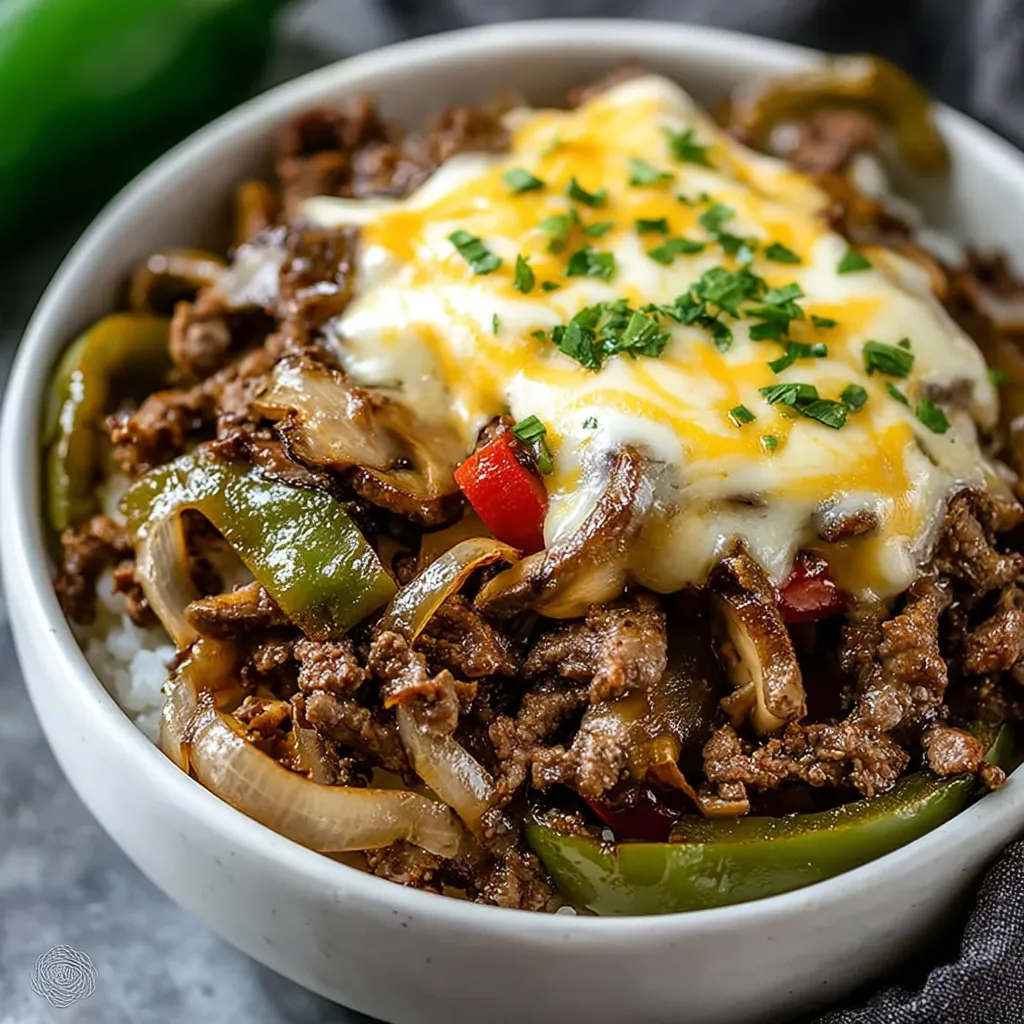
Philly Cheesesteak Bowls
Ingredients
Equipment
Method
- Prepare the Steak: If you can’t find pre-sliced steak, partially freeze a ribeye steak for about 30 minutes to make slicing easier. Use a sharp knife to slice the steak as thinly as possible against the grain.
- Sauté the Vegetables: Heat 1 tablespoon of olive oil or beef tallow in a large skillet or cast iron pan over medium-high heat. Add the sliced onions and bell peppers. Sauté until softened and caramelized, about 8-10 minutes, stirring occasionally. Season with salt and pepper. Remove vegetables from the skillet and set aside.
- Cook the Steak: Add the remaining 1 tablespoon of oil or tallow to the skillet. Increase the heat to high. Working in batches, add the thinly sliced steak to the hot skillet. Do not overcrowd the pan. Sear the steak quickly, about 1-2 minutes per side, until browned and cooked through. Season with garlic powder, onion powder, smoked paprika, salt, and pepper.
- Combine and Melt Cheese: Once all the steak is cooked, return the sautéed onions and peppers to the skillet. Toss everything together. Reduce the heat to low and top with the provolone cheese (or Cheez Whiz). Cover the skillet and let the cheese melt, about 1-2 minutes.
- Assemble the Bowls: Divide the cheesesteak mixture into bowls. Top with optional toppings like pickled hot peppers or sauteed mushrooms. Serve immediately.